
Pakistan and India Ceasefire Marks Anniversary of Intense Military Escalation
Coveragetap to expand ▾Spectrum: Center Only🌍ME: 1
- The conflict was triggered by the April 22 Pahalgam attack on tourists in India-occupied Kashmir, which India linked to Pakistan without evidence (per dawn.com).
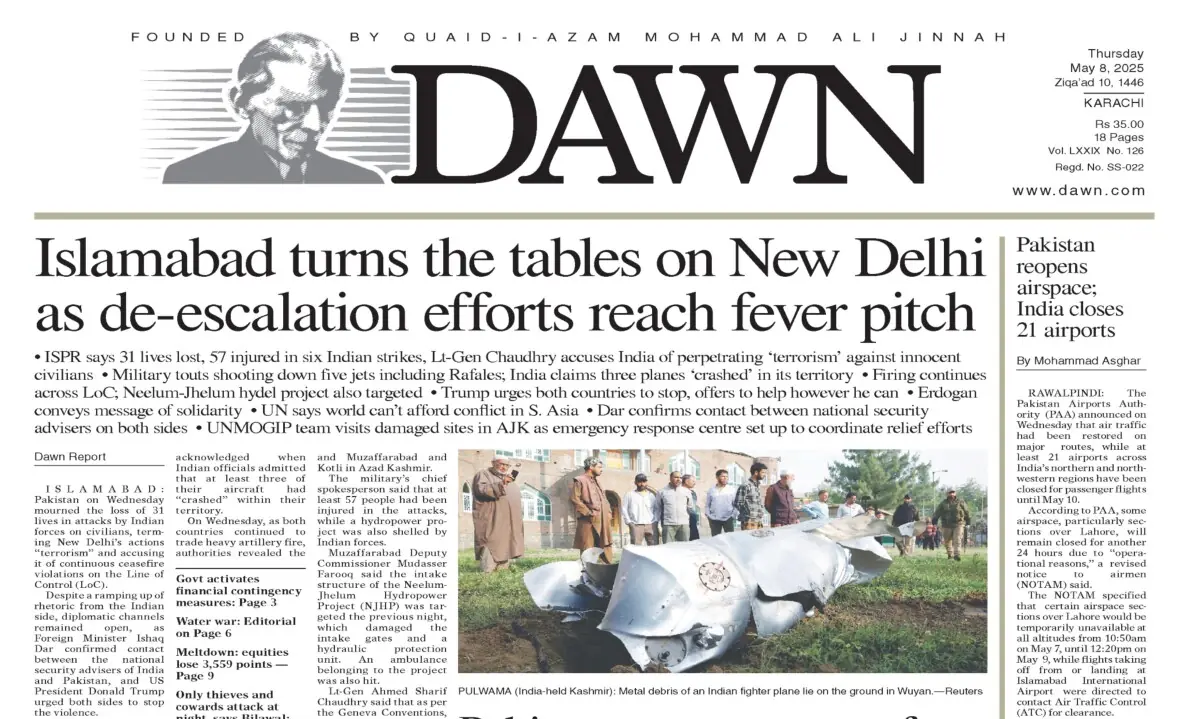
- India conducted airstrikes in Punjab and Azad Kashmir on May 7, escalating the conflict (per dawn.com).
- Pakistan responded with Operation Bunyanum Marsoos, targeting Indian airbases (per dawn.com).
- A ceasefire was agreed upon on May 10 after intervention by the United States (per dawn.com).
The anniversary of a significant military escalation between Pakistan and India is marked by the events that unfolded a year ago. The conflict was ignited by the April 22 attack on tourists in Pahalgam, located in the India-occupied Kashmir region. India attributed the attack to Pakistan, although no evidence was provided to substantiate this claim.
In response, India launched airstrikes on May 7, targeting areas in Punjab and Azad Kashmir, which significantly heightened tensions between the two countries. Pakistan retaliated with Operation Bunyanum Marsoos, conducting strikes on Indian airbases. This exchange of military actions underscored the volatile nature of the relationship between the two nuclear-armed neighbors.
The situation reached a critical point, prompting intervention from the United States, which facilitated a ceasefire agreement on May 10. This intervention was crucial in de-escalating the conflict and preventing further military engagements.
The events of this period highlight the fragile peace that exists between Pakistan and India, with both sides quick to engage in military actions in response to perceived threats. The anniversary serves as a reminder of the ongoing tensions and the potential for rapid escalation in the region.
- The civilian populations in Punjab and Azad Kashmir bear the concrete costs of military actions, facing the threat of airstrikes and their aftermath.
- The military establishments of both Pakistan and India benefit from heightened tensions, as they justify increased defense spending and strategic posturing.
- The United States plays a critical role in mediating conflicts between nuclear-armed states, underscoring its influence in South Asian geopolitics.
- Whether Pakistan and India maintain the ceasefire agreement in the coming months.
- Any potential diplomatic engagements between Pakistan, India, and the United States to further stabilize the region.
- Monitoring for any new incidents in Kashmir that could reignite tensions between the two countries.
- dawn.com emphasizes the lack of evidence in India's claim against Pakistan regarding the Pahalgam attack.
- The attribution of the Pahalgam attack remains disputed, with India claiming Pakistani involvement without evidence.
- No source mentions the historical context of previous conflicts between Pakistan and India that have shaped current tensions.
- The economic impact of military escalations on local populations in affected regions is not discussed.
- dawn.com attributes the initial escalation to India's airstrikes following the Pahalgam attack.