
Pakistan's Climate Disasters Cost $29.3 Billion, Budget Lacks Resilience Focus
Coveragetap to expand ▾Spectrum: Center Only🌍ME: 1
- According to a State Bank report, from 1992 to 2021, climate disasters have cost the country $29.3 billion.
- For a country whose economic survival is tied to shoring up its climate-resilience, the government’s budgetary allocations have failed to reflect this pressing concern.
Pakistan faces a significant challenge as climate disasters have inflicted a staggering cost of $29.3 billion from 1992 to 2021, according to a report by the State Bank. This financial burden underscores the urgent need for the government to prioritize climate resilience in its budgetary allocations, which critics argue have fallen short of addressing this pressing concern.
Experts, including Dr. Khalid Waleed from the Sustainable Development Policy Institute, emphasize that the government's approach appears to be more about ticking boxes than implementing effective solutions.
Current policies discourage the adoption of renewable energy sources like solar power and electric vehicles, while investments in mega-hydro projects continue despite their detrimental ecological effects. Furthermore, proposed measures such as carbon capture are criticized as inadequate 'false solutions' that fail to address the root causes of climate change.
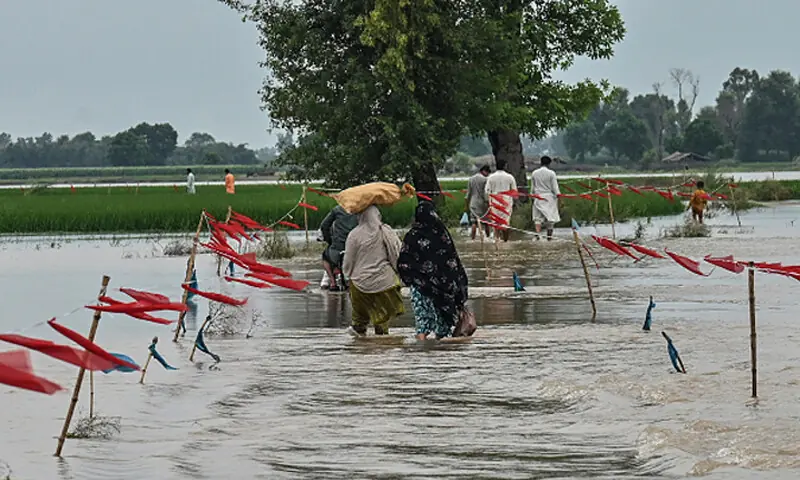
The ongoing neglect of the adaptation agenda, particularly in light of frequent flooding events, raises serious questions about the government's commitment to safeguarding its economy and environment. As Pakistan grapples with these challenges, the need for a comprehensive and inclusive strategy to build climate resilience has never been more critical.
- The staggering $29.3 billion cost of climate disasters in Pakistan underscores the urgent need for the government to prioritize climate resilience in its budget.
- Farmers, who rely on stable weather patterns for their livelihoods, face increasing uncertainty as floods and droughts disrupt agricultural production, threatening food security and economic stability.
- Without strategic investments in climate adaptation, vulnerable communities will continue to suffer, exacerbating poverty and displacement while hindering the nation's overall economic recovery.
- The Pakistani government is expected to announce a revised budget proposal within the next two weeks, which may include increased funding for climate resilience initiatives.
- The Asian Development Bank will hold a meeting next month to discuss potential financial support for Pakistan's recovery efforts and climate adaptation projects.
- The United Nations Climate Change Conference will take place in November, where Pakistan is likely to advocate for international assistance and share its recent disaster impact data.
- Local NGOs are planning a series of community workshops on climate adaptation strategies, starting within the next month, aimed at enhancing local resilience to future disasters.
- The World Bank is set to release a report in the coming quarter assessing the economic impacts of climate disasters in South Asia, which could influence future funding decisions for the region.