
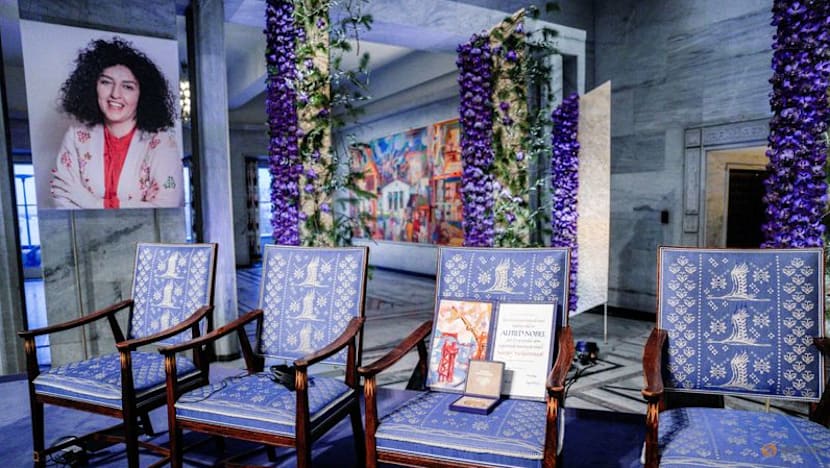
Iran Nobel Laureate Mohammadi Requires Urgent Heart Treatment, Family Warns
Coveragetap to expand ▾Spectrum: Mixed🌍ME: 3 · US: 1 · Other: 1
- She was taken to a hospital in northwestern Iran on May 1 due to deteriorating health (per jpost.com).
- Mohammadi is experiencing severe headaches, nausea, and chest pain (per jpost.com).
- Experts believe her life is in danger and recommend at least one month away from prison conditions for proper treatment (per jpost.com).
Iranian Nobel laureate Mohammadi is in urgent need of heart treatment in Tehran following a suspected heart attack. Her brother, Hamidreza Mohammadi, has raised alarms about her rapidly deteriorating health, citing severe headaches, nausea, and chest pain.
Mohammadi, who won the Nobel Peace Prize in 2023 for her advocacy of women's rights and the abolition of the death penalty in Iran, was taken to a hospital in northwestern Iran on May 1. However, her family insists that the provincial hospital lacks the necessary facilities to provide adequate care.
Hamidreza Mohammadi, speaking from his home in Norway, emphasized the critical nature of his sister's condition. He stated that experts have warned that her life is in danger and that she requires at least a month away from prison conditions to receive appropriate medical treatment.
The family is advocating for her transfer to Tehran, where she can be treated by doctors familiar with her medical history. The situation has drawn attention to the broader issue of healthcare access for political prisoners in Iran.
Mohammadi's case highlights the challenges faced by those incarcerated for their activism, particularly in receiving timely and adequate medical care. Her brother's plea underscores the urgency of the situation and the need for immediate intervention to prevent further health deterioration.
Mohammadi's health crisis comes amid ongoing tensions between Iran and Western nations, with her case potentially serving as a focal point for international human rights advocacy. The Nobel laureate's imprisonment and current health struggles reflect the broader struggle for human rights and reform within Iran.
As Mohammadi's family continues to push for her transfer and proper medical treatment, many governments may increase pressure on Iranian authorities to ensure her well-being. The outcome of this situation could have significant implications for the treatment of political prisoners in Iran and the country's human rights record.
The urgency of Mohammadi's condition and her family's call for action highlight the critical need for healthcare reforms and the protection of activists' rights within the Iranian prison system.
- Mohammadi's deteriorating health underscores the risks faced by political prisoners in Iran, who may not receive adequate medical care, potentially leading to severe health consequences.
- The Iranian government faces increased scrutiny from international human rights organizations, which may pressure authorities to improve conditions for political prisoners.
- Mohammadi's case could galvanize further international advocacy for women's rights and the abolition of the death penalty in Iran, aligning with her Nobel Peace Prize-winning efforts.
- Whether Iranian authorities approve Mohammadi's transfer to Tehran for specialized heart treatment.
- International human rights organizations' response to Mohammadi's health crisis and potential advocacy actions.
- Any official statements from the Iranian government regarding Mohammadi's medical treatment and prison conditions.
Left- and right-leaning outlets are covering this story differently — in which facts to emphasize, which context to include, and how to frame causes and consequences.
1 specific area where coverage diverges — see below.
- No source mentions the broader context of healthcare access for political prisoners in Iran, which is critical to understanding Mohammadi's situation.
- The potential international diplomatic implications of Mohammadi's health crisis are not discussed in the source.