
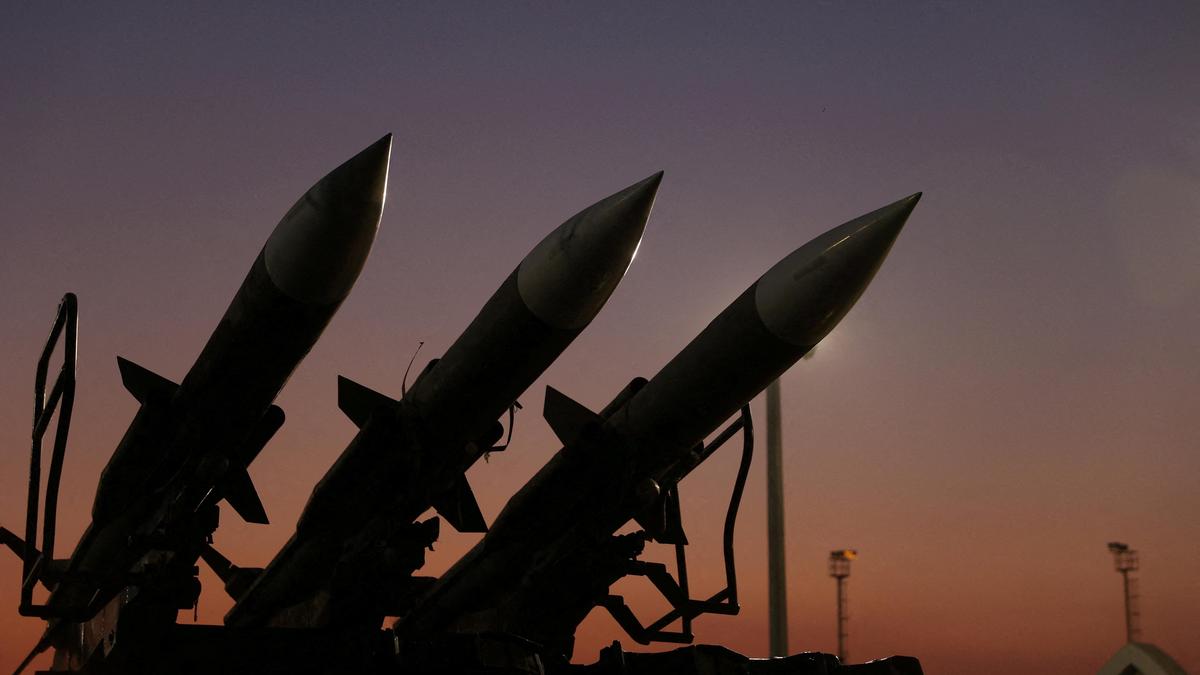
U.S. military says it has ‘defeated’ Iran missile and drone attacks in Gulf
Coveragetap to expand ▾Spectrum: Mostly Center🌍Asia: 4 · Other: 2 · Europe: 1 · ME: 1
- Central Command also denied claims by Iran’s Revolutionary Guards that they had struck the headquarters of the U.S.
- military said on Tuesday (June 2, 2026) that it had “successfully defeated” a series of Iranian missile and drone attacks in the Gulf and conducted self-defence strikes on Iran’s Qeshm Island.
- “Iran launched several ballistic missiles toward regional neighbors; however, all failed to hit their intended targets,” CENTCOM said in a statement.
- “Two Iranian missiles fired at Kuwait fell short or broke apart en route, and three missiles launched at Bahrain were immediately intercepted by US and Bahrain air defense forces.” The U.S.
In a significant protest at Gioia Tauro port, pro-Palestinian activists have launched a campaign aimed at disrupting military supplies linked to the ongoing Gaza conflict. This initiative, named 'Global Intifada Disarm', involved both maritime and land demonstrations, with five boats from the Thousand Madleens to Gaza initiative approaching the port.
Activists reported that 16 containers of dual-use ballistic steel, which can be utilized in missile production, are currently held at the port. They have claimed to have alerted authorities about the presence of this material for months without receiving a response.
Additionally, activists recalled that two shipments of weapons destined for Israel were seized at this port one year ago, highlighting ongoing concerns about military supplies being facilitated through Gioia Tauro. The maritime protests began the day before the main demonstration, indicating a coordinated effort to draw attention to the situation in Gaza.
As tensions continue to rise in the region, these protests reflect the activists' determination to disrupt military logistics they associate with the conflict.
- The U.S. military's successful interception of Iranian missile and drone attacks underscores the ongoing tensions in the Gulf, directly impacting regional allies like Kuwait and Bahrain, who rely on U.S. defense support for their security.
- This incident not only reinforces the U.S. commitment to countering Iranian aggression but also heightens the stakes for civilian populations in these countries, who face increased threats of conflict.
- As military engagements escalate, the humanitarian situation in the region could deteriorate further, complicating efforts to address the ongoing crisis in Gaza and potentially leading to broader instability in the Middle East.
- The U.S. military is expected to increase its naval presence in the Gulf region within the next 72 hours to deter further Iranian missile and drone threats.
- Iran may respond by conducting military exercises in the Strait of Hormuz within the next week to demonstrate its capabilities and assert its regional influence.
- The Gulf Cooperation Council (GCC) is likely to hold an emergency meeting within the next two weeks to discuss collective security measures in light of the recent attacks.
- The Biden administration is anticipated to announce new sanctions against Iranian military officials before the upcoming June summit with Middle Eastern allies.
- Israel may conduct preemptive airstrikes on Iranian missile facilities in Syria within the next month as part of its ongoing campaign to counter Iranian influence in the region.