
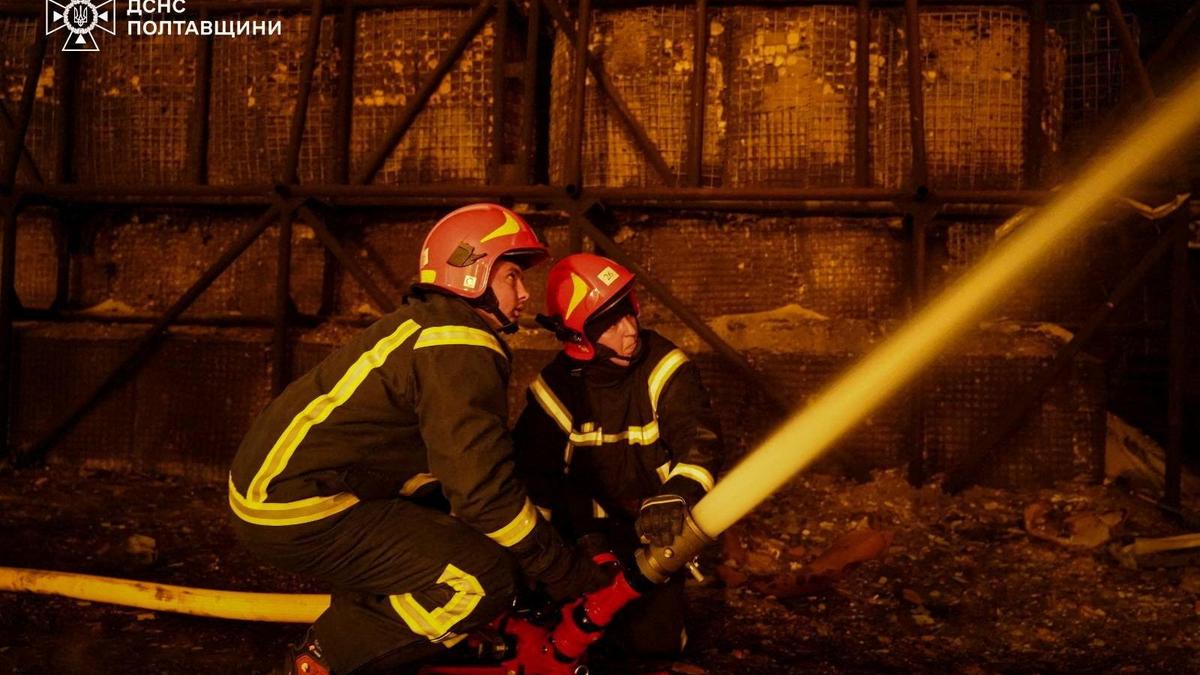
Russian Strikes on Ukraine's Naftogaz Facilities Kill Five, CEO Reports
Coveragetap to expand ▾Spectrum: Mostly Center🌍Other: 3 · ME: 1 · Asia: 1
- Russian airstrikes killed five people at Ukraine's Naftogaz gas facilities in the Poltava and Kharkiv regions (per aljazeera.com).
- Three Naftogaz employees and two rescue workers were among the dead (per aljazeera.com).
- The strikes injured 37 people and caused significant damage to the facilities, impacting gas production (per aljazeera.com).
- The strikes occurred a day after Kyiv and Moscow announced unilateral ceasefires (per aljazeera.com).
In a significant escalation of hostilities, Russian airstrikes on Ukraine's Naftogaz gas facilities have resulted in the deaths of five individuals, including three employees and two rescue workers.
The strikes, which utilized both unmanned aerial vehicles and ballistic missiles, also left 37 people injured and caused substantial damage to the gas production infrastructure in the Poltava and Kharkiv regions.
This attack comes on the heels of a ceasefire announcement by both Kyiv and Moscow, which Ukrainian President Volodymyr Zelenskyy has condemned as a display of 'utter cynicism' by Russian authorities. The overnight barrage not only claimed lives but also disrupted gas supply to approximately 3,500 customers, highlighting the broader impact on Ukraine's energy sector.
Naftogaz CEO Serhiy Koretskyi detailed the extent of the damage and production losses, underscoring the strategic significance of the targeted facilities. The timing of the strikes, following the ceasefire declarations, raises questions about the sincerity of diplomatic efforts to de-escalate the conflict.
The unilateral ceasefires were intended to provide a temporary reprieve from the ongoing violence, yet the continuation of hostilities suggests a complex and volatile situation. Ukraine's energy infrastructure has been a focal point in the conflict, with repeated attacks underscoring the vulnerability of critical national assets.
The latest assault on Naftogaz facilities not only affects immediate gas production but also poses long-term challenges for the country's energy security. As the conflict persists, many governments remains watchful of developments in the region. The recent strikes highlight the precarious nature of ceasefire agreements and the potential for further escalation.
The broader geopolitical implications of these events are significant, as they reflect ongoing tensions between Russia and Ukraine, with energy resources playing a pivotal role in the conflict dynamics. The situation remains fluid, with both sides likely to reassess their strategies in light of recent developments.
- Ukrainian civilians and energy workers bear the immediate costs, with five killed and 37 injured due to the strikes on Naftogaz facilities.
- The disruption of gas supply affects nearly 3,500 customers, highlighting the vulnerability of Ukraine's energy infrastructure.
- Russia benefits from maintaining pressure on Ukraine's critical infrastructure, potentially leveraging energy disruptions as a strategic tool.
- Whether Ukraine retaliates against Russian targets following the Naftogaz strikes.
- The implementation and adherence to the announced ceasefires by both Kyiv and Moscow.
- Potential international diplomatic responses to the breach of ceasefire agreements.
- No source mentions the specific economic interests or strategic objectives behind targeting Ukraine's energy infrastructure.
- The broader geopolitical context of Russia's actions in Ukraine, including historical tensions and previous conflicts, is not detailed.
- Ukrainian President Volodymyr Zelenskyy described the Russian ceasefire announcement as 'utter cynicism' (per aljazeera.com).