
Zelensky’s letter to Putin was a PR stunt – Russia’s UN envoy | Russia-Ukraine conflict
Coveragetap to expand ▾Spectrum: Mostly Center🌍Other: 2 · Europe: 1 · ME: 1
- Ukrainian President Volodymyr Zelensky sent a letter to Russian President Vladimir Putin proposing peace talks on June 9, 2026.
- Russia's UN envoy, Vasily Nebenzya, characterized Zelensky's letter as a public relations stunt during a press briefing on June 10, 2026.
- The Russia-Ukraine conflict has resulted in over 10,000 civilian casualties since its escalation in February 2022.
- The United States has provided Ukraine with over $75 billion in military and humanitarian aid since the conflict began in 2022.
- As of June 2026, Ukraine has been actively conducting a counteroffensive to reclaim territories occupied by Russian forces since 2022.
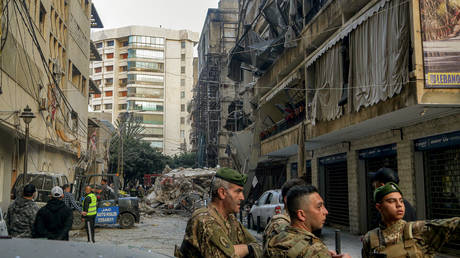
In a significant escalation of military actions, the United States and Israel conducted strikes on Iran and Lebanon, which former CIA analyst Larry Johnson claims were aimed at sabotaging ongoing peace negotiations with Iran.
This military action followed the crash of a US AH-64 Apache attack helicopter off the coast of Oman, an incident that President Donald Trump attributed to Iranian involvement. Johnson argues that the strikes were not merely a reaction to the helicopter crash but were part of a broader strategy influenced by pro-Israel politicians who oppose any deal with Iran.
He specifically mentioned that Trump is under pressure from what he termed the 'Zionist crowd' to take a hardline stance against Tehran. The strikes targeted Qeshm Island and other locations in southern Iran, marking a notable increase in military engagement in the region.
Tehran has yet to confirm any responsibility for the helicopter crash, leaving the situation shrouded in uncertainty. As tensions rise, the potential for diplomatic resolutions appears increasingly fragile, with Johnson asserting that certain factions actively seek to prevent a peaceful agreement.
The implications of these strikes could further complicate an already volatile situation in the Middle East, where military actions often overshadow diplomatic efforts.
- The dismissal of Zelensky's peace proposal by Russia's UN envoy highlights the entrenched animosity and lack of trust between the two nations, making any potential diplomatic resolution increasingly elusive.
- This ongoing stalemate not only prolongs the suffering of over 10,000 civilians who have already lost their lives in the conflict but also complicates humanitarian efforts, as aid access becomes more difficult amid continued hostilities.
- Furthermore, Ukraine's counteroffensive efforts may be hindered by the perception that diplomatic overtures are insincere, potentially leading to a protracted conflict that further destabilizes the region and strains international resources.
- Anticipate a formal response from the Ukrainian government regarding Zelensky's letter to Putin, expected within 48 hours, which may clarify Ukraine's stance on future negotiations.
- Watch for a statement from the Russian Foreign Ministry within the next week that could outline Russia's position on Zelensky's claims and potential diplomatic engagements.
- Keep an eye on NATO's upcoming summit scheduled for next month, where member states are likely to discuss increased military support for Ukraine in light of the ongoing conflict.
- Expect a briefing from the United Nations Security Council within the next two weeks, where discussions on the humanitarian situation in Ukraine may intensify following recent developments.
- Monitor potential sanctions announcements from the European Union in response to Russia's dismissal of Ukraine's diplomatic efforts, which could be revealed before the end of the month.
Left- and right-leaning outlets are covering this story differently — in which facts to emphasize, which context to include, and how to frame causes and consequences.