
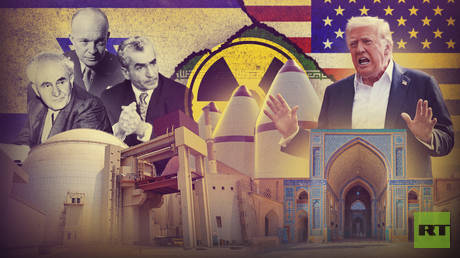
US and Israel's Role in Iran's Nuclear Program: A Historical Reversal
Coveragetap to expand ▾Spectrum: Mostly Center🌍Europe: 1 · ME: 1 · Other: 1
- From research reactors and Western contracts to blockades and threats of war, Iran’s nuclear history is also a history of Western reversal.
- Here’s the story From research reactors and Western contracts to blockades and threats of war, Iran’s nuclear history is also a history of Western reversal.
The United States and Israel were once key supporters of Iran's nuclear program, providing the foundational support for its nuclear program through research reactors and contracts. This cooperation occurred during the reign of the Shah, a period when Western nations viewed Iran as a strategic ally in the Middle East.
However, this relationship has undergone a dramatic reversal over the decades, evolving into a stance of opposition characterized by blockades and threats of military action. Initially, the US and Israel's involvement in Iran's nuclear project was part of a broader strategy to maintain influence in the region.
The Shah's regime was seen as a bulwark against Soviet expansion, and nuclear technology was a symbol of modernity and progress. Western nations, including the US, provided Iran with the necessary technology and expertise to develop its nuclear capabilities.
The geopolitical landscape shifted dramatically following the Iranian Revolution in 1979, which replaced the pro-Western Shah with an Islamic Republic that was hostile to US and Israeli interests. This change in regime marked the beginning of a new era of tension and mistrust.
Western nations, once allies, became adversaries, and Iran's nuclear program was recast as a potential threat to regional stability and security. In response to Iran's continued pursuit of nuclear technology, Western countries have implemented a series of economic sanctions and diplomatic pressures aimed at curbing its nuclear ambitions.
These measures have included blockades and threats of military intervention, reflecting a stark contrast to the initial support Iran received. This reversal in policy highlights the complexities of international relations and the shifting alliances that define global politics.
The case of Iran's nuclear program serves as a reminder of how strategic interests can realign over time, transforming former allies into adversaries. As tensions continue to simmer, the legacy of this historical reversal remains a point of contention in international diplomacy.
The ongoing conflict over Iran's nuclear program underscores the enduring impact of past decisions and the challenges of navigating a rapidly changing geopolitical landscape.
- Iranian civilians bear the concrete costs of economic sanctions and blockades, which have led to economic hardship and restricted access to essential goods.
- The United States and Israel benefit from maintaining strategic influence in the Middle East by opposing Iran's nuclear program, aligning with their broader geopolitical interests.
- Western nations' reversal from support to opposition of Iran's nuclear program reflects broader geopolitical tensions that impact regional security dynamics.
- Whether the United States will pursue further diplomatic measures or military options against Iran's nuclear program.
- Potential shifts in Israel's policy towards Iran in response to ongoing nuclear developments.
- The impact of international sanctions on Iran's economy and its nuclear program's progress.
Left- and right-leaning outlets are covering this story differently — in which facts to emphasize, which context to include, and how to frame causes and consequences.
3 specific areas where coverage diverges — see below.
- rt.com emphasizes the historical reversal of Western support to opposition in Iran's nuclear program.
- The specific motivations behind the initial Western support for Iran's nuclear program are not detailed.
- No source mentions the specific economic impacts of sanctions on Iranian civilians or the broader geopolitical strategies of the US and Israel.