
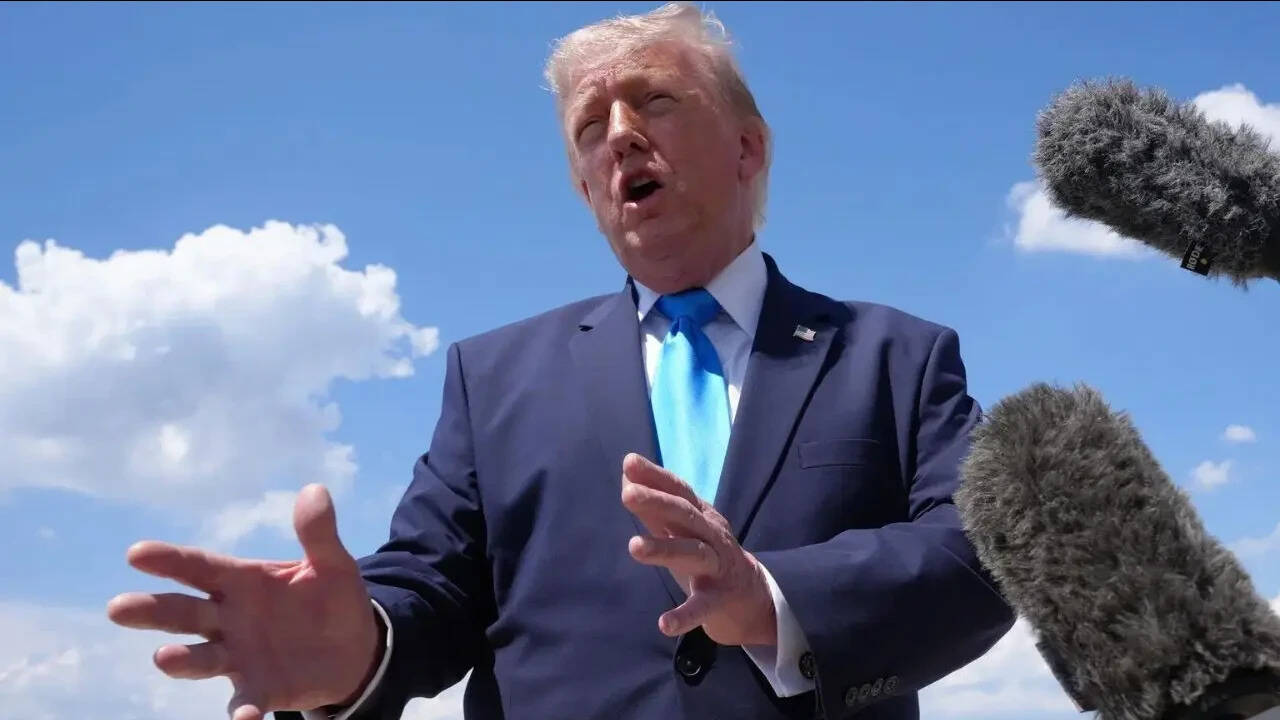
Trump's Claims of an Imminent End to Iran War Face Unmet Objectives
Coveragetap to expand ▾Spectrum: Center Only🌍US: 3 · Asia: 1 · Other: 1
- The military campaign against Iran, initiated by the United States and Israel, began in March 2026.
- The conflict has involved targeted strikes on Iranian military infrastructure, including power plants and air defenses.
- Trump has claimed since March 2026 that the Iran war will conclude imminently, despite ongoing military actions.
- As of October 2023, key objectives set by the Trump administration regarding the Iran conflict remain unmet.
- The escalation of hostilities has been characterized by a series of military actions from both the U.S. and Iran, complicating the situation in the Middle East.
As the conflict in Iran continues, President Donald Trump has reiterated his belief that the war could soon come to an end, despite the lack of progress on key objectives set by his administration. Since the coordinated military strikes by the U.S. and Israel against Iran in early March 2026, the situation has escalated, with Iran responding through its military operations.
While Trump maintains that a resolution is near, many of his stated goals regarding the conflict remain unfulfilled, leading to skepticism among analysts and the public. The U.S. and Israeli officials have been discussing potential diplomatic solutions, but the effectiveness of these discussions is yet to be seen.
Public sentiment is divided, with some Americans supporting continued military action while others advocate for a swift conclusion to the hostilities. The ongoing conflict not only impacts U.S. foreign policy but also raises concerns about regional stability in the Middle East.
As the situation evolves, the administration's ability to achieve its objectives will be closely scrutinized, particularly in light of the significant military actions taken thus far.
- The ongoing conflict with Iran has significant implications for U.S. military strategy and regional security, particularly for American allies like Israel and Saudi Arabia, who are directly affected by the instability.
- As the Trump administration's objectives remain unmet, the failure to achieve a swift resolution could lead to prolonged military engagement, further straining U.S. resources and potentially escalating tensions in the region.
- Additionally, the lack of progress may embolden Iran to continue its aggressive posturing, jeopardizing the safety of civilians caught in the crossfire and complicating humanitarian efforts in the area.
- Watch for a statement from the Pentagon regarding troop levels in the region, expected within the next 48 hours, as they assess the current military strategy in light of Trump's claims.
- Anticipate a briefing from the State Department on diplomatic efforts with Iran, scheduled for later this week, to clarify the U.S. objectives moving forward.
- Look for a response from Iran's government to Trump's assertions, which may come within the next 72 hours, potentially impacting regional stability.
- Expect Congress to hold a hearing on U.S. military engagement in Iran before the upcoming June summit, where lawmakers will discuss the implications of the ongoing conflict.
- Monitor the actions of U.S. allies in the Asia Pacific region, particularly Japan and Australia, as they may announce their defense posture changes in response to developments in the Iran conflict within the next month.