
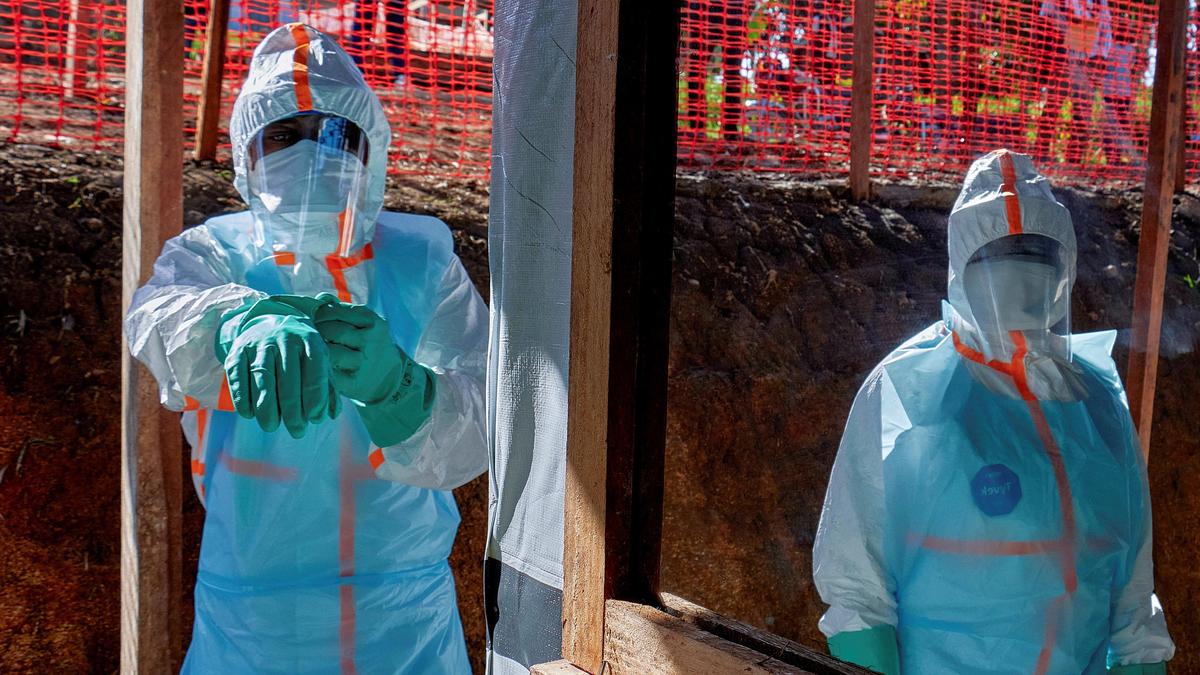
Congo and Uganda report 263 confirmed Ebola cases with 43 deaths, Africa CDC says
Coveragetap to expand ▾Spectrum: Mostly Center🌍Asia: 2 · US: 1 · Other: 1
- Africa Centres for Disease Control and Prevention director general Jean Kaseya said there were 263 confirmed cases in both countries as of Saturday, with 43 confirmed deaths.
- More than 1,100 suspected cases were still being investigated, he wrote in the editorial.
- On Thursday, the Africa CDC said there had been 246 suspected deaths from the virus.
- More than 1,100 suspected cases are being investigated and 43 people are confirmed to have died as a result of the rare Bundibugyo strain of Ebola, Kaseya said in an FT op-ed published on May 31.
- As at May 30, 263 confirmed Ebola cases have been reported in the Democratic Republic of Congo and Uganda, the director-general of the Africa Centres for Disease Control and Prevention, Jean Kaseya said.
- The Ebola outbreak - the 17th in Democratic Republic of Congo and the third-largest since Ebola was discovered half a century ago - is outpacing the global response.
As of May 30, 2026, the Democratic Republic of Congo and Uganda have confirmed 263 cases of Ebola, with 43 deaths reported.
This outbreak, caused by the Bundibugyo strain of the virus, has raised significant alarm among health officials, particularly as the Africa Centres for Disease Control and Prevention (Africa CDC) has indicated that over 1,100 suspected cases are still being investigated.
The outbreak has been described as outpacing the global response, with health officials noting a critical shortage of basic medical supplies, including masks, which are essential for containment efforts.
The World Health Organization has classified the situation as a public health emergency of international concern, underscoring the urgency of the response needed from many governments.
Jean Kaseya, the director general of the Africa CDC, has called for immediate assistance to address the escalating crisis, which is now the 17th Ebola outbreak in the Democratic Republic of Congo and the third-largest since the virus was first identified.
The rapid spread of the virus, which went undetected for weeks, has compounded the challenges faced by health workers and aid organizations in the region. As the situation develops, the need for coordinated international support and resources becomes increasingly critical to prevent further loss of life and to control the outbreak effectively.
- The ongoing Ebola outbreak in the Democratic Republic of Congo and Uganda poses a significant threat to public health, particularly for vulnerable communities already facing challenges such as poverty and limited access to healthcare.
- With 263 confirmed cases and 43 deaths, the outbreak not only strains local health systems but also risks overwhelming regional resources, diverting attention from other pressing health issues.
- As the Bundibugyo strain spreads, fear and stigma may deter individuals from seeking medical help, potentially leading to further transmission and loss of life.
- Immediate and effective responses are crucial to prevent the situation from escalating into a larger humanitarian crisis.
- The World Health Organization (WHO) is expected to release updated guidelines on Ebola containment measures within the next 48 hours, focusing on vaccination strategies and community engagement.
- The African Union will hold an emergency meeting within the next week to discuss coordinated responses among member states to the Ebola outbreak in Congo and Uganda.
- Health ministries in neighboring countries, including Kenya and Tanzania, are likely to announce enhanced surveillance and screening protocols at border crossings within the next 72 hours.
- The Uganda Ministry of Health is set to provide a progress report on their containment efforts and vaccination rollout by the end of this week.
- International aid organizations, such as Médecins Sans Frontières, are preparing to deploy additional medical teams to the affected regions, with announcements expected within the next few days.