
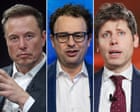
AI CEOs urge pause after White House and House GOP dismiss regulation
Coveragetap to expand ▾Spectrum: Mostly Center🌍US: 1 · Europe: 1
- CEOs Sam Altman, Elon Musk and Dario Amodei publicly urged a slowdown on AI development (per theguardian.com).
- House Speaker Mike Johnson said Congress will not act on AI regulation (per theguardian.com).
CEOs from leading AI firms pressed for a slowdown in AI development while top Republican officials publicly rejected new rules, deepening a policy divide over rapidly advancing systems.
Sam Altman, Elon Musk and Dario Amodei urged restraint as internal and public alarms about AI risks accumulated; President Donald Trump dismissed those warnings and House Speaker Mike Johnson said Congress will not act (per theguardian.com).
Corporate leaders presented their appeal as necessary to manage mounting insider concerns and practical risks; Republican leaders framed regulation as unnecessary and pledged inaction, leaving no clear federal path to govern the technologies (per theguardian.com).
The immediate dispute centers on whether voluntary industry pauses and internal governance can substitute for legislation; theguardian.com reports those insider alarms and real-world risks remain unaddressed if Congress declines to act.
Both sides couch their positions in terms of safety and innovation: CEOs warn of catastrophic or societal harms from unchecked AI, while Trump and Johnson emphasize technological progress and reject regulatory restraints (per theguardian.com).
The standoff increases pressure on industry self-regulation, corporate boards and investors to enforce limits privately, and it raises questions about who will bear responsibility if harmful systems are deployed without statutory oversight (per theguardian.com).
Analysts and critics cited by theguardian.com see a growing disconnect between documented internal warnings and political willingness to legislate, making immediate U.S. federal regulation unlikely unless political calculations shift or new incidents force reconsideration (per theguardian.com).
- Specific workers and consumers face concrete harms: theguardian.com documents 'real-world AI risks' that could cause safety failures or economic disruption for employees in sectors deploying large models.
- CEOs and their companies benefit from regulatory delay because voluntary pauses let firms control development timelines and competitive advantage (per theguardian.com).
- U.S. lawmakers' refusal to act hands oversight responsibility to corporate boards and investors, concentrating accountability inside the companies named by theguardian.com.
- If Congress declines regulation, citizens harmed by AI failures will have fewer statutory remedies and will instead rely on litigation or voluntary industry measures (per theguardian.com).
- Whether House Speaker Mike Johnson or President Donald Trump sponsor or endorse any legislative text addressing AI governance in the current congressional session (per theguardian.com).
- Whether Sam Altman, Elon Musk or Dario Amodei move from public calls for a slowdown to coordinated, binding industry agreements among major AI firms (per theguardian.com).
- Whether corporate boards or major investors impose enforceable development limits on AI projects within the next six months (per theguardian.com).
Left- and right-leaning outlets are covering this story differently — in which facts to emphasize, which context to include, and how to frame causes and consequences.
7 specific areas where coverage diverges — see below.
- theguardian.com frames Republican leadership as dismissing industry warnings while CEOs urge a slowdown; no right-leaning source is present to offer an alternate framing in this pack (per theguardian.com).
- No source in this pack disputes who said what; only theguardian.com is present, so cross-source disputes are not documented (per theguardian.com).
- No source mentions specific legislative texts, bills, or votes that would be needed to regulate AI.
- No source provides quantified estimates of potential harms, incident timelines, or documented past AI accidents that triggered the CEOs' warnings.
- No source cites which corporate governance mechanisms or investor agreements might enforce a slowdown.
- No source names specific companies' financial incentives, executive compensation tied to AI outputs, or lobbying expenditures related to AI policy.
- No differing numerical figures appear across sources in this pack; only theguardian.com provides qualitative descriptions (per theguardian.com).
- theguardian.com presents CEOs' calls for a slowdown as responses to mounting insider alarms and risks; it also states Trump and Johnson dismissed warnings, creating policy inaction — there is no conflicting causal account in this pack (per theguardian.com).
- theguardian.com attributes the CEOs' calls for slowdown to Sam Altman, Elon Musk and Dario Amodei and attributes the refusal to regulate to President Donald Trump and House Speaker Mike Johnson (per theguardian.com).