
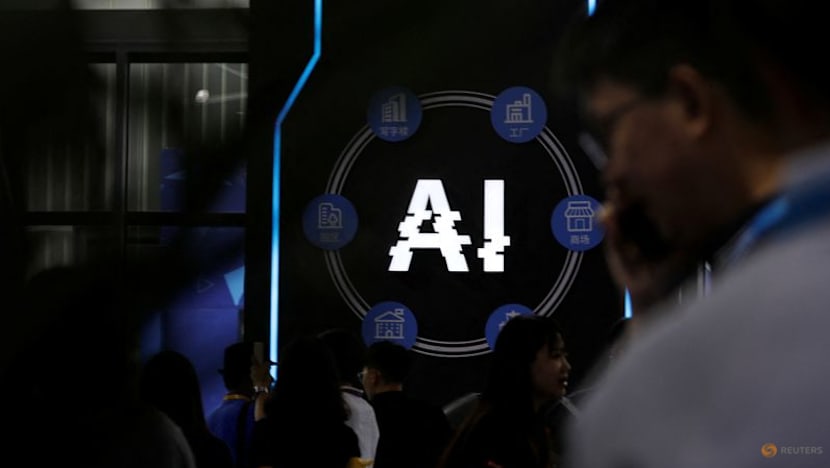
Singapore minister urges aviation-style safety rules for AI to build public trust
Topic: technologyRegion: AsiaUpdated: i2 outletsSources: 2Spectrum: Mixed⏱ 2 min read
Story Summary
SITUATION
Josephine Teo said AI may need aviation-style safety regulations to gain public trust, advocating stronger, structured oversight. The comment frames regulation as a pathway to confidence in AI deployment rather than a call for outright bans (per news.google.com).
Coveragetap to expand ▾Spectrum: Mixed🌍Asia: 2
Political Spectrum
Position is inferred from coverage mix.
i2 outlets · Center
Left
Center
Right
Left: 1
Center: 1
Right: 0
Geography Coverage
Distribution of where coverage is coming from.
i2 unique outlets · Dominant: Asia
KEY FACTS
- Josephine Teo said AI may need aviation-style safety regulations to gain public trust (per news.google.com)
- The reporting emphasizes trust-building as the principal aim of the proposed safety approach (per news.google.com)
HISTORICAL CONTEXT
The immediate backdrop is the active March 2026 conflict in which the United States and Israel coordinated strikes against Iranian power plants, air-defence sites and military infrastructure, and subsequent Iranian military actions have been framed by all sides as responses to that campaign.
Those operations unfolded amid a web of sanctions and nonproliferation frameworks: the 2015 Joint Comprehensive Plan of Action (JCPOA), the Trump administration’s unilateral U.S. withdrawal from the JCPOA in May 2018 and the reimposition of broad U.S. sanctions, and successive U.N. and unilateral measures imposed on Iran through the 2010s.
Brief
Singapore’s Patricia Josephine Teo argued that artificial intelligence will need safety systems modeled on aviation regulation to win public trust, pressing for formal, rigorous oversight rather than ad hoc limits.
Teo presented the aviation analogy to emphasize layered certification, clear operational rules and accountability mechanisms that, she said, could make AI deployment more transparent and reliable (per news.google.com). Her position places regulatory design — not prohibition — at the center of contemporary debates about how governments should handle rapid AI adoption.
Advocates for tighter controls welcome the comparison because aviation-style systems combine technical standards, independent audits and staged approvals; critics worry that transplanting a sector-specific regime could either under-regulate novel AI risks or entrench incumbents who can comply with costly certification (per news.google.com).
Teo’s remarks arrive amid broader global conversations about AI safety, where some governments call for binding rules and others prefer principles-based approaches; the report frames her stance as joining the cohort that favors prescriptive, operational safeguards (per news.google.com).
She did not, in the reported text, lay out specific timelines, draft rules or enforcement bodies, leaving concrete next steps unspecified in the source (per news.google.com).
The practical upshot of Teo’s argument is that regulators should plan for iterative certification, testing and oversight processes modeled on high-assurance industries if they want citizens and businesses to accept AI systems at scale (per news.google.com).
Why it matters
- Singapore citizens bear concrete costs if AI systems misbehave: without aviation-style certification, Teo warns, users may withhold trust and reject services that could improve public services or safety (per news.google.com).
- Technology companies stand to benefit from a certification regime because firms that can meet rigorous standards gain market access and credibility under the model Teo proposed (per news.google.com).
- Regulators would shoulder administrative and enforcement costs to build the layered oversight Teo describes, requiring new testing, audits and potentially specialized bodies to certify AI systems (per news.google.com).
What to watch next
- Whether Josephine Teo or Singapore ministries publish a roadmap or consultation paper on aviation-style AI certification within the next six months (per news.google.com).
- Whether Singapore proposes model regulatory language or participates in international standards talks endorsing sectoral certification at upcoming multilateral AI forums (per news.google.com).
- Whether industry groups in Singapore respond with pilot certification programs or public comments endorsing or challenging the aviation analogy (per news.google.com).
Where sources differ
7 dimensionsFraming differences
?- Only one outlet is in this pack; it frames Teo’s remarks as advocating regulatory frameworks modeled on aviation safety rather than bans (per news.google.com).
Disputed or unclear
?- No source in this pack disputes Teo’s claim or provides alternative expert views on whether aviation rules fit AI — the fit remains unexamined in the available reporting (per news.google.com).
Omitted context
?- No source mentions specific draft rules, enforcement bodies, or timelines that would clarify how aviation-style certification would be implemented.
- No source quantifies the potential costs to regulators or industry of adopting aviation-style oversight.
- No source cites comparative evidence from other jurisdictions that have tried sectoral certification for AI or related technologies.
- No source assesses which classes of AI systems (e.g., foundation models, safety-critical systems) Teo meant to include under the proposed regime.
Conflicting figures
?- No differing numerical figures appear in the source pack; the outlet gives no numeric metrics tied to Teo’s proposal.
Disputed causality
?- The source presents Teo’s statement as a policy recommendation rather than as a response to a single triggering event; no prior trigger or causal chain is named in the available text (per news.google.com).
Attribution disputes
?- The single outlet attributes the aviation-style regulation proposal to Josephine Teo (per news.google.com).
Sources
2 of 2 linked articles