
Airlines Cut Flights Amid Jet Fuel Price Surge Due to US
Coveragetap to expand ▾Spectrum: Mostly Center🌍Europe: 2 · Other: 1
- Turkish Airlines and Air China have reduced their flight schedules in response to rising jet fuel prices (per rt.com).
- The increase in jet fuel prices is attributed to the US-Israeli war on Iran and the blockade of the Strait of Hormuz (per rt.com).
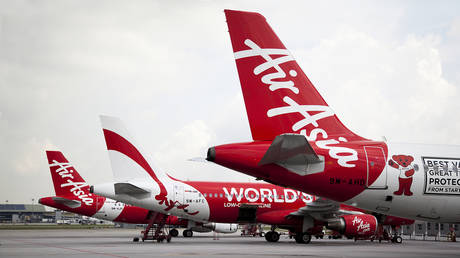
- AirAsia CEO Tony Fernandes stated that the current crisis is more challenging for airlines than the Covid-19 pandemic (per rt.com).
- Aviation analytics company Cirium reported that carriers have cut 13,000 flights from May schedules worldwide (per rt.com).
- Germany’s Lufthansa has announced the cancellation of 20,000 short-haul flights through October (per rt.com).
- Scandinavian Airlines has recently canceled around 1,000 flights (per rt.com).
- Spirit Airlines, a US-based low-cost carrier, has shut down due to the sustained rise in fuel prices (per rt.com).
Turkish Airlines and Air China are among the numerous carriers that have reduced their flight schedules in response to the soaring jet fuel prices. This surge in fuel costs is a direct consequence of the ongoing US-Israeli conflict with Iran and the blockade of the Strait of Hormuz, a critical chokepoint for global oil shipments.
The aviation industry is facing a crisis that AirAsia CEO Tony Fernandes describes as more severe than the challenges posed by the Covid-19 pandemic. Fernandes highlighted the unprecedented nature of the situation, noting that jet fuel prices have nearly tripled, creating a significant financial burden for airlines worldwide.
The impact of these rising costs is evident in the widespread cancellation of flights. According to aviation analytics company Cirium, airlines have cut 13,000 flights from their May schedules globally.
Major carriers like Germany's Lufthansa have announced the cancellation of 20,000 short-haul flights through October, while Scandinavian Airlines has recently axed around 1,000 flights. In the United States, Spirit Airlines, a low-cost carrier, has ceased operations entirely, citing the unsustainable rise in fuel prices as the primary reason.
The blockade of the Strait of Hormuz, a strategic waterway through which a significant portion of the world's oil supply is transported, has exacerbated the situation. The blockade is part of the broader conflict involving the US and Israel against Iran, which has disrupted oil supplies and driven up prices.
This geopolitical tension has had a ripple effect on the global economy, with the airline industry being one of the hardest-hit sectors. Airlines are now grappling with the dual challenge of managing operational costs while maintaining service levels.
The reduction in flight schedules is a necessary measure to mitigate financial losses, but it also impacts passengers who face reduced travel options and potentially higher ticket prices. The situation underscores the vulnerability of the airline industry to geopolitical events and the critical importance of stable fuel prices for its sustainability.
As the conflict continues, airlines are likely to face ongoing challenges in adjusting their operations to cope with fluctuating fuel costs. The industry is calling for a resolution to the geopolitical tensions that have led to the current crisis, emphasizing the need for stability in global oil markets to ensure the viability of air travel.
- Airline passengers face reduced travel options and potentially higher ticket prices due to flight cancellations by carriers like Turkish Airlines and Air China.
- The airline industry, already strained by the Covid-19 pandemic, is now dealing with a more severe financial crisis caused by rising jet fuel prices.
- The US-Israeli conflict with Iran and the blockade of the Strait of Hormuz have disrupted global oil supplies, directly impacting fuel costs for airlines.
- Airlines are forced to cut flights and, in some cases, cease operations, as seen with Spirit Airlines, due to unsustainable fuel price increases.
- Whether the US-Israeli conflict with Iran de-escalates, potentially stabilizing fuel prices.
- The impact of continued flight cancellations on passenger travel plans and airline revenues.
- Any policy changes or interventions by governments to address the rising fuel costs affecting airlines.
Left- and right-leaning outlets are covering this story differently — in which facts to emphasize, which context to include, and how to frame causes and consequences.
7 specific areas where coverage diverges — see below.
- rt.com emphasizes the severity of the crisis compared to Covid-19, quoting AirAsia CEO Tony Fernandes.
- No source disputes the impact of rising fuel prices on airlines, but the extent of the crisis compared to Covid-19 is subjective.
- No source mentions the specific actions by the US and Israel that led to the blockade of the Strait of Hormuz.
- rt.com reports 13,000 flights cut from May schedules globally, but no other source provides a different figure.
- rt.com attributes the rise in fuel prices directly to the US-Israeli conflict with Iran and the blockade of the Strait of Hormuz.
- rt.com attributes the statement about the crisis being worse than Covid-19 to AirAsia CEO Tony Fernandes.