
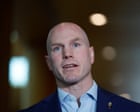
Pocock warns Albanese plan would give AI firms default access to Australian creators’ works
Coveragetap to expand ▾Spectrum: Mixed🌍Europe: 1 · Asia: 1
- Independent senator David Pocock said the Albanese government is proposing to give AI companies default access to Australian creatives’ works (per theguardian.com).
- Pocock said such a proposal would throw protections for creatives and copyright holders “under the bus” (per theguardian.com).
Independent senator David Pocock warned that the Albanese government is considering a policy that would effectively grant AI companies default rights to use Australian creatives’ work, a change he says would undermine existing protections for creators.
Pocock framed the proposal as a trade-off driven by Canberra’s effort to secure datacentre investment from large US tech firms after OpenAI executives told Labor ministers that Australia’s copyright rules were blocking their ability to train models locally.
The government, according to the reporting, is negotiating a compromise with American technology companies aimed at attracting that investment; Pocock presented the compromise as prioritising corporate access over artists’ rights.
OpenAI senior personnel explicitly raised the limits imposed by Australian copyright law in meetings with ministers, arguing those limits made local model training impractical (per theguardian.com).
Pocock’s criticism centers on the effect a default-access regime would have on copyright holders and creatives, whom he says would be left without meaningful protections if legislation or regulatory settings remove the need for licences or negotiated terms (per theguardian.com).
The reporting does not include a government spokesperson quote or a detailed legislative text; it frames the issue as an ongoing policy negotiation between Labor ministers and US tech firms focused on the economic prize of datacentre investment.
Observers and creators will now watch whether Labor proceeds with measures that alter creators’ bargaining position in exchange for perceived infrastructure and investment gains, but the source documents only Pocock’s warning and the meetings with OpenAI executives, not a finalized policy or enacted law (per theguardian.com).
- Australian creatives could lose negotiated control and compensation mechanisms if default access becomes law, shifting copyright enforcement risks onto individual creators (per theguardian.com).
- The Albanese government stands to gain datacentre investment from US tech companies if it relaxes copyright constraints, benefiting technology firms seeking local training capacity (per theguardian.com).
- OpenAI’s cited barrier—Australia’s current copyright rules—directly links corporate investment decisions to domestic copyright policy, making creators’ livelihoods contingent on government negotiation outcomes (per theguardian.com).
- Whether Labor ministers formalise a legislative or regulatory change granting default AI access to creators’ works in upcoming policy proposals or bills (per theguardian.com).
- Whether further meetings occur between OpenAI executives and Australian government officials to negotiate terms for local model training and datacentre investment (per theguardian.com).
- Whether Independent senator David Pocock introduces or supports amendments to preserve creators’ protections if the government advances a compromise with US tech firms (per theguardian.com).
Left- and right-leaning outlets are covering this story differently — in which facts to emphasize, which context to include, and how to frame causes and consequences.
7 specific areas where coverage diverges — see below.
- Only theguardian.com is in this pack; it frames the story around Pocock’s warning that protections would be sacrificed in pursuit of datacentre investment.
- No source in this pack provides a government response or a draft text; it is unclear whether the proposal is formal policy, draft legislation, or an exploratory compromise.
- No source mentions the specific legal mechanism that would grant default access (statutory licence, regulation, or administrative guidance).
- No source provides evidence on how creators would be compensated or what exceptions/limits would apply under the proposed access.
- No source names specific datacentre investments, companies beyond OpenAI, or the scale and timelines of the proposed investments.
- No numerical figures are provided by the source for compensation, investment size, or counts of affected creatives.
- Theguardian.com reports OpenAI told ministers copyright rules prevented local training → government pursued a compromise to attract datacentre investment; the exact causal chain and any formal government decision remain unverified.
- David Pocock attributes the proposal to the Albanese government’s actions; OpenAI personnel reportedly attributed the obstacle to Australia’s copyright laws.