
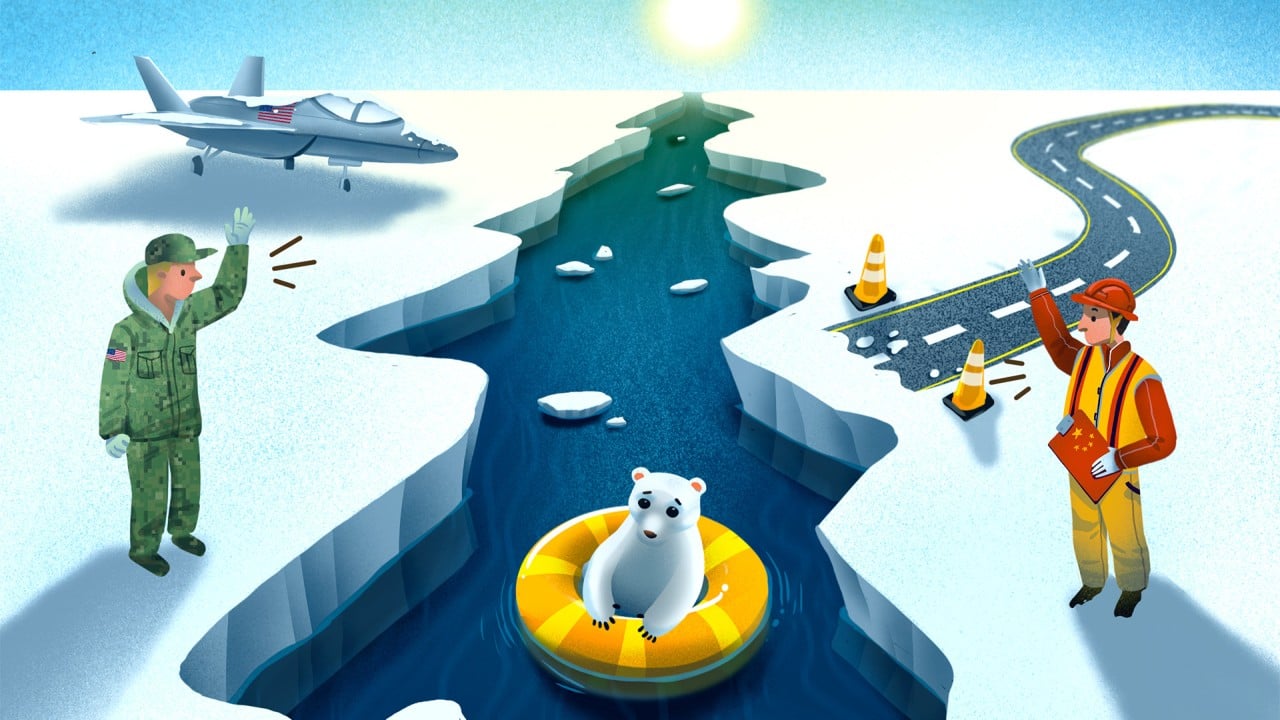
Arctic Warming: US-China Rivalry or Opportunity for Cooperation?
Coveragetap to expand ▾Spectrum: Left Only🌍Asia: 1
- Arctic warming is accelerating, leading to record or near-record lows in sea ice (per scmp.com).
- The melting ice is making the Arctic more accessible for shipping and resource extraction (per scmp.com).
- This increased accessibility is fueling great power rivalry between the United States and China (per scmp.com).
- Analysts believe that despite the rivalry, functional cooperation between the US and China may be necessary (per scmp.com).
- The Arctic was once described by former Soviet leader Mikhail Gorbachev as a 'zone of peace' (per scmp.com).
- There are concerns that the Arctic could become a new frontier for strategic rivalry between Washington and Beijing (per scmp.com).
The accelerating warming of the Arctic is transforming the region into a new arena for strategic competition between the United States and China. As sea ice continues to decline to record or near-record lows, the Arctic is becoming increasingly accessible for shipping routes and resource extraction.
This development is intensifying the rivalry between the two global powers, each seeking to expand their influence and secure economic advantages in the region. The melting ice opens up new sea lanes that could significantly reduce shipping times and costs, making the Arctic an attractive prospect for international trade.
Additionally, the region's untapped natural resources, including oil and gas reserves, present lucrative opportunities for extraction. However, this accessibility also brings challenges, as both the US and China vie for control and influence over these strategic assets.
Despite the heightened competition, analysts suggest that functional cooperation between the US and China may become increasingly important. The complexities of operating in the harsh Arctic environment, coupled with the need for sustainable management of its resources, could necessitate collaboration between the rival powers.
Such cooperation might involve joint efforts in scientific research, environmental protection, and the development of infrastructure to support safe navigation and resource extraction. Historically, the Arctic has been viewed as a 'zone of peace,' a term coined by former Soviet leader Mikhail Gorbachev.
However, the current geopolitical climate raises concerns that the region could become a new frontier for strategic rivalry. The US and China must navigate their competing interests carefully to avoid escalating tensions that could destabilize the region.
The potential for cooperation in the Arctic highlights the broader dynamics of US-China relations, where competition and collaboration coexist. As both nations recognize the strategic importance of the Arctic, their actions in the region will likely reflect their broader geopolitical strategies.
The outcome of this interaction could set a precedent for how the two powers manage their rivalry in other parts of the world. Ultimately, the warming Arctic presents both challenges and opportunities for the US and China.
The way they choose to engage with each other in this region could have significant implications for global trade, environmental sustainability, and international relations.
- The melting Arctic ice affects shipping routes, potentially reducing costs and times for global trade, impacting economies reliant on maritime commerce.
- The competition for Arctic resources could lead to geopolitical tensions, affecting regional stability and international relations.
- The US and China, as major global powers, have the opportunity to set a precedent for cooperation in managing shared global challenges like climate change.
- Whether the US and China engage in formal agreements for Arctic cooperation in the coming months.
- Developments in Arctic shipping infrastructure and resource extraction projects initiated by either nation.
- Any diplomatic engagements or conflicts arising from Arctic territorial claims or resource disputes.
- No source mentions the specific environmental impacts of increased shipping and resource extraction in the Arctic.
- The economic interests of specific companies or trade groups involved in Arctic resource extraction are not named.