
China's Naval Passage Near Japan Raises Security Concerns
Coveragetap to expand ▾Spectrum: Left Only🌍Asia: 1
- Three People's Liberation Army Navy (PLAN) warships were spotted transiting the Tsushima Strait en route to the East China Sea (per scmp.com).
- The Tsushima Strait is a strategic waterway between Japan and South Korea, often used by military vessels (per scmp.com).
- China's naval activities in the region are perceived as a demonstration of maritime strength (per scmp.com).
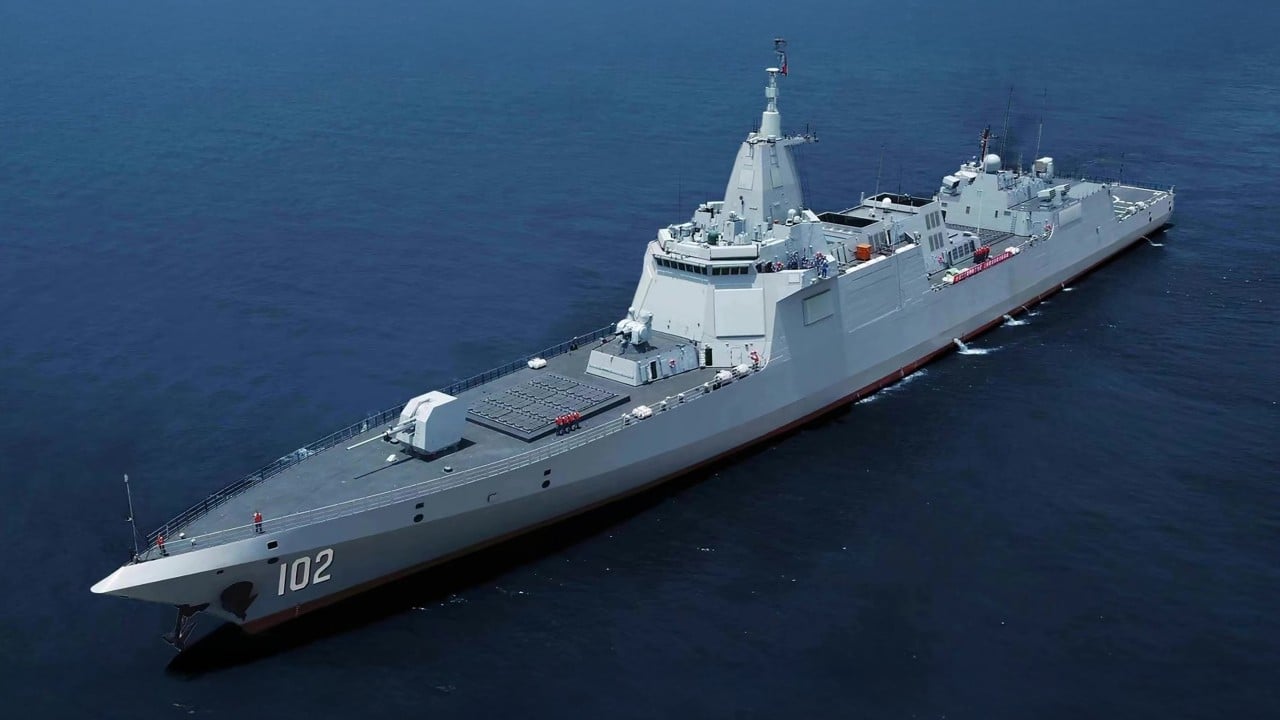
Three Chinese warships recently transited the Tsushima Strait, a strategic waterway between Japan and South Korea, en route to the East China Sea. This movement has prompted Japan to heighten its surveillance efforts, reflecting growing concerns over regional security dynamics.
The vessels, identified as two Type 055 guided-missile destroyers and one Type 052D destroyer, were closely monitored by Japan's Ministry of Defence and Self-Defence Forces. The Japanese force's JS Ootaka was actively involved in alert surveillance and intelligence gathering during the transit.
This naval maneuver by China is seen as part of a broader pattern of military posturing in East Asia, where tensions have been escalating due to various geopolitical disputes. The Tsushima Strait is a critical maritime passage frequently used by military vessels, underscoring its strategic importance.
China's actions are perceived as a demonstration of its maritime capabilities, further complicating the security landscape in the region. As Japan continues to track such movements, many governments remains watchful of potential implications for regional stability.
- Japan bears the concrete costs of increased surveillance and military readiness, potentially straining its defense resources.
- China benefits from demonstrating its naval capabilities, reinforcing its strategic presence in East Asia.
- The security dynamics in the Tsushima Strait affect regional trade routes and military alliances, impacting economic and defense strategies.
- Whether Japan increases its naval presence in response to further Chinese maneuvers.
- Potential diplomatic engagements between Japan and China addressing maritime security concerns.
- Any changes in military alliances or defense strategies among East Asian nations in response to China's actions.
- scmp.com emphasizes the strategic nature of the Tsushima Strait, while other outlets may focus on the broader geopolitical implications.
- The specific intentions behind China's naval maneuvers remain unverified.
- No source mentions the historical context of Japan-China maritime disputes or the role of the United States in regional security dynamics.