
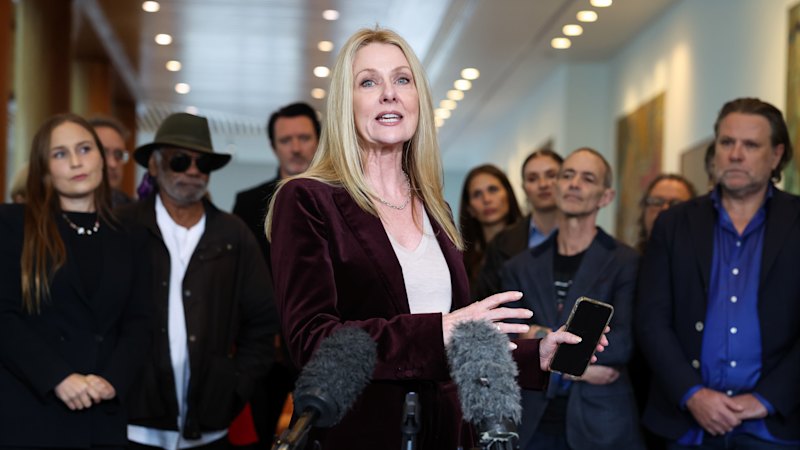
Artists warn Australian opt-out AI deal would let firms scrape and take creators' work
Coveragetap to expand ▾Spectrum: Center Only🌍Asia: 1
- The Australian government is considering allowing AI companies broad access to Australian content under an opt-out model (per smh.com.au).
- Artists warned the proposed opt-out model would enable copyright 'theft' and allow firms to scrape creators' work (per smh.com.au).
- Crossbench lawmakers urged the government to resist tech firms' push for the opt-out arrangement (per smh.com.au).
- The Coalition urged the government to reach a deal by the end of the year, citing data centre investment and national security concerns (per smh.com.au).
The Australian government is weighing an opt-out approach that would give AI companies broad access to Australian content, a proposal that artists say would amount to widespread scraping and copyright 'theft' (per smh.com.au).
Creators and their advocates told the government the model effectively hands their work to firms unless individual artists take the initiative to remove their material from training sets, a burden they say shifts rights protection onto creators rather than platforms or policymakers (per smh.com.au). Parliamentary voices split on the plan.
Crossbench lawmakers urged the government to resist pressure from technology companies and protect creators' rights, arguing an opt-out structure undermines copyright safeguards (per smh.com.au).
The Coalition, by contrast, pushed for agreeing terms by the end of the year, framing a deal as necessary to secure data‑centre investment and address national security concerns tied to large cloud and AI infrastructure (per smh.com.au).
The dispute centers on who bears the cost and administrative burden: artists say the opt-out system externalises enforcement costs and would allow firms to build commercial models on scraped Australian cultural and creative work, while proponents argue faster industry access supports investment and critical infrastructure (per smh.com.au).
The government has not published full legislative text in the quoted article, and specific technical safeguards or compensation mechanisms for creators were not described (per smh.com.au).
What happens next will hinge on whether the government accepts the Coalition's accelerated timetable or heeds crossbench calls for stronger protections; the smh.com.au account shows immediate political pressure but does not document a final decision or legal text (per smh.com.au).
The reporting highlights a common policy fault line: balancing creators' copyright protections against incentives for AI and data‑centre investment, with artists warning that an opt-out approach would leave Australian cultural output vulnerable to extraction by AI firms (per smh.com.au).
- - Australian creators bear direct costs: individual artists would need to opt out to prevent AI firms from scraping and using their work, shifting enforcement and administrative burden onto those creators (per smh.com.au). - The mechanism of harm is content scraping under an opt-out model that artists say permits firms to build AI products from Australian cultural content without active licensing or compensation (per smh.com.au). - Coalition-aligned policy aims to benefit AI companies and data‑centre investors by accelerating access to local content, potentially increasing commercial value for those firms (per smh.com.au). - Crossbench resistance signals a concrete political obstacle that could block or reshape any deal if the government does not strengthen creator protections (per smh.com.au).
Whether the Australian government adopts the Coalition's timetable to strike an opt-out deal by the end of the year (per smh.com.au). 2) Whether crossbench lawmakers force changes to convert an opt-out model into an opt-in or add statutory compensation and safeguards for creators (per smh.com.au). 3) Any publication of draft legislative text or regulation specifying technical safeguards, compensation, or enforcement mechanisms for creators (per smh.com.au).
- smh.com.au frames the opt-out proposal chiefly as a threat to artists, warning it would enable copyright 'theft' and large‑scale scraping of creators' work (per smh.com.au).
- No source text in this pack disputes the core claims, but the government's exact legal language, safeguards, and compensation mechanisms are not described in the provided article (per smh.com.au).
- No source article here mentions the specific draft legislative text or the precise legal mechanisms that would implement an opt-out model for AI training data (per smh.com.au).
- No source in this pack provides quantified estimates of how many Australian creators or which categories of works would be affected (per smh.com.au).
- No article here cites any existing licensing offers from AI firms or documented compensation proposals for creators (per smh.com.au).
- No source mentions relevant international precedents, court rulings, or intellectual property enforcement processes that would shape outcomes (per smh.com.au).
- Sources in this pack did not provide differing numerical figures for the same quantity (per smh.com.au).
- The article frames the proposed opt-out policy as the trigger for artists' warnings but does not document prior government announcements or negotiations that led to the proposal (per smh.com.au).
- smh.com.au attributes warnings about copyright 'theft' and scraping directly to artists and reports the Coalition's rationale for fast agreement (per smh.com.au).