
AG Blanche defends Trump’s right to criticize Supreme Court after mail‑in ballot ruling
Coveragetap to expand ▾Spectrum: Mostly Center🌍US: 1 · Other: 1
- The Supreme Court rejected the administration’s effort to restrict mail‑in ballots (per Washington Examiner).
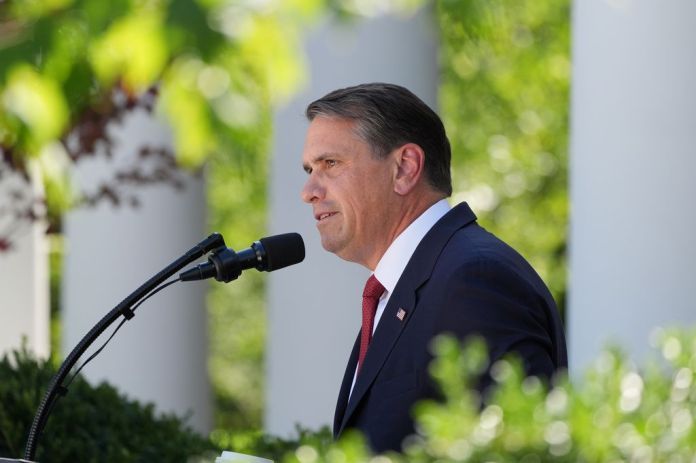
- Attorney General Todd Blanche said at a Rose Garden briefing that the president “has every right” to communicate concerns about the Court (per Washington Examiner).
- Blanche pushed back when asked how he would advise a client regarding criticizing the Court (per Washington Examiner).
- Blanche’s remarks occurred at a Rose Garden briefing reported on September 15, 2026 (per Washington Examiner).
The Supreme Court’s rejection of the administration’s bid to curtail mail‑in voting prompted President Donald Trump to publicly criticize Justices Neil Gorsuch, Amy Coney Barrett and Brett Kavanaugh, and Attorney General Todd Blanche moved quickly to defend the president’s freedom to voice those criticisms.
Blanche told reporters at a Rose Garden briefing that the president “has every right” to communicate his concerns and he pushed back when a reporter asked how he would advise a client facing similar questions (per Washington Examiner).
The exchange centers on the durable tension between presidential speech about the judiciary and longstanding norms meant to safeguard judicial independence; Blanche framed the dispute as a matter of presidential prerogative, while the underlying ruling instead focused on voting‑process limits.
The Washington Examiner account documents Blanche’s direct defense but does not provide statements from the Justices named or from other legal ethics experts weighing in, leaving unanswered how the Court or outside legal authorities will respond to a sitting president’s public critique.
Why now: the moment follows a concrete high‑profile judicial decision about mail‑in ballots that touches on election administration, and the administration’s public reaction and the attorney general’s defense foreground political and legal debate over the boundaries of presidential comment about pending court decisions.
Confirmed here are the Court’s decision to reject the ballot restriction, Trump’s naming of three Justices, and Blanche’s Rose Garden remarks defending the president’s right to speak; claims about legal impropriety or ethics consequences were not documented in this source.
With the administration and its attorney general asserting broad latitude to criticize judges, the dispute is likely to sharpen partisan debate about norms governing presidential remarks about the judiciary (per Washington Examiner).
- - Voters who use mail‑in ballots face direct consequences: the contested rule sought to restrict mail‑in voting and the Supreme Court’s rejection preserved existing ballot access (per Washington Examiner). - Attorney General Todd Blanche’s public defense of President Donald Trump normalizes presidential critique of specific justices, benefiting the president politically by shielding public attacks from internal administration pushback (per Washington Examiner). - The lack of documented response from the named justices or legal‑ethics authorities leaves court integrity norms unaddressed, imposing reputational costs on the judicial branch that could affect public trust among court observers and litigants (per Washington Examiner).
Whether the Supreme Court or any of the named justices (Neil Gorsuch, Amy Coney Barrett, Brett Kavanaugh) issue a public response to President Donald Trump’s criticism by the end of the current term. 2) Whether Attorney General Todd Blanche or the Department of Justice issues formal guidance or memos clarifying how administration officials should discuss ongoing or recent judicial decisions. 3) Whether any legal‑ethics bodies or bar associations publicly assess or censure a sitting official’s public criticism of individual justices within 60 days.
Left- and right-leaning outlets are covering this story differently — in which facts to emphasize, which context to include, and how to frame causes and consequences.
7 specific areas where coverage diverges — see below.
- Only the Washington Examiner is in this package; it frames Blanche’s comments as a defense of presidential speech and notes Trump criticized Justices Neil Gorsuch, Amy Coney Barrett and Brett Kavanaugh (per Washington Examiner).
- No source disputes the sequence of the Court ruling followed by Trump’s criticism and Blanche’s defense; there are no competing accounts in this pack (per Washington Examiner).
- No source in this pack quotes the three named justices or provides any response from the Supreme Court, which is critical for assessing institutional impact.
- No source here cites legal‑ethics experts or bar associations on whether a sitting president’s criticism of specific justices violates professional norms.
- No source mentions potential internal DOJ guidance or precedent governing how attorneys general advise presidents about public comments on the judiciary.
- No competing numerical figures were provided in this source set.
- This pack shows the sequence: the Court rejected the administration’s bid to restrict mail‑in ballots → President Donald Trump criticized three justices → Attorney General Todd Blanche defended the president (per Washington Examiner).
- Washington Examiner attributes the quoted defense directly to Attorney General Todd Blanche and the criticism directly to President Donald Trump (per Washington Examiner).