
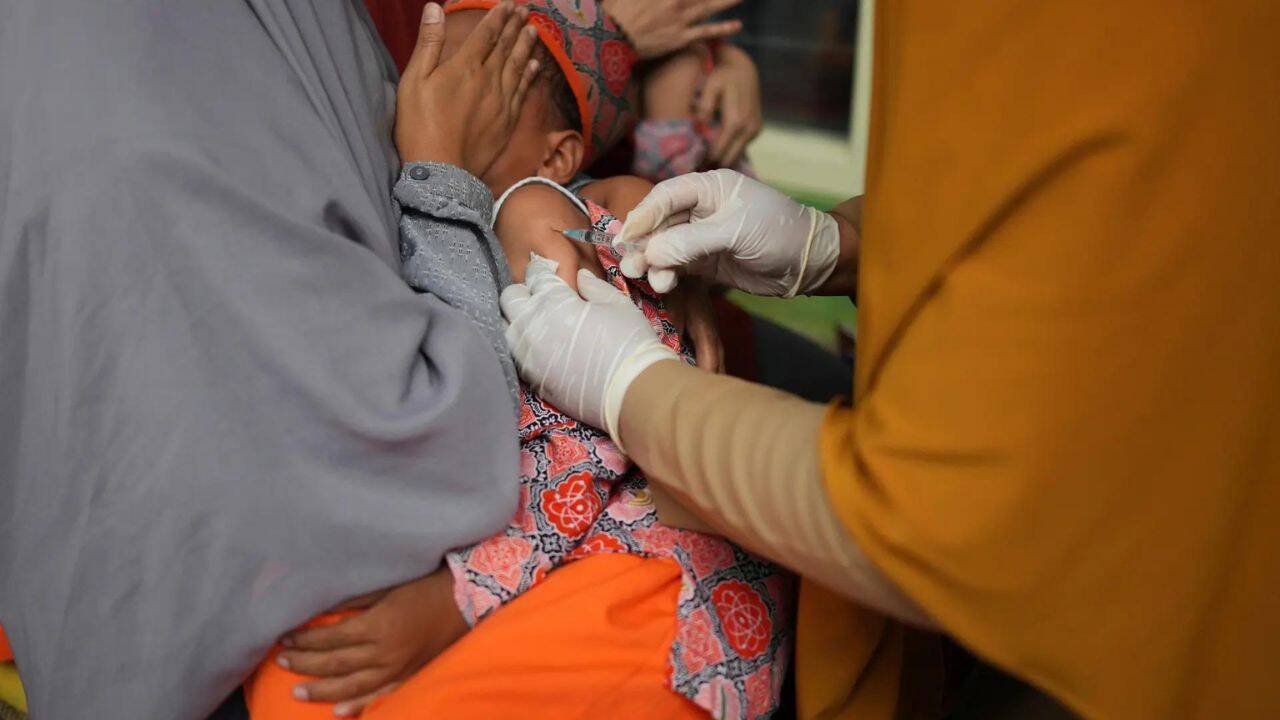
Measles kills nearly 1,000 Bangladeshi children as cases top 180,000
Coveragetap to expand ▾Spectrum: Center Only🌍Asia: 2
Bangladesh is facing a severe measles outbreak that, according to reporting in the South China Morning Post, has killed nearly 1,000 children and produced more than 180,000 reported cases. Hospitals are filling with young patients, and pediatric wards are under acute strain as clinicians and families confront a surge in admissions.
The most immediate, documented facts are stark: child deaths approach four digits and case counts have passed 180,000 (per South China Morning Post). Those two numbers frame the crisis and explain why frontline facilities are overwhelmed.
The South China Morning Post frames this primarily as a public-health emergency: large case counts and rapidly rising child fatalities tied to measles are producing overcrowded wards and stretched resources (per South China Morning Post). The outlet reports that the burden has fallen on hospitals' pediatric capacity, presenting families with delays and scarce beds.
Reporting focuses on human cost — children who have died and families seeking care — and on the visible impact in hospitals rather than on policy debates or long-term system reforms (per South China Morning Post). The outbreak highlights vulnerabilities that allow measles to spread rapidly: measles is highly contagious and can cause severe illness in unvaccinated children.
The South China Morning Post story centers on the outbreak's immediate toll and service pressures; it does not detail vaccination campaign timing, vaccine coverage levels, or specific failures in logistics or policy in this single article (per South China Morning Post).
That limited scope means confirmed numbers on deaths and reported cases are the clearest facts available from the reportage, while drivers behind those numbers require additional documentation.
Bangladeshi health workers and hospitals are the actors now carrying the burden: clinicians in pediatric wards, hospital administrators managing bed capacity, and families seeking urgent care. The article makes clear that hospitals are filling with children sick from measles, which is the proximate mechanism driving visible strain on services (per South China Morning Post).
The reporting does not assign legal or political blame to particular institutions beyond describing the public-health emergency itself, and it does not present alternative official statements or government responses in this piece.
Because the source focuses on the immediate emergency, readers do not get a full accounting of preventative measures or national plans in this file alone. The documented consequences are immediate: high child mortality and overwhelmed pediatric wards.
What comes next — whether the Bangladeshi health authorities mount an accelerated vaccination drive, request international assistance, or reallocate hospital capacity — will determine whether the outbreak's human toll stabilizes or worsens.
This account stays tightly anchored to what the South China Morning Post reported: near 1,000 child deaths, more than 180,000 reported cases, and hospital wards filling under the caseload (per South China Morning Post).
Additional reporting is needed to trace the outbreak's origins, map vaccination gaps, and list specific public-health responses; those items were not detailed in the SCMP piece. For now, the concrete picture is one of overwhelmed pediatric services and a high child mortality toll in Bangladesh as measles spreads rapidly among children (per South China Morning Post).