
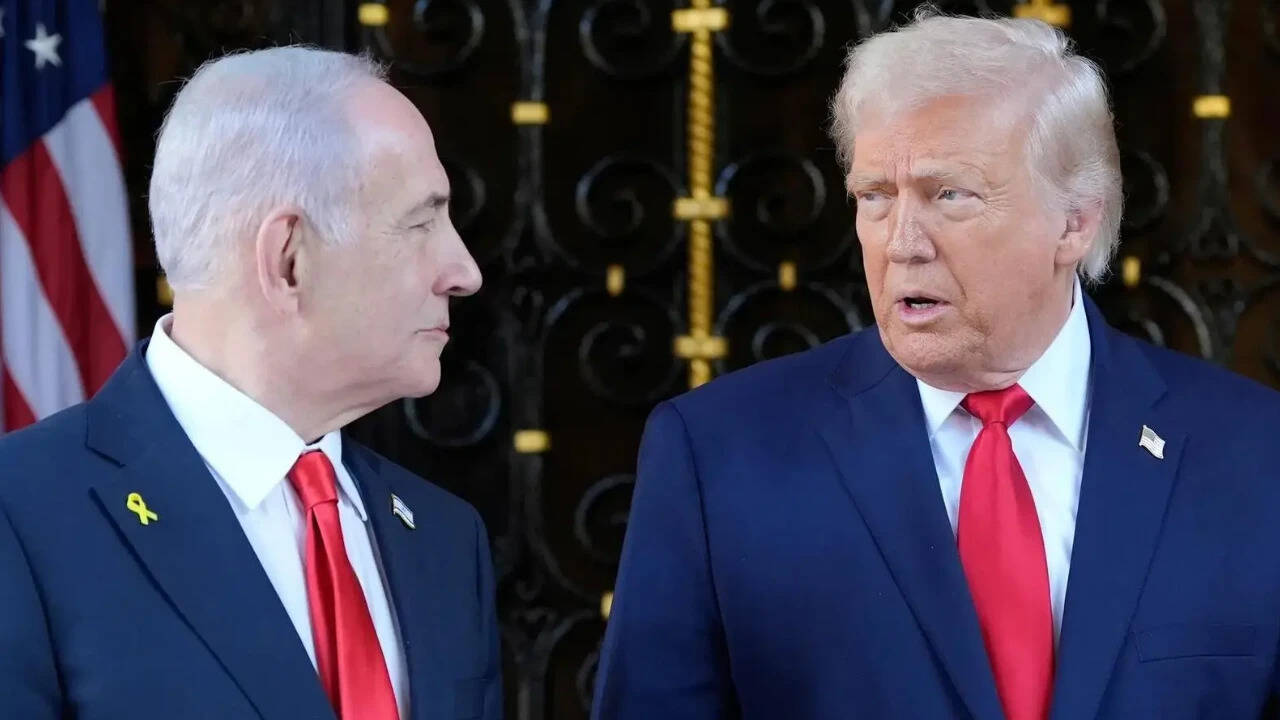
Trump Warns Netanyahu of Isolation Risks Amid Escalating Iran Conflict
Topic: geopoliticsRegion: North AmericaUpdated: i2 outletsSources: 5⚠ Bias gap — sources divergeSpectrum: Center Only⏱ 3 min read⚠ 3d+ old
Story Summary
SITUATION
Trump warned Netanyahu that further military actions against Iran could lead to Israel's isolation. This warning follows claims that the U.S.
Coveragetap to expand ▾Spectrum: Center Only🌍Asia: 3 · ME: 1 · Other: 1
Political Spectrum
Position is inferred from coverage mix.
i2 outlets · Center
Left
Center
Right
Left: 0
Center: 5
Right: 0
Geography Coverage
Distribution of where coverage is coming from.
i2 unique outlets · Dominant: Asia
KEY FACTS
- ‘You better be careful, Bibi’: Trump warned Netanyahu further strikes could isolate him in conflict with Iran - The Indian Express
- Trump says he warned Netanyahu Israel could be left alone if it escalated Iran fight, claims US got last-minute notice of strikes - The Times of Israel
- 'Israel will be alone' | Trump reveals dramatic call with Netanyahu over Iran - Israel National News
HISTORICAL CONTEXT
The ongoing military conflict between the United States and Israel against Iran began in March 2026, when coordinated strikes targeted Iranian power plants, air defenses, and military infrastructure. This campaign was a direct response to a series of escalating tensions and military exchanges that had been building over the preceding years.
In 2024, direct exchanges between Iran and Israel intensified, with each Israeli strike on Iranian assets provoking retaliatory actions from Iran. For instance, in late 2024, an Israeli airstrike on Iranian military facilities in Syria prompted Iran to launch missile attacks on Israeli positions, marking a significant escalation in hostilities.
Brief
In a significant warning, President Trump cautioned Israeli Prime Minister Netanyahu that further military escalation against Iran could lead to Israel's isolation on the global stage. This warning came during a recent phone call where Trump expressed concern over the U.S. receiving last-minute notifications regarding Israel's military strikes against Iranian targets.
The escalating conflict has raised alarms within the U.S. administration, which is trying to balance its support for Israel with the potential fallout from increased military actions. Trump’s remarks reflect a growing unease among U.S. officials about the implications of Israel's aggressive military strategy in the region.
Netanyahu's government faces pressure to respond decisively to Iranian provocations, complicating the dynamics of U.S.-Israel relations. The situation is further complicated by the ongoing military actions between the U.S., Israel, and Iran, which have created a tense atmosphere in the region.
As both nations navigate these challenges, the potential for Israel to find itself isolated becomes a pressing concern for U.S. foreign policy.
Where sources differ
Bias gap0.55 / 2.0
Left- and right-leaning outlets are covering this story differently — in which facts to emphasize, which context to include, and how to frame causes and consequences.
Center (5)
indianexpress.comtimes_of_indiandtv.comtimesofisrael.comisraelnationalnews.com
Sources
5 of 5 linked articles
‘You better be careful, Bibi’: Trump warned Netanyahu further strikes could isolate him in conflict with Iran
indianexpress.comJun 8Center
↗
‘You better be careful’: Trump warns Bibi as Israel scales back planned strikes on Iran
timesofindia.indiatimes.comJun 8Left
↗
Trump Warns Netanyahu To "Be Careful" Over Renewed Iran War: Report
ndtv.comJun 8Center
↗
Trump says he warned Netanyahu Israel could be left alone if it escalated Iran fight, claims US got last-minute notice of strikes
timesofisrael.comJun 8Center
↗
'Israel will be alone' | Trump reveals dramatic call with Netanyahu over Iran
israelnationalnews.comJun 8Left
↗