
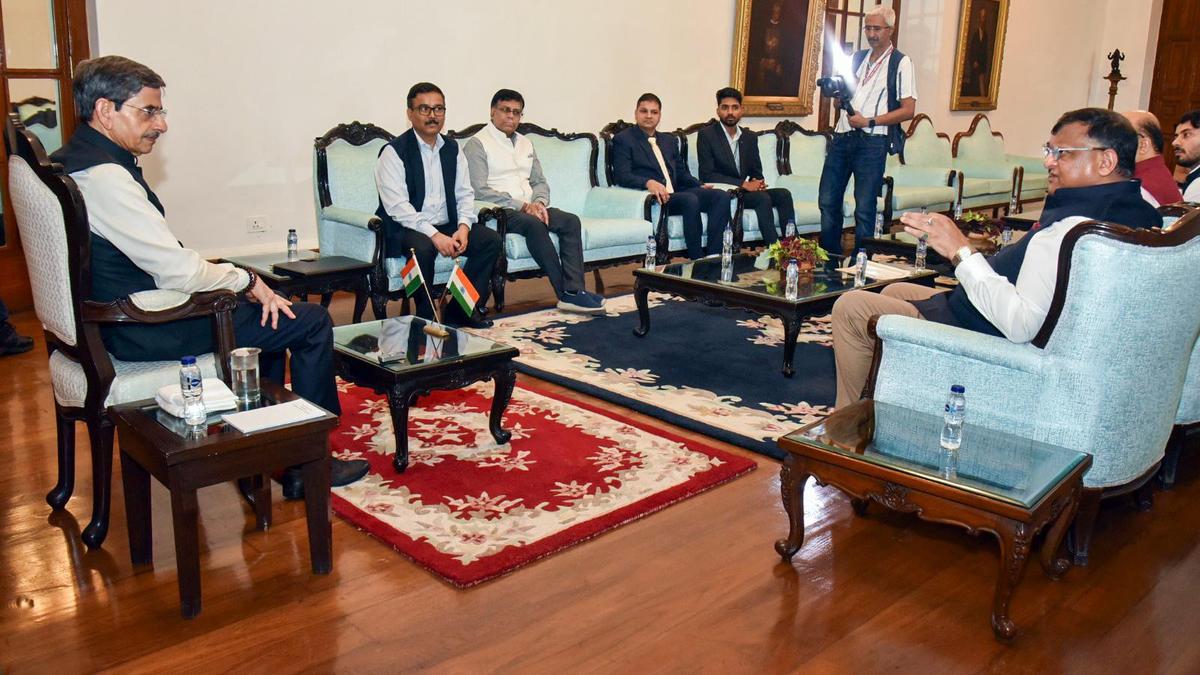
Governor RN Ravi Dissolves West Bengal Assembly, Mamata Banerjee Ousted
Coveragetap to expand ▾Spectrum: Center Only🌍Asia: 4 · Other: 2
- Mamata Banerjee refused to resign as Chief Minister prior to the dissolution of the assembly (per timesofindia.indiatimes.com).
- The dissolution of the assembly paves the way for the formation of a new government led by the Bharatiya Janata Party (BJP) (per news.google.com).
- The decision by Governor RN Ravi has sparked controversy and debate over the constitutional implications of such a move (per timesofindia.indiatimes.com).
- The BJP is expected to form the new government following the assembly's dissolution (per news.google.com).
- The political landscape in West Bengal is poised for significant changes as the BJP prepares to take control (per news.google.com).
In a decisive political maneuver, Governor RN Ravi has dissolved the West Bengal Assembly, effectively removing Mamata Banerjee from her position as Chief Minister. This move comes despite Banerjee's refusal to resign, highlighting a significant shift in the state's political dynamics.
The dissolution paves the way for the Bharatiya Janata Party (BJP) to form a new government, marking a potential end to Banerjee's long-standing influence in the region. The decision by Governor Ravi has not been without controversy.
Critics argue that the dissolution raises constitutional questions about the governor's authority and the implications for democratic governance in West Bengal. Supporters of the move, however, see it as a necessary step to facilitate a change in leadership and governance.
Mamata Banerjee, known for her strong political presence and leadership, has been a dominant figure in West Bengal politics. Her refusal to step down voluntarily underscores the contentious nature of the current political climate.
The BJP's anticipated rise to power represents a significant political realignment in a state that has traditionally been a stronghold for Banerjee's party. As the BJP prepares to assume control, the political landscape in West Bengal is set for transformation.
The party's agenda and policies will likely differ from those of Banerjee's administration, potentially impacting various sectors and communities within the state. Observers are closely watching the developments, as the transition of power could have broader implications for regional politics.
The BJP's strategy and governance approach will be under scrutiny as they navigate the complexities of leading a state with a diverse and dynamic political environment. The dissolution of the assembly and the subsequent political changes highlight the fluid nature of Indian politics, where shifts in power can occur rapidly and with significant consequences.
As the situation unfolds, the focus will remain on how the new government addresses the challenges and opportunities that lie ahead.
- The dissolution of the West Bengal Assembly directly impacts the state's political stability, affecting millions of residents who rely on consistent governance.
- Mamata Banerjee's removal as Chief Minister disrupts the existing political order, potentially altering policies and programs that have been in place under her leadership.
- The Bharatiya Janata Party (BJP) stands to benefit from this political shift, gaining an opportunity to implement its agenda and strengthen its influence in West Bengal.
- Whether the Bharatiya Janata Party successfully forms a new government in West Bengal.
- The response of Mamata Banerjee and her party to the dissolution of the assembly.
- Potential legal challenges or protests against the governor's decision to dissolve the assembly.
- news.google.com emphasizes the dissolution as a pathway for BJP governance, while timesofindia.indiatimes.com highlights the controversy and Banerjee's refusal to resign.
- The constitutional implications of the governor's decision remain a point of debate.
- No source mentions the specific reasons or pressures that led Governor RN Ravi to dissolve the assembly at this time.