
Israel Deports Two Activists After Intercepting Gaza
Topic: geopoliticsRegion: Middle EastUpdated: i5 outletsSources: 21⚠ Bias gap — sources divergeSpectrum: Mostly Center⏱ 4 min read📡 Wire pickup: 2⚠ 3d+ old
Story Summary
SITUATION
On May 10, Israel deported two activists, Saif Abu Keshek from Spain and Thiago Avila from Brazil, after intercepting their Gaza-bound flotilla in international waters. This action was part of a broader operation where over 430 activists were detained by Israeli forces, prompting significant international backlash regarding their treatment in custody.
Coveragetap to expand ▾Spectrum: Mostly Center🌍ME: 8 · Asia: 3 · Other: 3 · US: 2 · Europe: 1 · LatAm: 1
Political Spectrum
Position is inferred from coverage mix.
i5 outlets · Center
Left
Center
Right
Left: 2
Center: 14
Right: 2
Geography Coverage
Distribution of where coverage is coming from.
i5 unique outlets · Dominant: Middle East
KEY FACTS
- Israel deported two activists, Saif Abu Keshek and Thiago Avila, on May 10 after they were arrested aboard a Gaza-bound flotilla (per Strait Times).
- The activists were part of a second Global Sumud Flotilla launched from Spain on April 12 to break Israel's blockade of Gaza (per Strait Times).
- Israel's foreign ministry confirmed that all foreign activists from the flotilla have been deported amid international criticism (per Al Arabiya).
- More than 430 activists from various countries were detained by Israeli forces during the flotilla interception (per Dawn).
- Israeli Prime Minister Benjamin Netanyahu stated that the flotilla's mission was unnecessary provocation, despite acknowledging that the actions taken were not in line with Israel's values (per SMH).
HISTORICAL CONTEXT
In recent weeks, the return of a Brazilian flotilla activist has drawn attention to the complex geopolitical dynamics in the Middle East, particularly regarding Israel and its policies towards maritime activism.
This incident follows a series of events that have heightened scrutiny of Israel's treatment of activists and its broader military and political strategies in the region. The immediate backdrop to the activist's return involves the Israeli military's interception of a flotilla attempting to breach the naval blockade of Gaza.
Brief
Israeli Prime Minister Benjamin Netanyahu characterized the flotilla's mission as unnecessary provocation, while also acknowledging that the actions taken against the activists did not align with Israel's values. The deportations followed a wave of criticism, with activists and their supporters demanding accountability for their treatment.
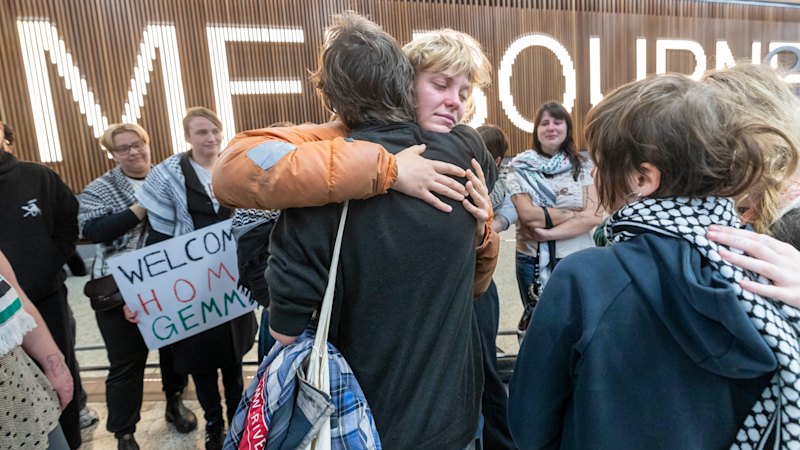
Gemma O'Toole, one of the detainees, expressed her distress over the experience, stating it was the worst week of her life. The flotilla aimed to deliver aid to Gaza, a region under a long-standing blockade by Israel, which has been a point of contention in the ongoing conflict.
The situation highlights the tensions surrounding attempts to break the blockade and the Israeli government's firm stance against such initiatives.
Why it matters
- The deportation of Saif Abu Keshek and Thiago Avila reflects ongoing tensions surrounding Israel's blockade of Gaza, impacting humanitarian efforts (per Strait Times).
- Over 430 activists were detained, illustrating the scale of Israel's response to attempts to breach the blockade, which affects international perceptions of Israel's policies (per Dawn).
- Global outrage over the treatment of activists in custody may influence future flotilla efforts and international activism regarding Gaza (per Al Arabiya).
What to watch next
- Whether Israel implements further measures against future flotilla attempts by activists in the coming months.
- Any official statements from the Israeli government regarding the treatment of detainees by the end of May.
- The response from international human rights organizations regarding the deportations and treatment of activists.
Where sources differ
2 dimensionsBias gap0.90 / 2.0
Left- and right-leaning outlets are covering this story differently — in which facts to emphasize, which context to include, and how to frame causes and consequences.
Left-leaning (2)
straits_times-0.80
Brazilian flotilla activist returns home, alleges torture during Israel detention Brazilian flotilla activist returns home, alleges torture during Israel detention Brazilian flotil…
sydney_morning_herald-0.15
‘I’m enraged’: Family demands answers from Israel, meeting with PM as activists arrive home ‘I’m enraged’: Family demands answers from Israel, meeting with PM as activists arrive h…
Center (14)
bbc.comdawn_pakistanchannel_news_asiaonenewspage.comthecradle.conewarab.comenglish.aawsat.comtimesofisrael.comreuters.comhaaretz.comenglish.ahram.org.egi24news.tvreuters.comtimesofisrael.com
Right-leaning (2)
jpost.com+0.75
All Gaza flotilla activists deported from Israel, Foreign Ministry announces - The Jerusalem Post
jpost.com+0.75
2 specific areas where coverage diverges — see below.
Framing differences
?- SMH emphasizes the personal accounts of activists like Gemma O'Toole, while other outlets focus on the official statements from the Israeli government.
Omitted context
?- No source mentions the specific conditions of detention faced by the activists while in Israeli custody.
Sources
18 of 18 linked articles
“What you saw in that video is an infinitesimal amount of what we actually went through.”
smh.com.auMay 24Center
↗
Gaza flotilla activists deported from Israel as backlash over treatment grows
bbc.comMay 22Center
↗
Israel deports all foreign Gaza flotilla activists
dawn.comMay 21Center
↗
Israel deports all foreign activists from Gaza flotilla
channelnewsasia.comMay 21Center
↗
Israel says all Gaza flotilla activists have been deported amid global outrage over their treatment
onenewspage.comMay 21Left
↗
Israel begins deportation of Gaza flotilla activists - thecradle.co
thecradle.coMay 21Left
↗