
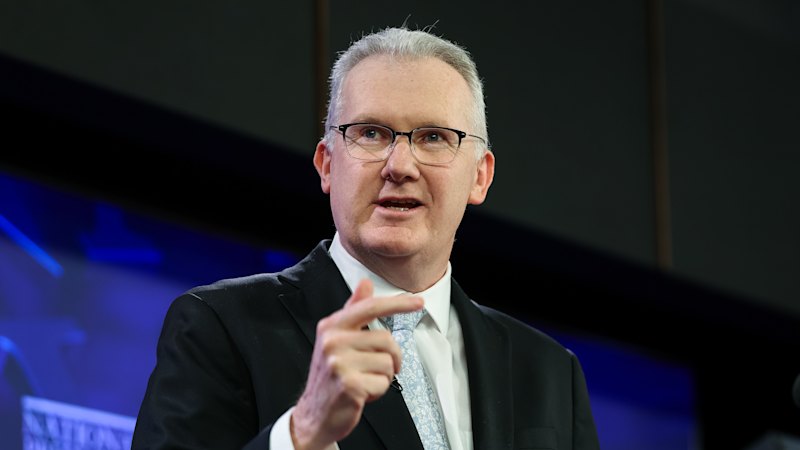
Tony Burke unveils migration overhaul to ramp up deportations, sparking backlash from universities and charities
Coveragetap to expand ▾Spectrum: Center Only🌍Asia: 2 · Other: 1
- Home Affairs Minister Tony Burke revealed sweeping changes to Australia’s migration system on September 18, 2026.
- Burke said the plan would help the government reach a net migration target of 225,000.
- University bodies and charities slammed Burke’s plan, and the live coverage says international students were forced to consider their future.
- Tony Burke said at the National Press Club that "Immigration will need to be part of the solution to help provide some space for housing supply to catch up."
- Burke also said "The housing shortage we have is not caused by immigration, but immigration needs to be part of the solution."
- The speech is described as a major shake-up to Labor’s migration policy and an attempt to neutralise the political issue driving voters to Pauline Hanson.
- The piece notes Peter Dutton was criticised by party moderates last year for saying high migration was contributing to elevated rents and property prices.
- The article is live national coverage by Emily Kaine for the Sydney Morning Herald, updated September 18, 2026.
Home Affairs Minister Tony Burke will set out a major migration overhaul at the National Press Club that aims to lower Australia's net migration from 305,000 to 225,000 over two years.
The package, to be delivered in a speech described by the government as procedural and regulatory rather than numerical, will rely on changes to visa rules, tighter controls on bridging visas and reforms to the Administrative Review Tribunal to limit avenues for visa-hopping and protracted asylum claims (per smh.com.au).
The government will not publish a headline numeric cut to annual intake; instead it intends to achieve the reduction through rules and administrative changes, consistent with Labor's May budget pledge to prioritise younger, higher-skilled migrants in the skills program — an element expected to be fleshed out in Burke's remarks (per smh.com.au).
Burke's currently delayed speech schedule, cancelled early last month, amplified political bargaining: opposition parties such as One Nation and the Coalition have used the vacuum to push for deeper numeric cuts, forcing Labor to pursue measures it can enact without broader parliamentary support (per smh.com.au).
Officials say the Administrative Review Tribunal reforms are central because they would limit administrative avenues that critics say enable visa-hopping; the package also signals a political effort to respond to public concern about high migration figures without winning crossbench backing for explicit intake caps (per smh.com.au).
The timing—immediately before Prime Minister Anthony Albanese's departure to the United Nations in New York—suggests the government wants the policy visible before the prime minister leaves for overseas engagements (per smh.com.au).
What Burke will propose is presented as a practical, regulatory toolkit rather than legislation requiring negotiated votes; that constrained approach reflects Labor's recognition it cannot pass the strongest cuts pushed by rival parties in the current parliament (per smh.com.au).
The speech will be watched for details on how the government intends to translate budget commitments on skills prioritisation into operational visa settings and how far tribunal and bridging-visa reforms will go in practice (per smh.com.au).