
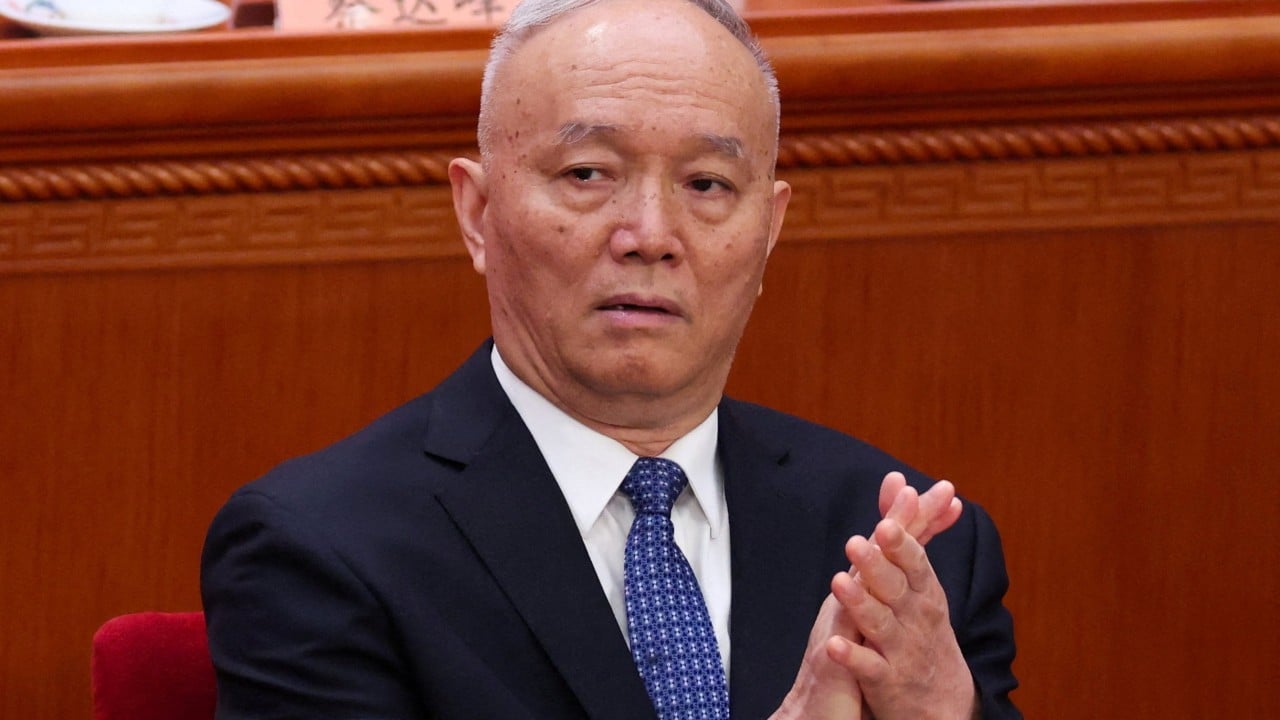
Cai Qi's Appointment to Central Party School Reflects Xi Jinping's Strategic Vision
Coveragetap to expand ▾Spectrum: Mixed🌍Asia: 2 · Other: 2 · US: 1
- Why the new party academy role held by Xi Jinping’s chief of staff is important in China
- Last week, Chinese President Xi Jinping’s chief of staff Cai Qi, the fifth most senior official in the ruling Communist Party, was chosen to lead the Central Party School, Beijing’s leading academy for cadres
Cai Qi's recent appointment to lead the Central Party School marks a significant move in Xi Jinping's ongoing consolidation of power within the Chinese Communist Party.
As Xi's chief of staff and the fifth most senior official, Cai's new role emphasizes the importance of ideological training for party cadres, which Xi views as essential for maintaining the party's integrity and effectiveness.
The Central Party School is not merely an educational institution; it serves as a critical component of Xi's strategy to ensure that party officials are aligned with his vision and policies. This appointment comes at a time when Xi is focusing on reinforcing party loyalty and expertise amid various domestic and international challenges.
Analysts suggest that Cai's leadership could lead to a more unified approach to governance, as the Central Party School plays a pivotal role in shaping the ideological framework that guides party members.
The implications of this appointment extend beyond mere administrative changes; it reflects Xi's broader ambitions for the party's future direction and stability in governance. As the political landscape evolves, the Central Party School's influence will likely grow, shaping the next generation of leaders who will carry forward Xi's policies and priorities.