
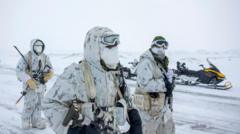
Canada's Military Recruitment Surges Amid Global Uncertainty and Nationalism
Coveragetap to expand ▾Spectrum: Center Only🌍Europe: 1
- Canada's army is experiencing its largest recruitment surge in 30 years, potentially reversing a chronic personnel shortage (per BBC).
- The Canadian government has committed billions in new military funding to address these issues and meet NATO obligations (per BBC).
- Geopolitical uncertainty and global conflicts are significant factors driving Canadians to join the military (per BBC).
- A rise in nationalism has been noted since US President Donald Trump referred to Canada as the '51st state', which many Canadians viewed negatively (per BBC).
- The current government, led by Prime Minister Carney, has made military modernization and expansion a priority since taking office last year (per BBC).
Canada is witnessing its most significant military recruitment surge in three decades, with the Canadian Armed Forces reaching levels of enlistment not seen since the early 1990s. This increase comes after years of stagnation and declining defense budgets, which had led to a dire recruitment situation that a former defense minister described as a 'death spiral'.
The Canadian government has responded to this crisis by committing billions in new military funding, aiming to fulfill its NATO obligations and modernize its forces. Geopolitical tensions and ongoing global conflicts have heightened the sense of insecurity among Canadians, prompting many to consider military service as a viable career path.
Additionally, a notable rise in nationalism has emerged, particularly following remarks by US President Donald Trump, who referred to Canada as the '51st state'. This comment resonated negatively with many Canadians, further motivating them to support and join their military.
Prime Minister Carney's administration has prioritized military expansion and modernization since taking office, reflecting a shift in public sentiment towards national defense. As Canada navigates this recruitment surge,
- The surge in military recruitment indicates a growing concern among Canadians about national security, potentially leading to a more robust military presence (per updat3_article).
- Increased military funding could divert resources from other public services, impacting sectors like healthcare and education (per key_facts).
- The rise in nationalism may influence Canadian foreign policy, particularly in relation to the United States and NATO (per updat3_article).
- A stronger military could alter Canada's role in international conflicts, affecting its diplomatic relationships with other nations (per key_facts).
- Whether Prime Minister Carney's government implements the planned military modernization initiatives by the end of 2026.
- The impact of increased military recruitment on Canada's defense budget during the next fiscal year.
- Any changes in public opinion regarding military service as a career choice in Canada over the next year.
- {"framing":[],"numbers":[],"causality":[],"attribution":[],"omitted_context":[],"disputed_or_unclear":[],"notable_quotes_or_claims":[]}