
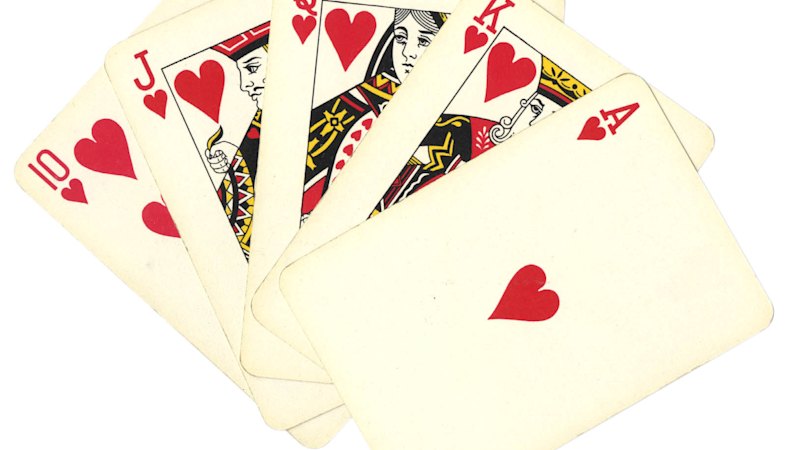
Card-game terms like 'trump', 'lurch' and 'showdown' shaped sports language
Topic: generalRegion: North AmericaUpdated: i1 outletsSources: 1Spectrum: Center Only⏱ 2 min read
Story Summary
SITUATION
David Astle reports that English sports vocabulary borrows heavily from card games, citing examples like 'trump', 'lurch' and 'showdown' (per smh.com.au). Astle notes the words trace to specific games and historical texts — for example triomphe, cribbage, poker and Edmund Hoyle's 1742 whist manual — and he links some usages to public figures' rhetoric (per smh.com.au).
Coveragetap to expand ▾Spectrum: Center Only🌍Asia: 1
Political Spectrum
Position is inferred from coverage mix.
i1 outlets · Center
Left
Center
Right
Left: 0
Center: 1
Right: 0
Geography Coverage
Distribution of where coverage is coming from.
i1 unique outlets · Dominant: Asia
KEY FACTS
- 'Trump' as a verb is traced to a corruption of 'triumph' and ultimately to the game triomphe (per smh.com.au).
- 'Showdown' entered English from poker and is used in sporting contexts like decisive contests (per smh.com.au).
- 'Lurch' and other card-game-derived terms have migrated into general idiom and sports commentary (per smh.com.au).
- Edmund Hoyle's 1742 whist manual is cited as an early authoritative source that helped standardize gaming terms in English (per smh.com.au).
HISTORICAL CONTEXT
Since March 2026, a coordinated U.S.-Israeli military campaign has struck Iranian power plants, air defenses and military infrastructure, and Iran has mounted retaliatory military actions in response.
Those operations unfolded against a framework of international agreements and sanctions: the 2015 Joint Comprehensive Plan of Action (JCPOA) on Iran’s nuclear program, the U.S. withdrawal from that deal in 2018 and subsequent reimposition of U.S. sanctions, plus successive UN and unilateral measures that shaped regional tensions.
Brief
English sportswriting and everyday sporting talk owe more to card tables than to the pitch, David Astle argues in a recent dispatch. Astle documents how words borrowed from games such as triomphe, cribbage and poker — most famously 'trump', 'lurch' and 'showdown' — migrated into sports commentary and broader idiom (per smh.com.au).
He traces 'trump' as a verb to a corruption of 'triumph' and to the trick-taking game triomphe; he shows 'showdown' came from poker and became shorthand for decisive contests on the field or court (per smh.com.au).
Astle also points to Edmund Hoyle's 1742 whist manual as a key early text that helped fix gaming terminology in English, creating a vocabulary that later commentators and journalists borrowed (per smh.com.au). The essay links some of those borrowings to public rhetoric, citing Franklin D.
Roosevelt as an exemplar of political speech that folded game metaphors into policymaking talk (per smh.com.au).
Astle frames the borrowing as long-standing and accelerating in recent years, arguing that everyday phrases like 'hold the upper hand' or 'pass the buck' are survivals of table talk; he treats modern political figures' use of such terms as a cultural amplifier rather than the original source (per smh.com.au).
The piece is descriptive: it identifies linguistic lineages and primary sources in card-game literature and popular speech, distinguishes documented etymologies from folk explanations, and leaves broader judgments about cultural effects to readers (per smh.com.au).
Why it matters
- English-language sports commentators and journalists borrow specific vocabulary that shapes how fans understand competition — concrete terms cited include 'trump', 'lurch' and 'showdown' (per smh.com.au).
- Edmund Hoyle's 1742 whist manual helped standardize gaming terms that later migrated into public discourse, meaning a single 18th-century text materially influenced modern sporting lexicon (per smh.com.au).
- Public figures who use game metaphors, exemplified by David Astle's citation of Franklin D. Roosevelt, amplify card-game-derived phrases into political and media narratives, benefiting communicators who rely on familiar metaphors (per smh.com.au).
What to watch next
- Whether lexicographers and style guides update usage notes or etymologies for sports terms like 'trump' and 'showdown' in upcoming dictionary revisions.
- Whether sports broadcasters adopt or avoid card-game metaphors in major events, especially in tennis and cricket commentary where such terms are frequently used (per smh.com.au).
- Whether cultural critics or linguists publish follow-up pieces challenging or expanding Astle's etymologies and historical links to Hoyle's 1742 manual.
Where sources differ
7 dimensionsFraming differences
?- Only smh.com.au is in this pack; it frames card-game terms as longstanding borrowings and cultural continuities rather than recent inventions (per smh.com.au).
Disputed or unclear
?- No source in this pack disputes Astle's lineage claims; independent verification of every etymology is not provided in the single source (per smh.com.au).
Omitted context
?- No source in this pack mentions alternative etymologies from non-card sources for the listed terms.
- No source in this pack quantifies how often sports commentary uses card-game metaphors (frequency data omitted).
- No source in this pack cites linguistic scholarship beyond Hoyle and the popular examples Astle selects.
Conflicting figures
?- No sources in this pack provide differing numeric figures for the same quantity.
Disputed causality
?- Astle attributes modern usage to long-term lexical migration from gaming texts and public rhetoric; no source in this pack frames an opposing causal sequence (per smh.com.au).
Attribution disputes
?- smh.com.au attributes the claims and examples to David Astle and cites Hoyle and Franklin D. Roosevelt as historical anchors (per smh.com.au).
Sources
1 of 1 linked articles