
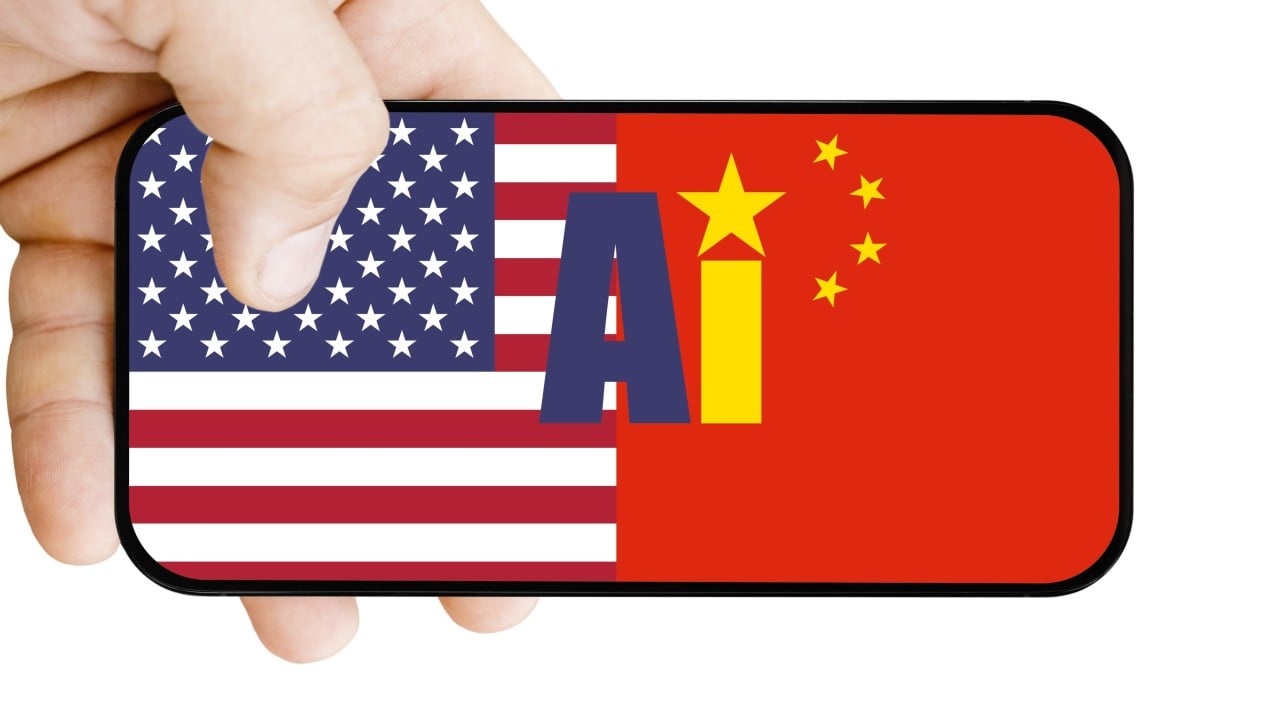
US and China Compete in High-Stakes AI Race for Global Dominance
Coveragetap to expand ▾Spectrum: Left Only🌍Asia: 1
- The United States and China are competing for supremacy in the artificial intelligence (AI) sector (per scmp.com).
- Jensen Huang, founder of Nvidia, stated that China is poised to win the AI race (per scmp.com).
- Some experts believe that while China is advancing rapidly, it will not surpass the US in AI development soon (per scmp.com).
- The AI race is expected to be a central topic at the upcoming Trump-Xi summit (per scmp.com).
- The competition in AI is seen as a critical component of broader technological and geopolitical rivalries between the US and China (per scmp.com).
The United States and China are locked in a fierce competition to lead the world in artificial intelligence (AI), a technological frontier with significant implications for global power dynamics. This race is not just about technological prowess but also about securing economic and geopolitical advantages.
Nvidia founder Jensen Huang has boldly predicted that China will eventually win this AI race, a statement that underscores the intensity of the competition. However, other experts maintain that while China is making significant strides, the United States is likely to retain its lead in the near term.
The AI sector is poised to be a major point of discussion at the upcoming summit between US President Donald Trump and Chinese President Xi Jinping. This meeting highlights the strategic importance both nations place on AI as a component of their broader technological and geopolitical rivalry.
The AI revolution is expected to transform industries ranging from healthcare to defense, making dominance in this field a critical national security concern. Both countries are investing heavily in AI research and development, seeking to harness the technology's potential to drive economic growth and enhance military capabilities.
The stakes are high, as AI is seen as a key driver of future economic and military power. The US and China are not only competing to develop the most advanced AI technologies but also to set the global standards and norms that will govern their use.
This competition is occurring against a backdrop of broader tensions between the two nations, including trade disputes and differing approaches to global governance. The outcome of the AI race could have far-reaching implications for the balance of power in the 21st century.
As both nations vie for supremacy, the world watches closely, aware that the winner could shape the future of technology and international relations. The AI race is emblematic of the broader struggle for technological leadership, with both the US and China seeking to position themselves as the dominant force in the digital age.
This rivalry is not just about economic gains but also about ideological influence, as each nation seeks to promote its vision of how technology should be integrated into society. As the competition intensifies, many governments is paying close attention to how these developments will impact global stability and economic growth.
The AI race is a microcosm of the larger geopolitical contest between the US and China, with the potential to redefine alliances and reshape the global order.
- The AI race between the US and China could significantly impact global economic power, with industries worldwide potentially affected by shifts in technological leadership.
- Nvidia, a major player in AI technology, stands to benefit from increased demand for AI capabilities, influencing market dynamics and investment flows.
- The outcome of the AI race could alter national security strategies, as AI technologies are integrated into military and defense systems, affecting global security balances.
- China's potential to surpass the US in AI development could shift geopolitical power dynamics, influencing international relations and trade policies.
- Outcomes of the Trump-Xi summit, where AI competition is a key topic.
- Future statements from Nvidia and other tech leaders regarding AI advancements.
- US and China's continued investments in AI research and development.
- scmp.com highlights Jensen Huang's prediction of China's eventual victory in AI, while noting other experts' belief in the US maintaining its lead.
- The exact timeline for when China might surpass the US in AI development remains debated among experts.
- No source mentions the specific economic or military applications of AI that each country is prioritizing, which could provide insight into their strategic goals.
- No specific figures are provided for the amount of investment each country is making in AI development.
- There is no detailed explanation of how current US-China tensions are directly influencing the AI race.
- Jensen Huang's prediction is attributed to him by scmp.com, but no other sources are cited for similar claims.