
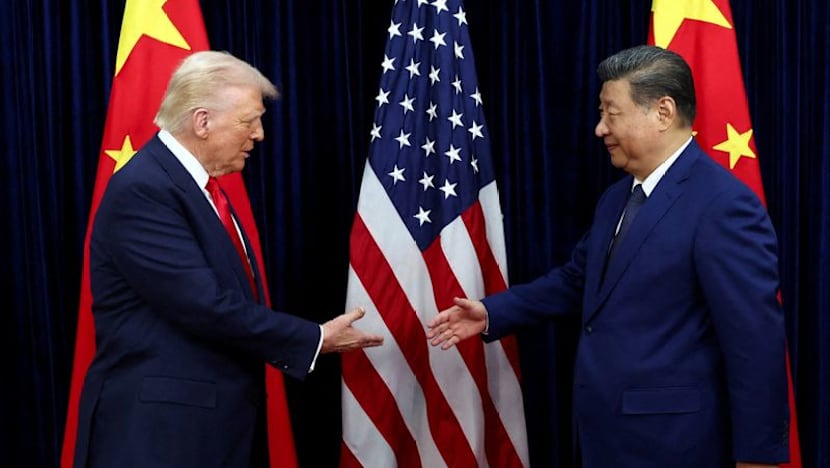
China's Pushback on US Sanctions Reshapes Global Business Dynamics
Coveragetap to expand ▾Spectrum: Center Only🌍Asia: 1
- China is no longer just protesting US sanctions (per channelnewsasia.com).
- Firms may now have to navigate two systems due to China's pushback against US sanctions (per channelnewsasia.com).
China's recent actions against US sanctions mark a significant shift in the global business landscape, moving beyond mere protests to a more assertive stance that complicates international trade.
As the US continues to impose sanctions, Chinese firms are now faced with the challenge of navigating two distinct regulatory systems, which could lead to increased operational complexities and costs.
This development comes amid heightened tensions between the two nations, as the US seeks to curb China's economic influence while China pushes back against what it perceives as unfair economic practices. The implications of this shift are profound, as businesses worldwide must adapt to a dual system that could reshape supply chains and market strategies.
Both the US and China have framed their positions as necessary for national security and economic stability, yet the reality is that companies operating in this environment will bear the brunt of these geopolitical tensions.
The current landscape suggests that firms will need to develop robust strategies to manage compliance with both US and Chinese regulations, which may lead to increased costs and operational risks.
As this situation evolves, the global business community will be watching closely to see how companies adapt to these new realities and what further actions may arise from both governments.
- Global businesses face increased operational complexities and costs due to the need to navigate two regulatory systems (per channelnewsasia.com).
- Chinese firms may struggle to maintain competitiveness in international markets as they adapt to US sanctions (per channelnewsasia.com).
- The ongoing tensions between the US and China could lead to further economic fragmentation, impacting global supply chains (per channelnewsasia.com).
- Whether Chinese firms implement new compliance strategies to navigate US sanctions by the end of Q2 2026.
- Any new sanctions imposed by the US on Chinese companies in response to their pushback by June 2026.
- {"framing":[],"numbers":[],"causality":[],"attribution":[],"omitted_context":[],"disputed_or_unclear":[],"notable_quotes_or_claims":[]}