
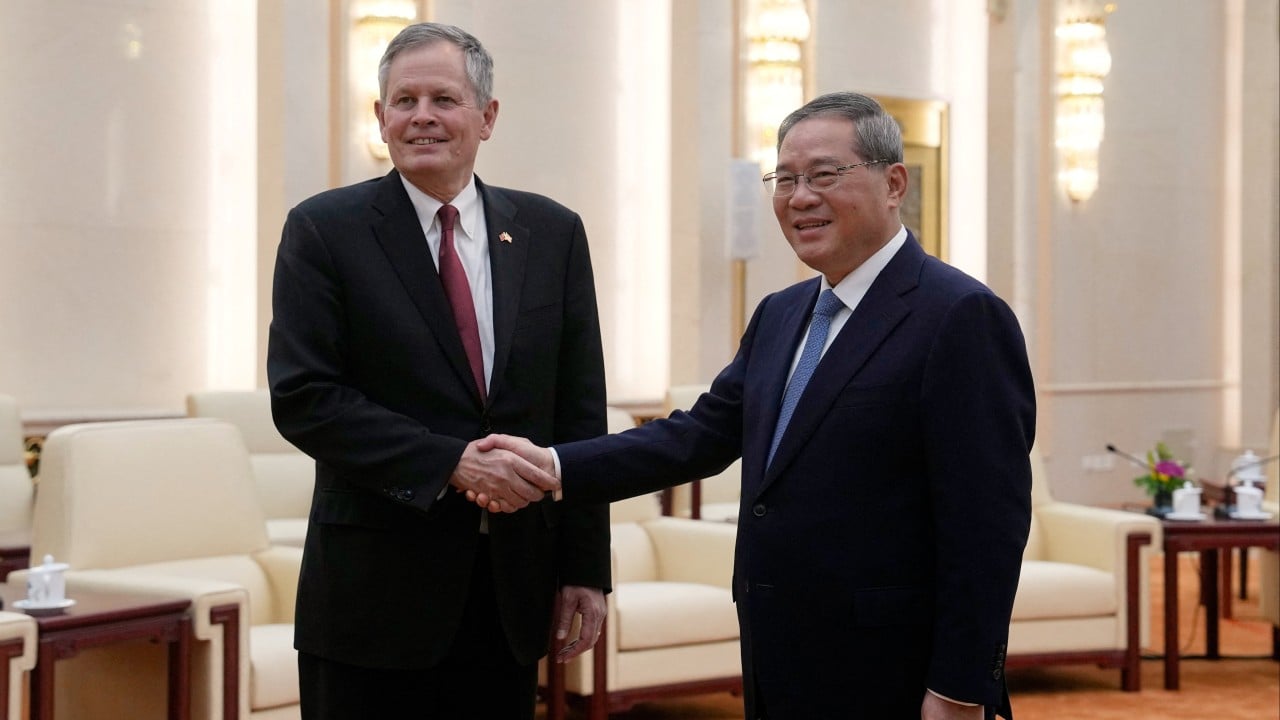
China Outlines Key Issues to US Senators Before Trump's Beijing Visit
Coveragetap to expand ▾Spectrum: Mostly Center🌍Other: 2 · Asia: 1
- Daines, a Republican from Montana and close Trump ally, is leading a five-member delegation of US senators visiting Shanghai and Beijing ahead of US President Donald Trump’s rescheduled trip to China next week.
During a meeting at the Great Hall of the People, Chinese Premier Li Qiang emphasized the importance of maintaining stable and predictable trade relations with the United States. Li called for increased dialogue and cooperation, highlighting that such an approach serves the fundamental interests of both countries.
A significant point of discussion was the Taiwan issue, which Li described as a core interest for China and a red line in Sino-US relations. This emphasis underscores the sensitive nature of Taiwan in the bilateral relationship, as China views Taiwan as a breakaway province, while the US has historically maintained a policy of strategic ambiguity regarding Taiwan's status.
The visit by the US senators is seen as a precursor to the high-level talks expected during President Trump's visit. It reflects ongoing efforts to address and potentially ease tensions between the two economic superpowers. The discussions also come at a time when both nations are navigating complex trade dynamics and geopolitical challenges.
China's call for stable trade ties and reduced confrontation aligns with its broader strategy to foster economic growth and stability amid global uncertainties. The emphasis on dialogue over zero-sum games suggests a willingness to engage constructively with the US, despite existing tensions over issues such as technology transfers and human rights.
As the world watches the developments between these two influential nations, the outcomes of the upcoming summit could have significant implications for global trade and international relations. The engagement between the US senators and Chinese officials sets the stage for what could be a pivotal moment in Sino-US diplomacy.
The focus on Taiwan as a critical issue highlights the delicate balance both countries must maintain to avoid escalating tensions.
- The US-China relationship directly affects global trade dynamics, impacting economies worldwide, particularly those reliant on stable trade routes.
- Taiwan's status is a contentious issue that could lead to significant geopolitical tensions if not managed carefully, affecting regional security in East Asia.
- US businesses and consumers could face economic consequences if trade relations with China become strained, potentially leading to increased tariffs or supply chain disruptions.
- China benefits from stable trade relations with the US, which supports its economic growth and global market presence.
- Whether President Donald Trump addresses the Taiwan issue during his visit to Beijing next week.
- The outcomes of the planned summit between President Trump and Chinese leaders, particularly regarding trade agreements.
- Any changes in US-China trade policies following the discussions between the US senators and Chinese officials.
- No significant framing differences noted as only one source was provided.
- No disputes or unclear facts noted in the single source provided.
- No source mentions the broader geopolitical tensions between the US and China, including issues like technology transfer and human rights, which are relevant to the discussions.
- No differing figures noted as only one source was provided.
- No causality disagreements noted as only one source was provided.
- No differing attributions noted as only one source was provided.