
China Unveils AI-Powered Lunar Rover for Chang’e-8 Mission
Coveragetap to expand ▾Spectrum: Left Only🌍Asia: 1
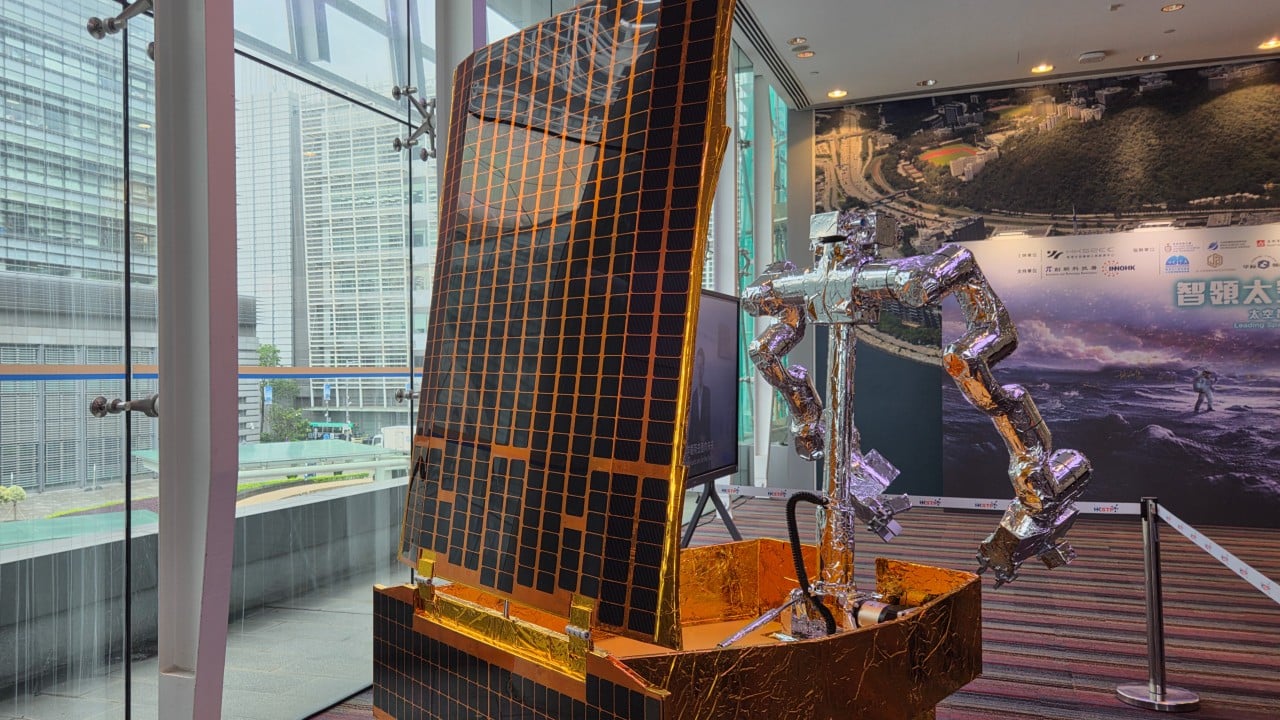
- China is sending a new type of lunar rover with a humanoid upper body and four wheels for the Chang’e-8 mission (per scmp.com).
- The rover is developed by a team led by the Hong Kong University of Science and Technology (HKUST) (per scmp.com).
- The mission is scheduled for 2029 (per scmp.com).
- The 100kg robot will transport, deploy, and install instruments and sensors on the lunar surface (per scmp.com).
- The rover will also collect samples from the moon’s surface (per scmp.com).
China is set to advance its lunar exploration capabilities with the introduction of a new AI-powered rover designed for the Chang’e-8 mission. This innovative rover, featuring a humanoid upper body and four wheels, is the product of a collaborative effort led by the Hong Kong University of Science and Technology (HKUST).
Scheduled for deployment in 2029, the rover is tasked with a critical role in transporting, deploying, and installing scientific instruments and sensors on the moon’s surface. Additionally, it will collect samples, contributing to the mission’s scientific objectives.
The rover weighs 100 kilograms and represents a significant step forward in the use of humanoid robotics in space exploration. Gao, who directs the Hong Kong Space Robotics and Energy Centre, expressed pride in the design, highlighting its potential to demonstrate China's capabilities in humanoid robotics on the lunar surface.
The development of this rover involved extensive collaboration with 30 universities and space organizations across Hong Kong, mainland China, and internationally. This collaborative approach underscores the importance of pooling expertise and resources to achieve complex space exploration goals.
The Chang’e-8 mission is part of China's broader lunar exploration program, which aims to establish a sustainable human presence on the moon. The introduction of this advanced rover aligns with China's strategic objectives in space exploration, showcasing its commitment to technological innovation and international collaboration.
As the mission progresses, the rover's performance will be closely monitored to assess its effectiveness in carrying out its designated tasks. The success of this mission could pave the way for future advancements in lunar exploration and the potential for more sophisticated robotic missions.
The deployment of this AI-powered rover not only highlights China's growing capabilities in space technology but also reflects its ambition to play a leading role in the next phase of lunar exploration. The mission's outcomes will be eagerly anticipated by the global scientific community, as they could provide valuable insights into the moon's environment and resources.
- The Chinese lunar rover will enhance scientific understanding of the moon by deploying and installing instruments, directly benefiting the global scientific community.
- The development of the rover involved collaboration with 30 universities and organizations, highlighting the importance of international cooperation in advancing space technology.
- China's investment in AI-powered robotics for space exploration demonstrates its commitment to becoming a leader in lunar exploration, potentially influencing global space policy and competition.
- Whether the AI-powered rover successfully completes its tasks during the Chang’e-8 mission in 2029.
- The impact of the rover's deployment on future lunar exploration missions by China and other nations.
- Potential advancements in humanoid robotics technology as a result of this mission.
- No source mentions the broader geopolitical implications of China's advancements in space technology.
- The economic costs and funding sources for the development of the rover are not detailed in the source.
- "This will be a novel demonstration of humanoid robotics on the moon and by China," said Gao, director of the Hong Kong Space Robotics and Energy Centre (per scmp.com).