
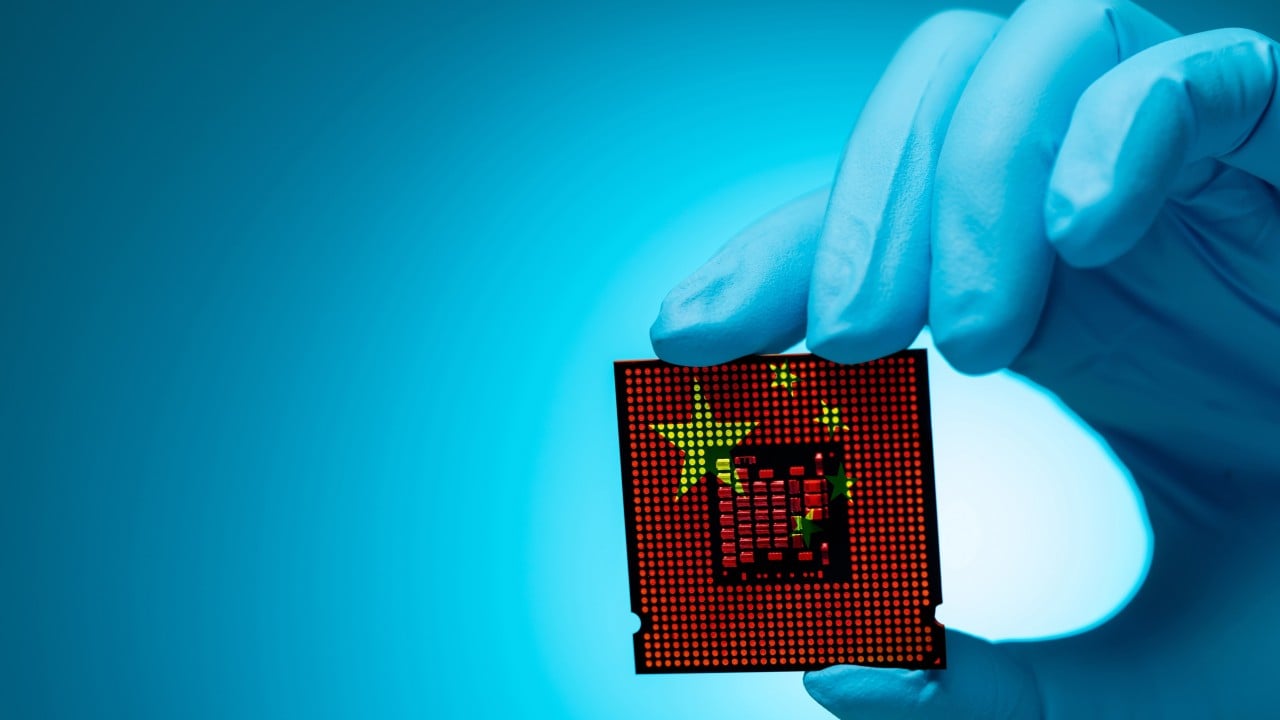
China Unveils LineShine Supercomputer, Aims to Surpass US El Capitan
Coveragetap to expand ▾Spectrum: Left Only🌍Asia: 1
- China has unveiled a new supercomputer named LineShine, built entirely from domestic CPUs (per scmp.com).
- LineShine is designed to achieve 2 exaflops, surpassing the US's El Capitan, which operates at 1.8 exaflops (per scmp.com).
- The development of LineShine is part of China's strategy to sidestep US export controls (per scmp.com).
China has taken a significant step in the global supercomputing race with the introduction of LineShine, a supercomputer built entirely from domestically produced central processing units (CPUs). This development aims to surpass the United States' current record-holder, El Capitan, which operates at 1.8 exaflops, by achieving a performance of 2 exaflops.
The move is part of China's broader strategy to circumvent US export controls and regain its position at the forefront of supercomputing technology. LineShine distinguishes itself from other exascale supercomputers by relying solely on CPUs, rather than incorporating graphics processing units (GPUs).
This design choice reflects China's emphasis on self-reliance in technology, particularly in the face of international trade restrictions. The supercomputer's architecture, which includes 47,000 CPUs distributed across 92 compute cabinets, supports both traditional high-performance computing and artificial intelligence (AI) workloads.
Huang Xiaohui, the deputy director of the National Supercomputing Centre in Shenzhen, highlighted LineShine's capabilities during a recent conference in Shenzhen.
The announcement underscores China's commitment to advancing its technological capabilities independently, a priority that has gained urgency amid ongoing geopolitical tensions and trade disputes with the United States. The unveiling of LineShine is not just a technological achievement but also a strategic maneuver in the context of global trade and technology competition.
By developing a supercomputer that does not rely on foreign technology, China aims to mitigate the impact of US export controls, which have increasingly targeted Chinese tech firms and their access to critical components.
This development comes at a time when supercomputing capabilities are becoming increasingly vital for national security, scientific research, and economic competitiveness. As countries vie for technological supremacy, the ability to perform complex calculations at unprecedented speeds is seen as a key advantage.
China's focus on domestic innovation in supercomputing is likely to influence other nations' strategies in technology development and trade policy. As the global landscape of technology continues to evolve, the implications of such advancements will be closely watched by governments and industry leaders worldwide.
- China's technological self-reliance in supercomputing challenges US dominance, impacting global tech leadership.
- US export controls on technology have prompted China to innovate domestically, affecting international trade dynamics.
- The LineShine supercomputer's capabilities could enhance China's national security and scientific research capabilities.
- Whether China officially surpasses the US's El Capitan in supercomputing performance metrics.
- Potential US policy responses to China's technological advancements in supercomputing.
- Developments in China's domestic tech industry as it continues to innovate independently.
- No source mentions the specific impact of US export controls on China's previous supercomputing projects.
- The economic implications for US tech companies due to China's shift to domestic CPUs are not discussed.