
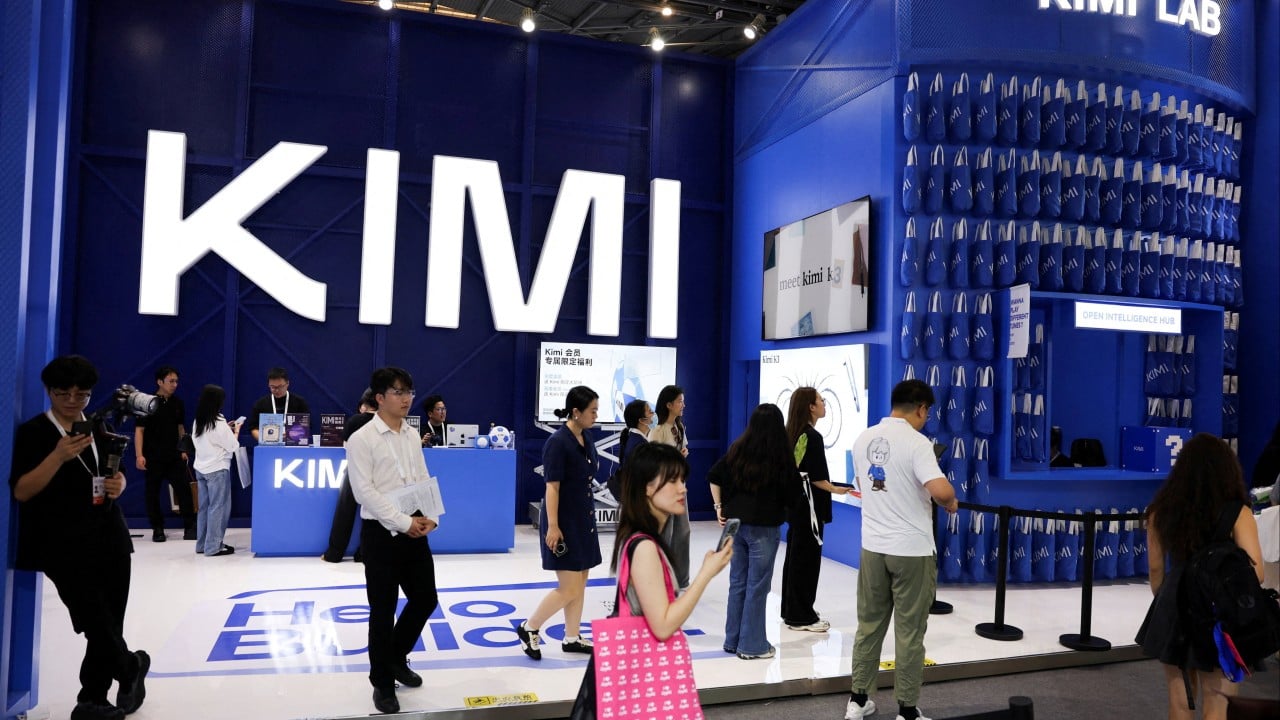
The model is reportedly almost as powerful as top US rivals and much cheaper.
Coveragetap to expand ▾Spectrum: Mixed🌍Asia: 1 · Other: 1
- The calls came after Beijing-based start-up Moonshot AI launched its Kimi K3 model earlier this month, sending shock waves through Silicon Valley and the White House.
- Moonshot, which was founded just three years ago, released the model’s core components on the internet, allowing anyone to download, inspect and customise for free.
- Kimi is an open-weight or open-source model, unlike many American closed artificial intelligence models, whose core inner workings are guarded closely by the company that developed them.
The recent launch of the Kimi K3 model by Moonshot AI has sparked a significant debate over global AI governance, particularly in the context of the ongoing rivalry between China and the United States. This model, which is reported to be nearly as powerful as leading US AI systems but at a lower cost, has raised alarms in Silicon Valley and the White House.
The open-source nature of Kimi K3, allowing anyone to download and customize its core components, contrasts sharply with the proprietary models developed by American companies, which keep their algorithms closely guarded.
In light of this development, various Chinese institutions are advocating for Beijing to take the lead in establishing international AI regulations, arguing that there is a 'vacuum' in global governance that needs to be filled. This push comes amid a backdrop of increasing competition between the two nations over technological supremacy.
While both sides acknowledge the importance of dialogue on AI governance, the launch of Kimi K3 has highlighted the growing divide in policy approaches. The implications of this divide could reshape the landscape of AI development and regulation, influencing how nations engage with emerging technologies in the future.