
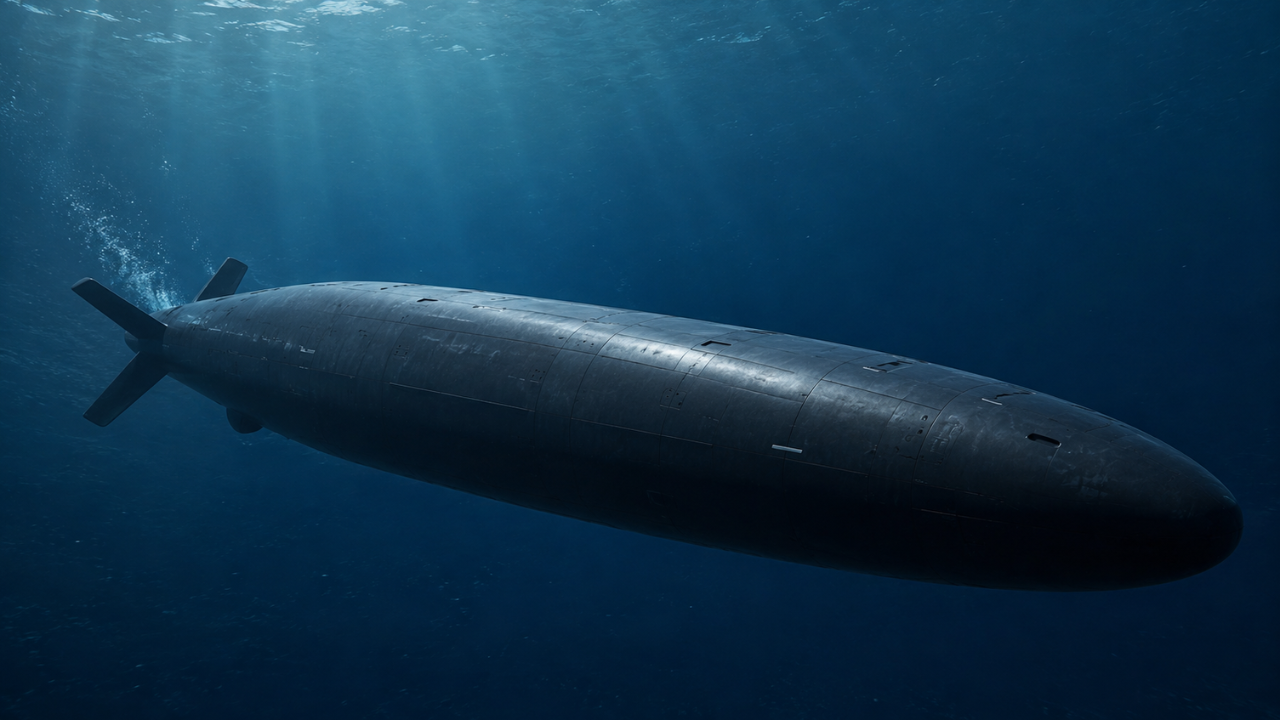
China's 'Finless' Submarine Promises to Transform Naval Warfare Landscape
Coveragetap to expand ▾Spectrum: Mostly Center🌍Asia: 2 · Other: 1
- How China's 'finless' submarine could upend global naval power dynamics
- The most striking feature of the new submarine is the apparent absence of a conventional sail.
- Military analysts cited by Chinese media believe the design could reduce hydrodynamic drag by as much as a third, allowing the submarine to move faster, operate more quietly and become harder to detect.
- According to Naval News, China has launched roughly 15 to 20 submarines in the past five years, including at least eight new classes.
- China's submarine force has evolved dramatically from its early Soviet-inspired Romeo and Ming-class boats.
- The mystery vessel's size has also fuelled speculation that it could be linked to the long-anticipated Type 095 nuclear-powered attack submarine programme.
China's latest submarine, distinguished by its innovative finless design, marks a significant advancement in naval technology that could reshape global maritime power dynamics.
The absence of a conventional sail, which typically houses essential navigation and communication equipment, allows for a streamlined profile that military analysts suggest could reduce hydrodynamic drag by as much as a third. This reduction is expected to enhance the submarine's speed and stealth capabilities, making it harder to detect in the water.
Over the past five years, China has aggressively expanded its submarine fleet, launching approximately 15 to 20 new vessels, including at least eight different classes. This rapid development reflects a strategic shift from older Soviet-inspired designs to more sophisticated models, indicating a commitment to modernizing its naval forces.
The size of the new submarine has also fueled speculation regarding its potential ties to the anticipated Type 095 nuclear-powered attack submarine program, which would further bolster China's underwater warfare capabilities.
As tensions in the region continue to evolve, the implications of such advancements in military technology could have far-reaching effects on naval engagements and power balances worldwide.