
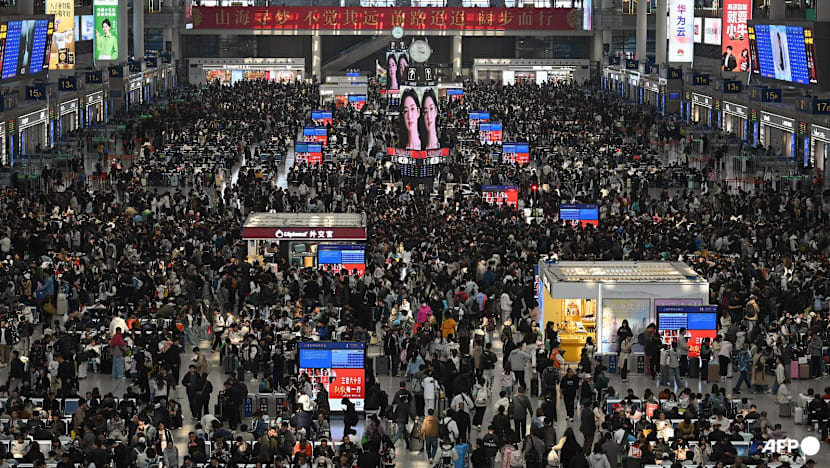
China's Railways Set Record with 24.8 Million Passengers on May Day
Coveragetap to expand ▾Spectrum: Center Only🌍Other: 3 · Asia: 1
- China's railway system handled a record 24.8 million passengers on May Day (per news.google.com).
- The record was set on May Day, a public holiday in China, which traditionally sees increased travel (per news.google.com).
- The increase in passengers is attributed to the May Day holiday, which is a peak travel period in China (per news.google.com).
- China's extensive railway network is a critical component of its transportation infrastructure, facilitating mass travel during holidays (per news.google.com).
- China's railway system is known for its efficiency and capacity to handle large volumes of passengers, especially during peak times (per news.google.com).
China's railway system achieved a significant milestone by setting a new single-day passenger record on May Day, handling 24.8 million travelers.
This achievement underscores the robust demand for rail travel in China, particularly during national holidays when millions of citizens take advantage of the extensive railway network to visit family, friends, and tourist destinations. The May Day holiday, a public holiday in China, traditionally sees a spike in travel, and this year was no exception.
The record-breaking passenger numbers highlight the efficiency and capacity of China's railway infrastructure, which has been a cornerstone of the country's transportation system. The ability to accommodate such a large volume of passengers is a testament to the investments made in expanding and modernizing the railway network over the years.
This development is also indicative of China's ongoing economic recovery, as more people are willing and able to travel. China's railway system is renowned for its high-speed trains and extensive reach, connecting major cities and remote areas alike.
The system's ability to handle peak travel periods efficiently is crucial for maintaining public confidence in rail travel as a reliable and convenient mode of transportation. The May Day record is a reflection of this confidence, as well as the public's eagerness to travel after periods of restricted movement.
The surge in passenger numbers during the May Day holiday also points to the broader trend of increasing domestic tourism in China. As international travel remains limited for many, domestic destinations have become more popular, further boosting the demand for rail travel.
This trend is expected to continue, with China's railway system playing a pivotal role in facilitating the movement of people across the country. While the record-setting day is a cause for celebration, it also presents challenges for the railway system in terms of maintaining service quality and managing the increased demand.
Ensuring passenger safety and comfort during peak travel times is essential, and the railway authorities will need to continue investing in infrastructure and technology to meet these demands. Overall, the new passenger record set on May Day is a positive indicator of China's economic vitality and the resilience of its transportation infrastructure.
As the country continues to recover and grow, the railway system will remain a vital component of its development strategy, supporting both economic activity and social connectivity.
- China's railway system's ability to handle 24.8 million passengers in a single day demonstrates its critical role in supporting domestic travel, particularly during peak holiday periods.
- The record-setting passenger numbers reflect China's economic recovery and the public's confidence in the safety and efficiency of rail travel.
- The surge in domestic travel during the May Day holiday highlights the growing importance of domestic tourism as international travel remains limited.
- Whether China's railway system can maintain service quality and safety during future peak travel periods.
- The impact of continued investments in railway infrastructure on passenger capacity and efficiency.
- Trends in domestic tourism in China as international travel restrictions persist.
- No source mentions the specific economic impact of the increased passenger numbers on local economies.
- The sources do not provide details on how the railway system managed the increased demand logistically.