
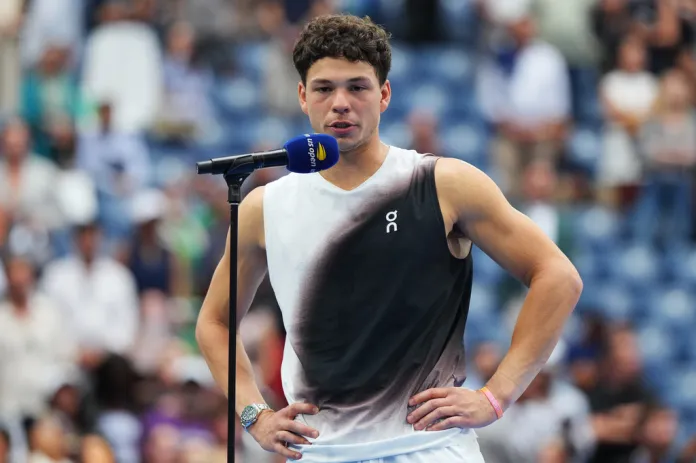
College rosters have become majority international, shrinking chances for American teens
Topic: generalRegion: North AmericaUpdated: i1 outletsSources: 1Spectrum: Right Only⏱ 3 min read
Story Summary
SITUATION
American universities historically took underdeveloped young athletes and developed them into Olympians and national-team members, but college rosters are now majority international, shrinking chances for many American teenagers. NCAA research cited by Senate health committee Chairman Bill Cassidy found first-year Division I tennis rosters were 61% to 64% international, and the author counted only three American singles players among 24 at the Southeastern Conference and Atlantic Coast Conference men’s finals.
Coveragetap to expand ▾Spectrum: Right Only🌍US: 1
Political Spectrum
Position is inferred from coverage mix.
i1 outlets · Right
Left
Center
Right
Left: 0
Center: 0
Right: 1
Geography Coverage
Distribution of where coverage is coming from.
i1 unique outlets · Dominant: US/Canada
KEY FACTS
- NCAA research cited by Senate health committee Chairman Bill Cassidy found first-year Division I tennis rosters were 61% to 64% international (per Washington Examiner).
- The Washington Examiner argues tennis showed the effect first because it is the most international U.S. college sport (per Washington Examiner).
- The article cites Ben Shelton as an example of a recent American college player who reached the US Open final after playing college tennis at Florida (per Washington Examiner).
HISTORICAL CONTEXT
The immediate backdrop is the broader geopolitical crisis: in March 2026 the United States and Israel launched coordinated strikes on Iranian nuclear and military infrastructure, and that campaign and Iranian responses have reshaped national priorities and rhetoric in Washington.
The structural roots in college sports trace to NCAA policy and market shifts: the creation of the NCAA Division I transfer portal (activated October 15, 2018) and the Supreme Court decision in NCAA v. Alston (June 21, 2021) that undercut long‑standing amateurism limits, followed by the NCAA’s adoption of interim NIL policy and state laws taking effect July 1, 2021.
Brief
College athletic rosters have shifted decisively toward international recruits, and that change is already shrinking roster opportunities for American teenagers, the Washington Examiner documents.
The paper points to NCAA research — highlighted by Senate health committee Chairman Bill Cassidy — showing first-year Division I tennis rosters were 61% to 64% international, and it reports only three Americans competed among 24 singles players at the SEC and ACC men’s finals, a stark marker in a sport long dominated by college development.
The Examiner places tennis at the front of the wave because it is the most international U.S. college sport, and it says similar patterns are appearing in basketball, soccer, track and field, cross country, golf and swimming.
The author stresses that for decades U.S. universities served as development pipelines that took underdeveloped young athletes and turned them into Olympians, national-team members and coaches; the current roster composition, the piece argues, reduces that domestic-development role (per Washington Examiner).
Supporters of the new recruiting model would point to success stories such as Ben Shelton — who played at Florida and reached the US Open final — as evidence U.S. college tennis still develops elite Americans, but the Examiner uses Shelton’s example to underscore how rare such trajectories have become (per Washington Examiner).
The article offers no counter-data showing roster spots have increased overall to offset the international share, nor does it quantify total roster changes by sport beyond tennis; it frames the trend as a widening structural squeeze on American teenagers seeking Division I opportunities (per Washington Examiner).
Policymakers and coaches who prioritize domestic development will face pressure from this data to consider recruiting limits or development-focused policies if they want to restore larger pathways for American high-school athletes, the Examiner suggests (per Washington Examiner).
Why it matters
- American high-school athletes: fewer Division I roster spots in tennis (61%–64% international first-year rosters) reduces concrete NCAA roster opportunities for U.S. teens (per Washington Examiner).
- College athletic programs: loss of the traditional U.S. development pipeline risks producing fewer homegrown Olympians and national-team members, altering talent flows that historically ran through college programs (per Washington Examiner).
- Coaches and athletic departments: face a choice between prioritizing international recruits who may win now and policies that rebuild pathways for American teenagers, affecting scholarship allocations and recruiting budgets (per Washington Examiner).
What to watch next
- Whether the NCAA or individual conferences propose or adopt recruiting or roster rules aimed at limiting international slots before the next recruiting cycle.
- Whether Senate health committee Chairman Bill Cassidy uses the cited NCAA research to push hearings or legislation addressing college recruiting practices.
- Whether athletic departments in basketball, soccer, track and field, cross country, golf or swimming publish roster breakdowns that confirm or contradict the tennis figures this academic year.
Where sources differ
7 dimensionsFraming differences
?- Only the Washington Examiner frames the shift as a broad national problem shrinking chances for American teens and cites specific NCAA research and count data (per Washington Examiner).
Disputed or unclear
?- No other outlet in this pack disputes or corroborates the Examiner’s figures or counts; the scale of the trend in sports beyond tennis remains unverified by additional sources (per Washington Examiner).
Omitted context
?- No source in this pack provides NCAA-wide roster breakdowns by sport beyond first-year Division I tennis, which limits understanding of how pervasive the trend is across athletics.
- No source discusses immigration, visa, scholarship-policy, or NCAA-eligibility rules that shape international recruiting and could explain the mechanics of the shift.
- No source examines whether total roster sizes or scholarship allocations have changed, which would show whether international entries have displaced Americans or expanded rosters.
Conflicting figures
?- Washington Examiner reports first-year Division I tennis rosters were 61%–64% international (per Washington Examiner).
Disputed causality
?- The Examiner attributes reduced chances for American teens to majority-international rosters but does not document whether international recruiting directly displaced American players through reduced roster slots or scholarship cuts (per Washington Examiner).
Attribution disputes
?- The Washington Examiner attributes the NCAA research figures and the framing about shrinking American opportunities to research cited by Senate health committee Chairman Bill Cassidy and the author’s own roster counts (per Washington Examiner).
Sources
1 of 1 linked articles