
Trump says ceasefire ‘on life support’ as he meets with generals, criticizes Kurds
Coveragetap to expand ▾Spectrum: Mostly Center🌍Other: 5 · Asia: 3 · US: 1 · Europe: 1
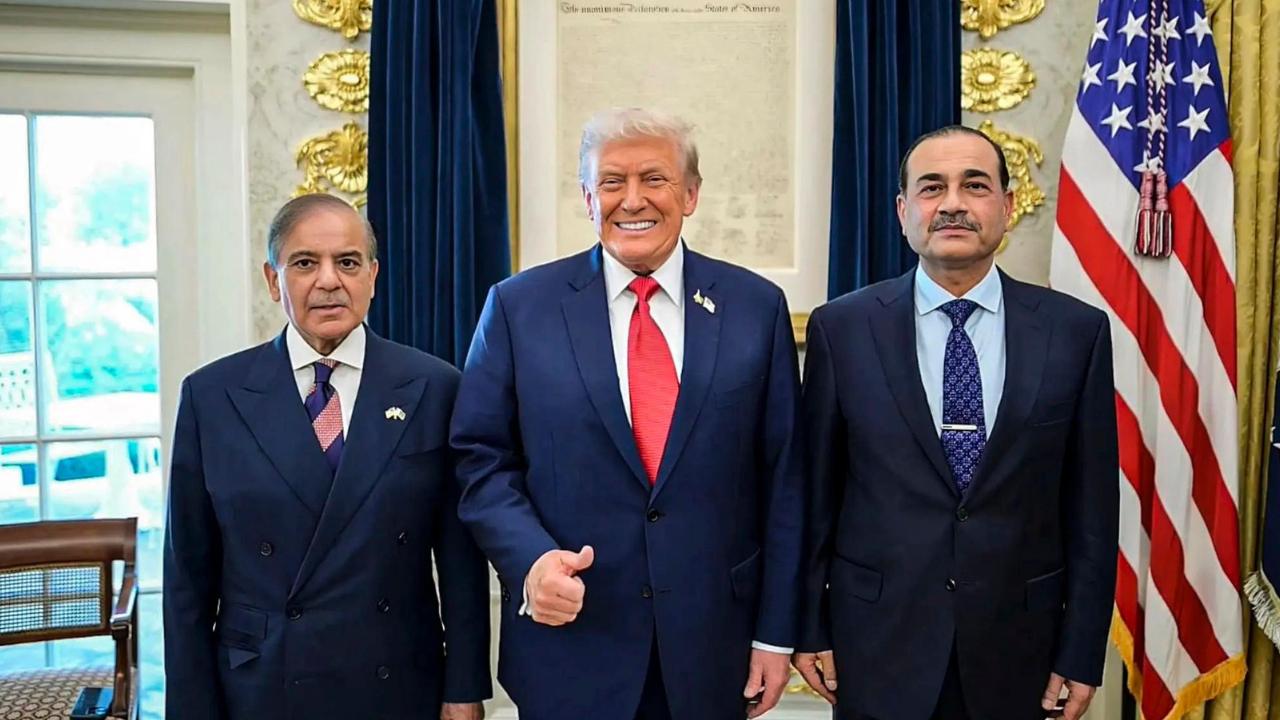
- Trump says US agreed to ceasefire with Iran as 'favour to Pakistan' - 24NewsHD
- Trump says US agreed to Iran ceasefire 'as 'favour to Pakistan'
- Trump says ceasefire with Iran on ‘life support’ after rejecting peace proposals
- As such, he regarded the ceasefire that has been in place since April 8 as “unbelievably weak”.
- “I would say the ceasefire is on massive life support,” he said, joking that it was like “where the doctor walks in and says, ‘Sir, your loved one has approximately a one per cent chance of living’.”
President Donald Trump has declared that the ceasefire between the US, Israel, and Iran is 'on life support', a stark assessment that underscores the fragility of the current diplomatic situation.
Speaking during a healthcare event, Trump rejected peace proposals aimed at stabilizing the ceasefire, which has been in effect since April 8, 2026, and described it as 'unbelievably weak'. He humorously noted that the ceasefire has a 'one percent chance of living', highlighting his administration's dissatisfaction with the current state of affairs.
Trump's remarks came as he met with military generals to discuss potential military actions, including the possibility of restarting a mission to guide ships through the strategically important Strait of Hormuz.
The president's criticism extended to Iran's leadership, whom he labeled as 'stupid', reflecting the ongoing tensions that have escalated since the US and Israel launched coordinated military strikes against Iran in early March 2026.
While Trump’s comments signal a hardening stance, they also reveal the complexities of navigating a ceasefire that many view as increasingly tenuous. The situation remains fluid as military and diplomatic efforts continue to unfold in the region.
- Trump's assertion that the ceasefire with Iran is "on life support" underscores the precariousness of U.S.-Iran relations, which directly impacts regional allies like Pakistan and the Kurds.
- As tensions escalate, the potential for renewed conflict could destabilize the already fragile security situation in the Asia-Pacific, affecting humanitarian efforts and economic stability.
- The Kurds, in particular, may face increased vulnerability as U.S. support wavers, potentially leading to a resurgence of violence and displacement in the region.
- Watch for a potential announcement from the U.S. Department of Defense regarding troop deployments in the region within the next 72 hours as discussions with military leaders continue.
- Expect a statement from the Kurdish leadership on their strategic response to U.S. criticisms and the status of their alliances, likely within the next week.
- Monitor the upcoming meeting between U.S. and allied military officials scheduled for next month, where strategies regarding the ceasefire and regional stability will be discussed.
- Look for a response from the Turkish government regarding their position on the ceasefire and potential military actions in the region, anticipated within the next two weeks.
- Anticipate a briefing from the White House on foreign policy adjustments in the Asia Pacific, expected before the next quarterly earnings report from defense contractors.
Left- and right-leaning outlets are covering this story differently — in which facts to emphasize, which context to include, and how to frame causes and consequences.