
Documentary at Venice alleges Israel used AI to kill thousands in Gaza; IDF rejects claims
Coveragetap to expand ▾Spectrum: Mostly Center🌍US: 1 · Europe: 1
- The film is titled NAZA and premiered at the Venice Film Festival (per RT)
- The Israel Defense Forces rejected the film's claims, saying the whistleblowers cannot be verified (per RT)
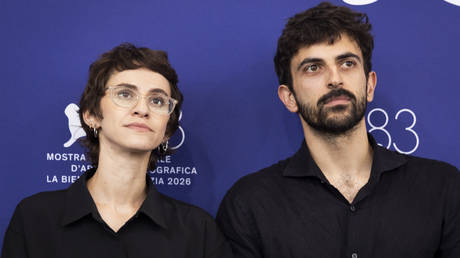
A new documentary, NAZA, premiered at the Venice Film Festival and alleges that Israel used powerful artificial intelligence tools in Gaza operations that killed thousands of Palestinians.
The film, which the Venice audience greeted with a roughly 25-minute standing ovation, presents on-camera whistleblowers and excerpts in which insiders reportedly described planning airstrikes as “insanely fun” (per RT).
The Israel Defense Forces issued a categorical rejection of the film's central allegations, saying the whistleblowers cannot be verified and disputing the documentary's account (per RT).
The film's claims — large-scale use of AI in targeting and the attribution of thousands of deaths to that use — remain described in the documentary itself and have not been independently corroborated in the reporting provided here (per RT).
NAZA's reception at Venice has amplified scrutiny: supporters point to its eyewitness-sourced testimony and audience reaction as evidence the allegations merit investigation, while the IDF's statement frames the material as unverified and challenges the credibility of the contributors (per RT).
Given the stakes implied by the documentary — accusations that new technologies were employed in ways that caused mass civilian deaths — questions now center on verification: who the whistleblowers are, what documentary evidence exists linking specific AI systems to specific strikes, and whether independent investigators or credible open-source analysts can substantiate the film's chain of evidence (per RT).
- Palestinian civilians in Gaza bear the concrete costs alleged: the documentary claims thousands were killed by strikes it ties to AI-assisted planning (per RT).
- The Israel Defense Forces benefits politically by disputing the film's credibility; their rejection frames the allegations as unverifiable and protects the military's operational legitimacy (per RT).
- Venice audience reaction — a roughly 25-minute standing ovation — boosted the film's profile and increases pressure for independent verification of its claims (per RT).
- Whether independent investigators or credible open-source analysts publish verification of NAZA's central claims within the coming months (per RT).
- Whether the Israel Defense Forces provides additional evidence or a detailed rebuttal that identifies specific whistleblowers or disproves the film's key scenes (per RT).
- Whether film festivals, streaming platforms, or distributors decide to screen or acquire NAZA following its Venice reception (per RT).
Left- and right-leaning outlets are covering this story differently — in which facts to emphasize, which context to include, and how to frame causes and consequences.
7 specific areas where coverage diverges — see below.
- Only RT is available in this pack; RT frames NAZA as alleging AI-enabled killings of thousands and highlights the Venice standing ovation, while the IDF frame (also reported by RT) focuses on unverifiability of whistleblowers.
- The central allegation that AI tools killed thousands of Palestinians is presented by the documentary but remains unverified in the available reporting (per RT).
- No source in this pack provides independent verification of the documentary's claims or named evidence linking specific AI systems to particular strikes.
- No source in this pack names the whistleblowers verbatim, their affiliations, or the technical AI systems allegedly used.
- No source in this pack provides casualty counts or lists of specific incidents tied to the documentary's claims beyond the broad phrase 'thousands'.
- No source in this pack mentions judicial, UN, or ICC processes that could assess allegations of unlawful civilian deaths tied to AI-assisted strikes.
- RT: 'roughly 25-minute standing ovation' for NAZA at Venice; RT: 'thousands' killed as alleged by the documentary.
- RT presents the documentary's claim that Israeli use of AI tools led to thousands of deaths; the IDF disputes that claim and says whistleblowers cannot be verified (per RT).
- RT attributes the allegation to the documentary NAZA and attributes the rejection of those claims to the Israel Defense Forces.