
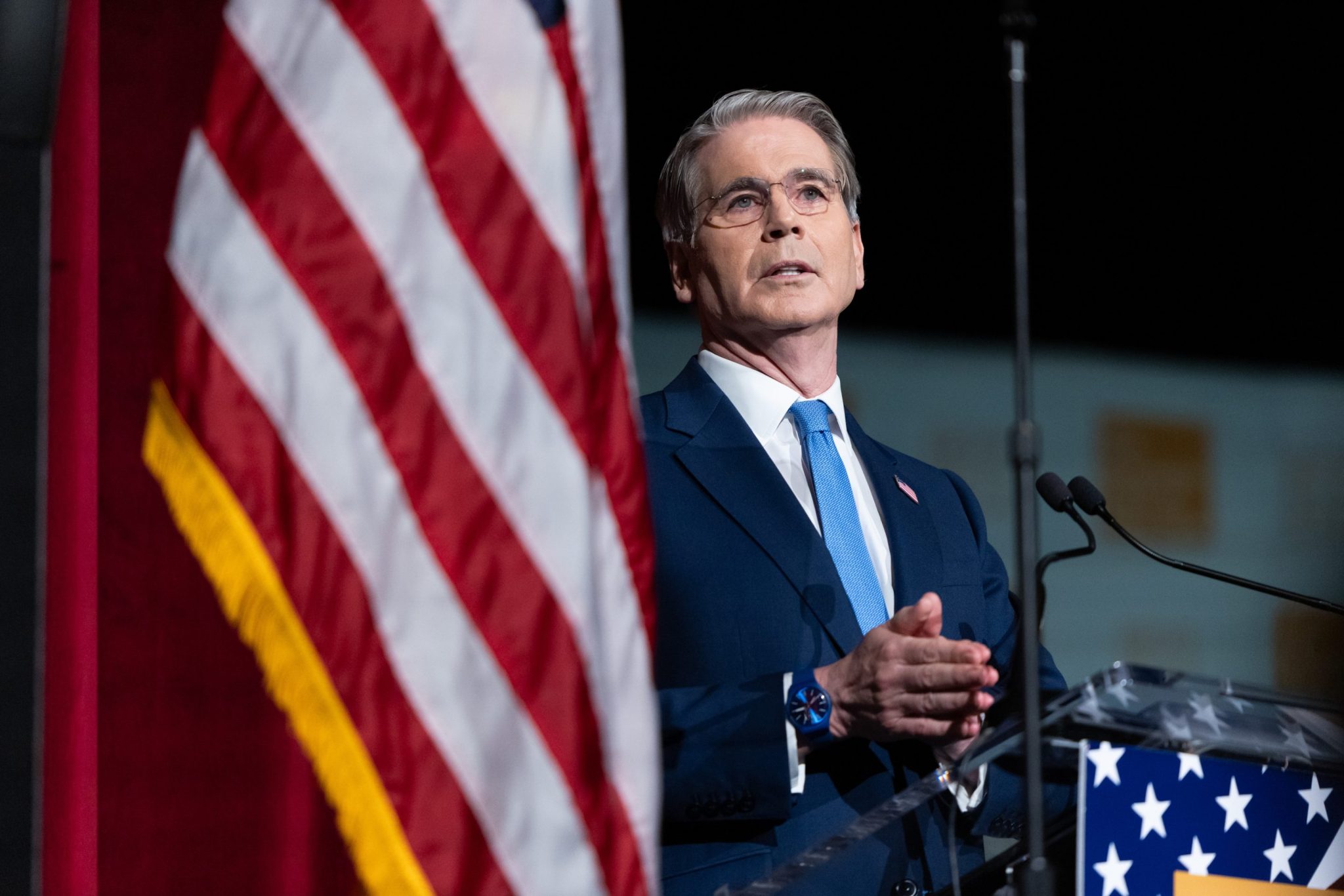
They’re not laughing anymore,” he said, adding that the US has “had some very bad presidents.”
Coveragetap to expand ▾Spectrum: Mostly Center🌍ME: 2 · Other: 2 · US: 1 · Asia: 1
- Donald Trump stated in a CNBC interview that he is the 'best president in Israel's history.'
- Trump defended his decision to go to war with Iran, claiming it is necessary to prevent them from acquiring nuclear weapons.
- The war with Iran has lasted for four months, according to Trump's statements.
- The U.S. national debt has reached approximately $39.5 trillion, influenced by rising government spending and stagnant revenue growth.
- The COVID-19 pandemic in 2020 led to unprecedented government spending, including the $2.2 trillion authorized by the CARES Act.
Elon Musk has positioned artificial intelligence as the key solution to the United States' staggering $40 trillion debt crisis, asserting that productivity gains from AI and robotics are crucial for addressing this financial challenge.
During a discussion on the Nikhil Kamath podcast, Musk emphasized that without significant advancements in AI, the U.S. government would struggle to manage its growing debt burden, which was reported at $39.5 trillion at the time.
However, a new study has emerged that casts doubt on Musk's optimistic outlook, indicating that even the most favorable projections regarding AI's economic contributions may fall short of what is needed to bridge the debt gap.
This skepticism highlights a critical divide in the ongoing discourse about AI's role in the economy, with some experts questioning whether technology can truly deliver the transformative results Musk envisions.
The U.S. debt crisis has been fueled by a combination of increasing government expenditures and stagnant revenue growth, creating a complex financial landscape that challenges policymakers.
As the debate continues, Musk's advocacy for AI reflects a broader trend among technology leaders who believe that innovation can solve pressing economic issues, though the effectiveness of such solutions remains hotly contested.
The implications of this discussion are significant, as they could shape future economic policies and the role of technology in addressing national financial challenges.
- Trump's assertion of being the "best president in Israel's history" and his defense of military action against Iran highlight a significant shift in U.S. foreign policy that could impact diplomatic relations in the Middle East.
- This stance may embolden hardline factions in both the U.S. and Israel, potentially escalating tensions and undermining efforts for a peaceful resolution to ongoing conflicts.
- As a result, regional allies, particularly those advocating for de-escalation, may find their positions weakened, leading to increased instability and humanitarian challenges for civilians caught in the crossfire.
- Watch for potential responses from Israeli officials regarding Trump's claim of being their best president, expected within the next week.
- Anticipate a statement from Iran's government in reaction to Trump's comments about war, likely to be issued within 72 hours.
- Monitor upcoming congressional hearings on U.S.-Israel relations, scheduled for next month, which may address Trump's assertions.
- Expect a reaction from tech companies involved in defense contracts as they assess the implications of Trump's foreign policy decisions, particularly before the next quarterly earnings reports.
Left- and right-leaning outlets are covering this story differently — in which facts to emphasize, which context to include, and how to frame causes and consequences.