
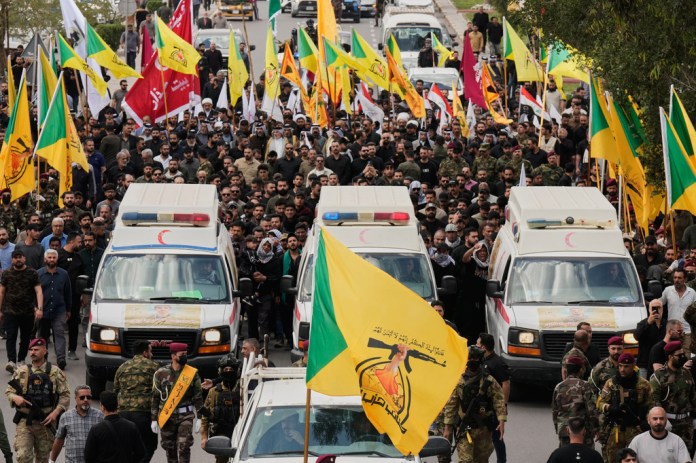
Enemy from within: How Iran’s political networks are taking control of Iraq’s new government
Coveragetap to expand ▾Spectrum: Mixed🌍US: 1 · Other: 1
- That is the contradiction at the center of American policy toward Iraq.
- officials spoke as if there were two separate forces competing for Iraq’s future: the Iraqi state on one side and Iran-backed militias on the other.
- In today’s Iraq, many of the networks aligned with Tehran are no longer operating outside the system.
- Iran’s influence in Iraq has evolved far beyond militias carrying rockets and drones.
Iran's political networks are increasingly taking control of Iraq's new government, raising alarms in Washington about the influence of Iran-backed militias. The United States has repeatedly warned against allowing these militias to dominate the Iraqi political landscape, yet many of the forces shaping the next cabinet are closely tied to Tehran's influence network.
This situation reflects a significant contradiction in U.S. policy, which has historically portrayed a dichotomy between the Iraqi state and Iran-aligned groups. However, the reality on the ground shows that these networks are now deeply embedded within the political system, complicating efforts to counter Iran's sway in the region.
U.S. officials have long recognized that Iran's influence extends beyond military might, encompassing a range of political and social mechanisms that allow it to shape Iraq's governance. As Iraq navigates its political future, the challenge remains for the U.S. to address the growing power of Iranian-affiliated entities while promoting a stable and independent Iraqi state.
- The increasing influence of Iran-backed militias over Iraq's new government poses a direct threat to U.S. interests in the region, undermining efforts to promote a stable, independent Iraqi state.
- As these militias gain political power, ordinary Iraqis may face heightened sectarian tensions and reduced access to essential services, as governance becomes increasingly aligned with Tehran's agenda rather than the needs of the populace.
- This shift could also lead to a further entrenchment of Iranian influence, complicating U.S. diplomatic efforts and potentially destabilizing the broader Middle East.
- Watch for the U.S. State Department to issue a formal statement regarding sanctions on Iran-backed militias within the next 72 hours, as tensions rise over their influence in Iraq's government.
- Monitor the Iraqi parliament's schedule for a vote on key cabinet positions, expected within the next week, which may reveal the extent of Iranian influence in the new government.
- Anticipate a response from the Iraqi Prime Minister regarding U.S. concerns about Iranian interference, likely to be delivered during a press conference planned for later this month.
- Keep an eye on the upcoming meeting of the Gulf Cooperation Council, set for early next month, where regional leaders may discuss strategies to counteract Iranian influence in Iraq.
- Expect a report from the U.N. Security Council on the situation in Iraq, due in two weeks, which could outline international responses to Iran's political maneuvers.
Left- and right-leaning outlets are covering this story differently — in which facts to emphasize, which context to include, and how to frame causes and consequences.