
A sinking ship? Why the EU and China could be heading for a trade war
Coveragetap to expand ▾Spectrum: Left Only🌍Asia: 1
- Chinese speakers were accused of dismissing Europe’s long-standing complaints and ignoring the harsh economic reality of an increasingly lopsided trading relationship.
- EU diplomats were accused of “bullying”, while the bloc’s policies were billed as “protectionist” efforts to decouple from China.
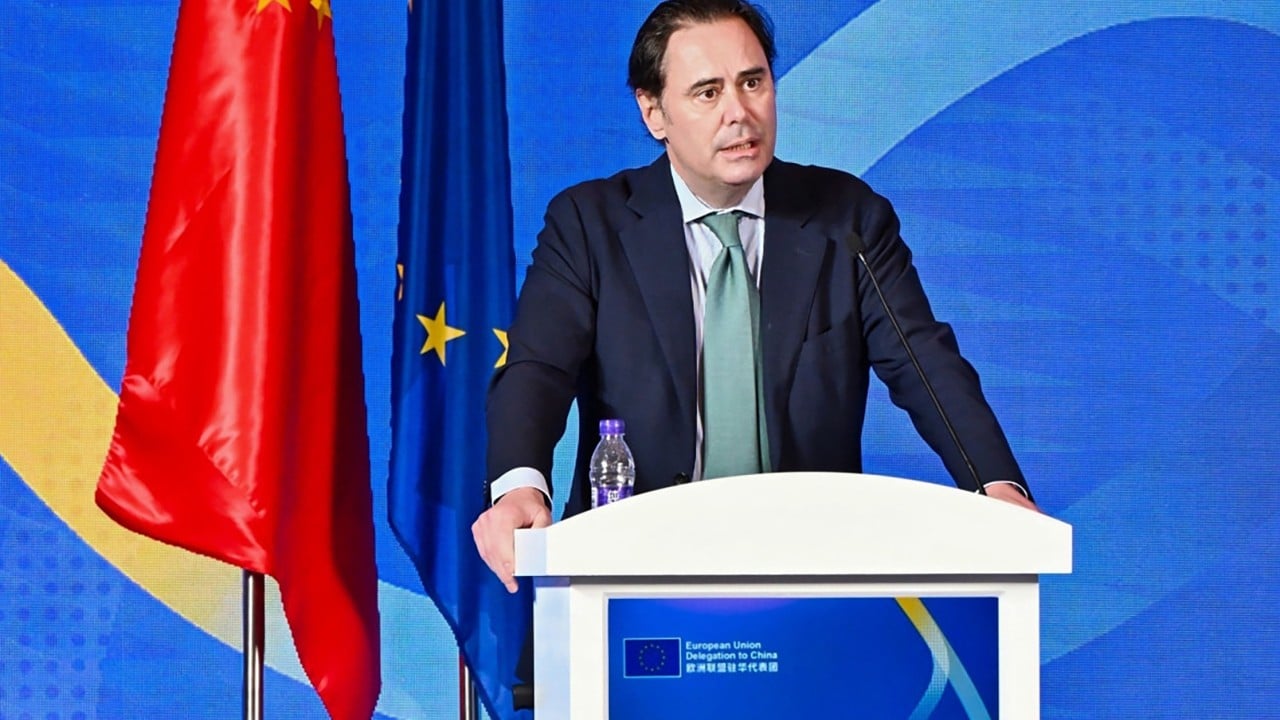
In a recent conference in Beijing, tensions between the European Union and China escalated as officials from both sides engaged in a heated exchange over trade issues. The EU accused Chinese representatives of ignoring longstanding complaints about trade imbalances, while Chinese officials countered by labeling EU policies as protectionist and indicative of bullying tactics.
This clash underscores a broader deterioration in economic relations, with both parties unwilling to acknowledge their roles in the escalating tensions. The EU's concerns center around what it perceives as an increasingly lopsided trading relationship, which has prompted calls for a reassessment of trade policies.
Conversely, China has criticized the EU's approach as an attempt to decouple from its economy, further complicating the dialogue. The current climate reflects a growing economic rivalry, with both sides seemingly entrenched in their positions.
As the situation develops, the potential for a trade war looms, raising alarms about the economic consequences for both regions and their global trading partners.
- The escalating tensions between the EU and China over trade issues could significantly impact European manufacturers and exporters who rely on Chinese markets for growth.
- If a trade war ensues, these businesses may face increased tariffs and barriers, leading to higher costs and reduced competitiveness.
- Additionally, the confrontation could disrupt supply chains, affecting not only companies in Europe but also those in Asia Pacific that depend on smooth trade relations, ultimately risking job losses and economic instability in both regions.
- Watch for the EU's response to China's recent tariffs on European goods, expected to be announced within the next 72 hours.
- Monitor China's upcoming trade policy review, scheduled for next month, which may include new measures affecting EU imports.
- Keep an eye on the EU's plans to introduce legislation aimed at countering foreign subsidies, with a draft expected to be released before the June summit.
- Anticipate statements from the European Commission regarding potential retaliatory actions against Chinese trade practices, likely to be made during the next quarterly earnings reports.
- Observe the outcomes of bilateral meetings between EU and Chinese trade representatives set for later this month, which could signal shifts in negotiation strategies.