
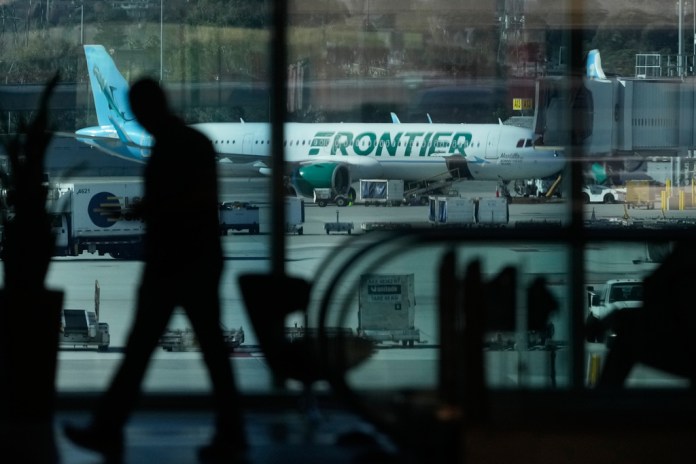
Ex-Frontier CEO: Spirit's Shutdown Avoidable with Merger
Coveragetap to expand ▾Spectrum: Right Only🌍US: 1
- Barry Biffle, former CEO of Frontier Airlines, stated that Spirit Airlines might still be operational if it had merged with Frontier (per washingtonexaminer.com).
- JetBlue made a competing bid for Spirit Airlines, which was believed to be higher than Frontier's offer (per washingtonexaminer.com).
- Biffle mentioned that mass layoffs at Spirit Airlines could have been avoided if the merger with Frontier had been completed (per washingtonexaminer.com).
Barry Biffle, the former CEO of Frontier Airlines, has suggested that Spirit Airlines might have avoided its recent shutdown if it had successfully merged with Frontier. Biffle, who stepped down from his role at Frontier in December, pointed to the failed merger as a missed opportunity that could have prevented the mass layoffs now facing Spirit employees.
Frontier Airlines had initially shown interest in acquiring Spirit in 2022, but their offer was overshadowed by a competing bid from JetBlue, which was believed to be higher. However, JetBlue's attempt to merge with Spirit was ultimately blocked by a federal judge in 2024, who ruled in favor of the Biden administration's antitrust concerns.
This decision left Spirit without a merger partner, contributing to its financial struggles and eventual shutdown. Biffle expressed his disappointment, noting that he had been in discussions with various stakeholders over the weekend, lamenting the missed opportunity to stabilize Spirit through a merger.
The shutdown of Spirit Airlines marks a significant shift in the low-cost carrier market, where consolidation has been a recurring theme. The blocked merger with JetBlue highlights ongoing regulatory scrutiny over airline consolidations, as antitrust authorities remain vigilant about maintaining competition in the industry.
Biffle's comments underscore the challenges faced by smaller airlines in navigating these regulatory landscapes while trying to remain competitive. The situation also raises questions about the future of low-cost carriers in the U.S. aviation market.
With Spirit's exit, passengers may face reduced options and potentially higher fares, as fewer budget airlines remain to challenge the dominance of larger carriers. The regulatory environment, as demonstrated by the antitrust ruling, continues to play a crucial role in shaping the competitive dynamics of the airline industry.
As the industry grapples with these changes, stakeholders will be closely watching how remaining low-cost carriers adapt to the evolving market conditions. The outcome of Spirit's shutdown and the regulatory decisions surrounding airline mergers will likely influence future consolidation efforts and the strategic decisions of other airlines.
Biffle's reflections on the potential merger with Spirit highlight the complex interplay between business strategies and regulatory frameworks in the airline industry. As airlines continue to seek growth and stability, the balance between competition and consolidation remains a critical factor in determining their success.
- Spirit Airlines employees face job losses due to the shutdown, impacting their livelihoods directly.
- Passengers may experience fewer low-cost travel options, potentially leading to higher fares.
- Frontier Airlines, as a potential merger partner, missed an opportunity to expand its market presence.
- Regulatory scrutiny on airline mergers remains a significant barrier to industry consolidation.
- Whether Frontier Airlines pursues other merger opportunities in the wake of Spirit's shutdown.
- Regulatory responses to future airline merger proposals, particularly concerning antitrust concerns.
- The impact of Spirit's shutdown on fare prices and competition among remaining low-cost carriers.
- No significant framing differences noted in the single source provided.
- No disputes or unclear facts noted in the single source provided.
- The source does not mention the specific financial struggles Spirit faced leading to the shutdown.
- No differing figures noted in the single source provided.
- No causality disagreements noted in the single source provided.
- No differing attributions noted in the single source provided.