
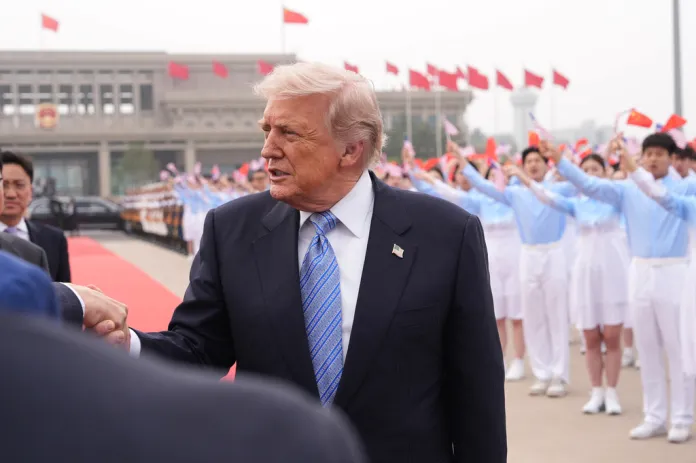
farmland, saying farm prices would “drop” if those companies were pushed out of the sector.
Coveragetap to expand ▾Spectrum: Mostly Center🌍Other: 3 · US: 2
- President Donald Trump stated that if Chinese companies were removed from U.S. farmland ownership, farm prices would drop.
- Trump's comments on Chinese ownership of U.S. farmland were made during a press conference on October 15, 2023.
- Conservative lawmakers have expressed concerns about national security regarding foreign ownership of agricultural land.
- The U.S. currently has approximately 191,000 acres of farmland owned by foreign entities, with a significant portion owned by Chinese companies.
- Critics argue that foreign ownership of farmland could lead to espionage and compromise U.S. food security.
- Trump's defense of foreign ownership has led to backlash from at least 20 Republican senators who are advocating for stricter regulations.
In a recent statement, President Donald Trump defended the ownership of U.S. farmland by Chinese entities, asserting that farm prices would 'drop' if these companies were forced out of the agricultural sector.
This defense comes amid growing concerns among conservatives regarding national security and the potential for espionage linked to foreign ownership of American agricultural land. Trump made these remarks following a diplomatic visit to China, where he engaged in talks with Chinese President Xi Jinping.
The issue of foreign ownership of farmland has been contentious, with Chinese investors reportedly owning over 245,000 acres across the United States. Critics argue that such ownership poses risks to national security, fearing that adversaries could exploit these holdings for surveillance or other malicious purposes.
Trump's comments have ignited a backlash from conservative factions who view the presence of foreign entities in critical sectors as a threat. The ongoing debate highlights the complexities of U.S.-China relations and the implications for domestic agriculture as the country grapples with the balance between foreign investment and national security.
- President Trump's defense of Chinese ownership of U.S. farmland highlights a growing tension between economic interests and national security concerns.
- Farmers and agricultural stakeholders could face significant financial repercussions if foreign investments are curtailed, potentially leading to decreased farm prices and reduced access to capital for local producers.
- Additionally, the backlash from conservatives may push lawmakers to introduce stricter regulations on foreign ownership, which could reshape the agricultural landscape and impact food supply chains across North America.
- Watch for a potential response from the U.S. Congress within the next week, as lawmakers may introduce legislation aimed at restricting foreign ownership of agricultural land.
- Monitor statements from key conservative leaders and organizations over the next 72 hours, as they may ramp up their criticism of Trump's remarks and call for action on national security concerns.
- Keep an eye on upcoming agricultural industry conferences, where stakeholders may discuss the implications of foreign investment and possible strategies to address rising tensions.
- Expect a reaction from major agricultural companies, which may release statements or position papers within the next month outlining their stance on foreign ownership and its impact on farm prices.
- Look for developments in public opinion polls regarding foreign ownership of farmland, as new surveys may be released in the coming weeks reflecting voter sentiment on this issue.
Left- and right-leaning outlets are covering this story differently — in which facts to emphasize, which context to include, and how to frame causes and consequences.