
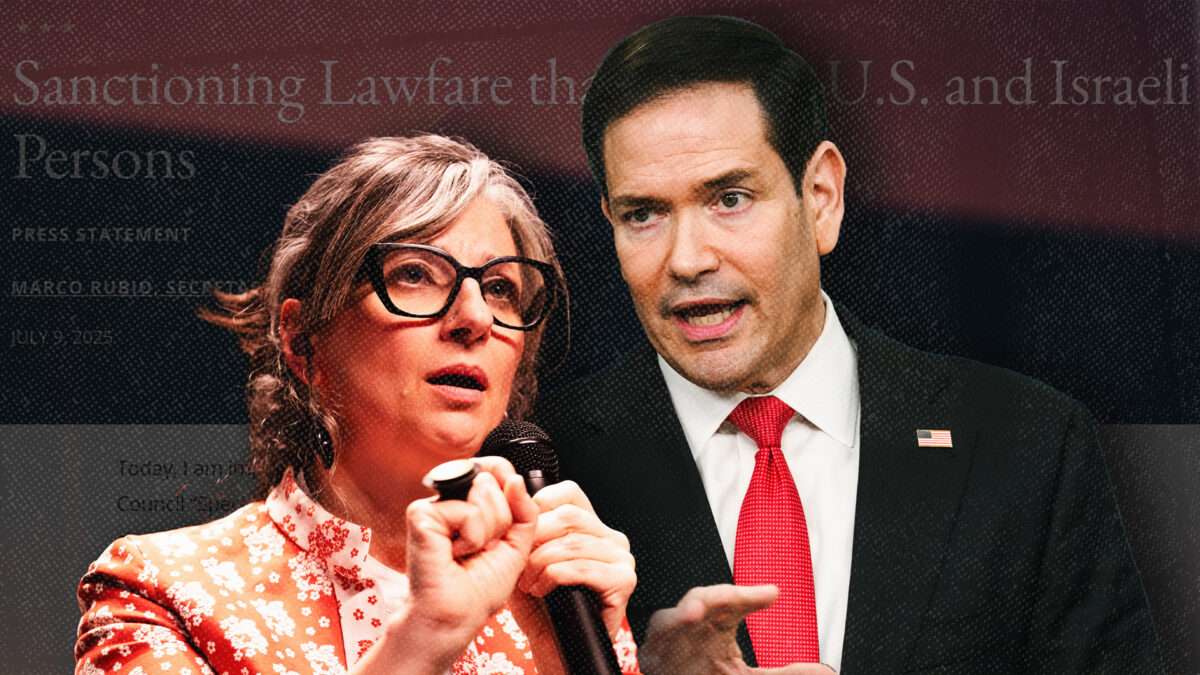
and Israeli persons.” But a court said that’s not ground to seize her property.
Coveragetap to expand ▾Spectrum: Center Only🌍US: 1 · ME: 1
- federal court blocked the Department of the Treasury from enforcing the sanctions on Albanese, ruling that Albanese's family is "likely to succeed" in their First Amendment lawsuit against the government.
- It is undisputed that her recommendations have no binding effect on the [International Criminal Court's] actions—they are nothing more than her opinion," Judge Richard Leon wrote in the ruling.
A U.S. federal court has blocked the Department of the Treasury from enforcing sanctions against Francesca Albanese, a legal scholar known for her outspoken views on international law and human rights. The court's decision, delivered by Judge Richard Leon, underscores the importance of free speech, particularly in the context of political discourse.
The Trump administration had accused Albanese of engaging in 'lawfare that targets U.S. and Israeli persons,' suggesting that her statements were intended to undermine U.S. interests.
However, the court found that Albanese's opinions do not carry any legal weight that would justify sanctions, stating that her recommendations are merely her personal views and have no binding effect on the International Criminal Court's actions.
This ruling highlights a significant tension between government actions aimed at curbing perceived threats and the constitutional protections afforded to free speech. The case raises broader questions about the limits of government authority in regulating speech, especially when it pertains to controversial topics such as international law and human rights.
As the legal landscape continues to evolve, the implications of this ruling may resonate beyond Albanese's case, potentially influencing how similar cases are handled in the future.
Left- and right-leaning outlets are covering this story differently — in which facts to emphasize, which context to include, and how to frame causes and consequences.