
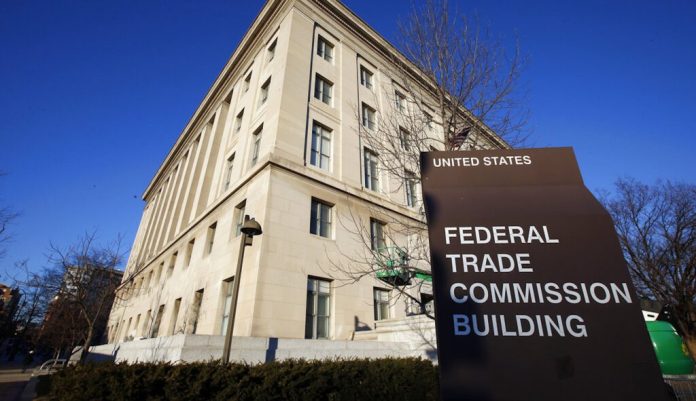
FTC seeks $225 million from Amway, accuses company and trainers of deceptive recruitment
Coveragetap to expand ▾Spectrum: Right Only🌍US: 1
- The Federal Trade Commission is seeking $225 million from Amway to resolve allegations about deceptive recruitment and sales practices (per Washington Examiner).
- The FTC filed court papers alleging more than three-quarters of Amway’s products were sold to its own independent business owners (per Washington Examiner).
The Federal Trade Commission is asking a court to force Amway to pay $225 million after filing papers that allege the direct-selling giant and two affiliated training groups used deceptive recruitment tactics and pressured recruits into buying inventory they could not resell (per Washington Examiner).
The commission’s filing contends that more than three-quarters of Amway’s product sales flowed to its own independent business owners rather than outside customers, and that many participants quit because the cost of inventory purchases and mandatory training outstripped any bonuses they earned (per Washington Examiner).
Amway faces an FTC theory common in challenges to multi-level marketing: the business model becomes a self-contained market where distributors are the primary customers, not external consumers; the Examiner says the agency built its request around both recruitment representations and internal sales data it unearthed (per Washington Examiner).
Amway and the two named training groups are accused of using recruitment messages that misrepresented earnings prospects and of creating pressure to buy starter packs and ongoing inventory — practices the FTC argues pushed recruits into losses before they had a realistic chance to sell (per Washington Examiner).
The filing seeks a monetary remedy of $225 million to resolve the agency’s allegations and to deter what the FTC frames as systemic deceptive practices in the network (per Washington Examiner).
The public account in the Examiner piece is limited to the FTC’s claims and figures; the outlet does not include Amway’s response or any court scheduling details, leaving unanswered how Amway will contest the agency’s characterization and what defenses the company will present in court (per Washington Examiner).
- Costs to recent or prospective Amway independent business owners: the FTC alleges purchases and training costs exceed bonuses, meaning thousands of distributors could have suffered net financial losses if the agency’s facts hold (per Washington Examiner).
- Financial stake: the FTC’s $225 million demand signals both a large-scale monetary penalty and potential consumer restitution tied to alleged deceptive recruitment and self-sales (per Washington Examiner).
- Market structure scrutiny benefits competitors and regulators who argue the MLM model can shield internal sales from consumer protections; a significant judgment or settlement could reshape enforcement against similar networks (per Washington Examiner).
Whether the FTC files a formal complaint and the court sets a civil trial schedule or a settlement timeline; 2) Whether Amway publicly files an answer or motion contesting the FTC’s allegations and seeking to limit damages; 3) Whether the two affiliated training groups named by the FTC are separately sued or join Amway in defense, affecting allocation of any monetary remedy; 4) Whether the court accepts the FTC’s internal-sales evidence as a basis for damages and injunctive relief.
- Only the Washington Examiner is in this source set; it frames the story around the FTC’s allegations that internal sales to distributors dominated Amway’s revenue and that recruitment pressure drove purchases (per Washington Examiner).
- No source disputes the FTC’s claims in this packet; Amway’s response or any contrary evidence is not present in the provided material (per Washington Examiner).
- No source in this pack provides Amway’s response or legal defense to the FTC’s $225 million demand.
- No source provides data on how many independent business owners may have been affected or concrete estimates of consumer losses.
- No source mentions prior FTC enforcement actions against Amway or similar multi-level marketing firms that would contextualize the agency’s strategy.
- No source details the identities or business practices of the two affiliated training groups beyond their involvement.
- Washington Examiner: $225 million (per Washington Examiner); Washington Examiner: more than three-quarters of Amway's products sold to independent business owners (per Washington Examiner).
- The FTC’s action is presented as an enforcement filing seeking damages for alleged deceptive recruitment and internal sales; the Examiner does not identify a prior triggering investigation timeline or specific event that prompted the filing (per Washington Examiner).
- The claims and figures in this packet are attributed to the Federal Trade Commission via court papers, as reported by the Washington Examiner (per Washington Examiner).