
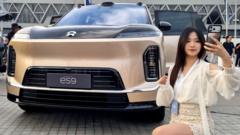
The world's carmakers are struggling to compete with China
Topic: geopoliticsRegion: AsiaUpdated: i1 outletsSources: 1Spectrum: Center Only⏱ 2 min read⚠ 3d+ old
Story Summary
SITUATION
Global carmakers are losing ground to Chinese rivals who are leading in electric vehicles and technology. Executives from Honda and Ford express urgent concerns about the competitive landscape as foreign brands adapt their strategies in response to China's rapid advancements (per BBC).
Coveragetap to expand ▾Spectrum: Center Only🌍Europe: 1
Political Spectrum
Position is inferred from coverage mix.
i1 outlets · Center
Left
Center
Right
Left: 0
Center: 1
Right: 0
Geography Coverage
Distribution of where coverage is coming from.
i1 unique outlets · Dominant: Europe
KEY FACTS
- Ford chief executive Jim Farley has also warned that Western carmakers are "in a fight for our lives" as Chinese rivals expand globally.
- After decades spent investing in joint ventures with Chinese partners to build vehicles, foreign carmakers are now changing the nature of those partnerships to stay competitive.
- "The biggest mistake that the developed world is making is believing that the transition is only about electric cars," says Shanghai-based auto analyst Bill Russo.
HISTORICAL CONTEXT
This development falls within the broader context of Geopolitics activity in Europe. Current reporting indicates: The world's carmakers are struggling to compete with China Ford chief executive Jim Farley has also warned that Western carmakers are "in a fight for our lives" as Chinese rivals expand globally.
After decades spent investing in joint ventures with Chinese partners to build vehicles, foreign carmakers are now changing the nature of those partnerships to stay competitive. This context is based on the currently available source text and may be refined as fuller reporting becomes available.
Brief
Global carmakers are increasingly struggling to compete with their Chinese counterparts, who are making significant strides in the electric vehicle (EV) market and related technologies.
Executives from major companies like Honda and Ford have voiced their concerns, with Honda's Toshihiro Mibe admitting that they feel they have 'no chance' against the advancements seen in Chinese factories. Meanwhile, Ford's Jim Farley has characterized the situation as a 'fight for our lives' for Western automakers.
This competitive shift is underscored by the rapid pace of innovation in Chinese automotive manufacturing, particularly in cities like Shanghai and Hefei, where automation and software development are far ahead of foreign brands.
Analysts, including Bill Russo, have pointed out that the developed world is making a critical mistake by viewing the transition to EVs as merely about electric cars, overlooking the broader implications of battery technology and design.
Furthermore, Chinese government subsidies, which have drawn criticism from both the EU and the US for distorting market dynamics, have played a crucial role in enabling local companies to expand aggressively and reduce prices.
As foreign manufacturers adapt their strategies and partnerships in response to these challenges, the landscape of the global automotive industry is poised for significant transformation.
Sources
1 of 1 linked articles