
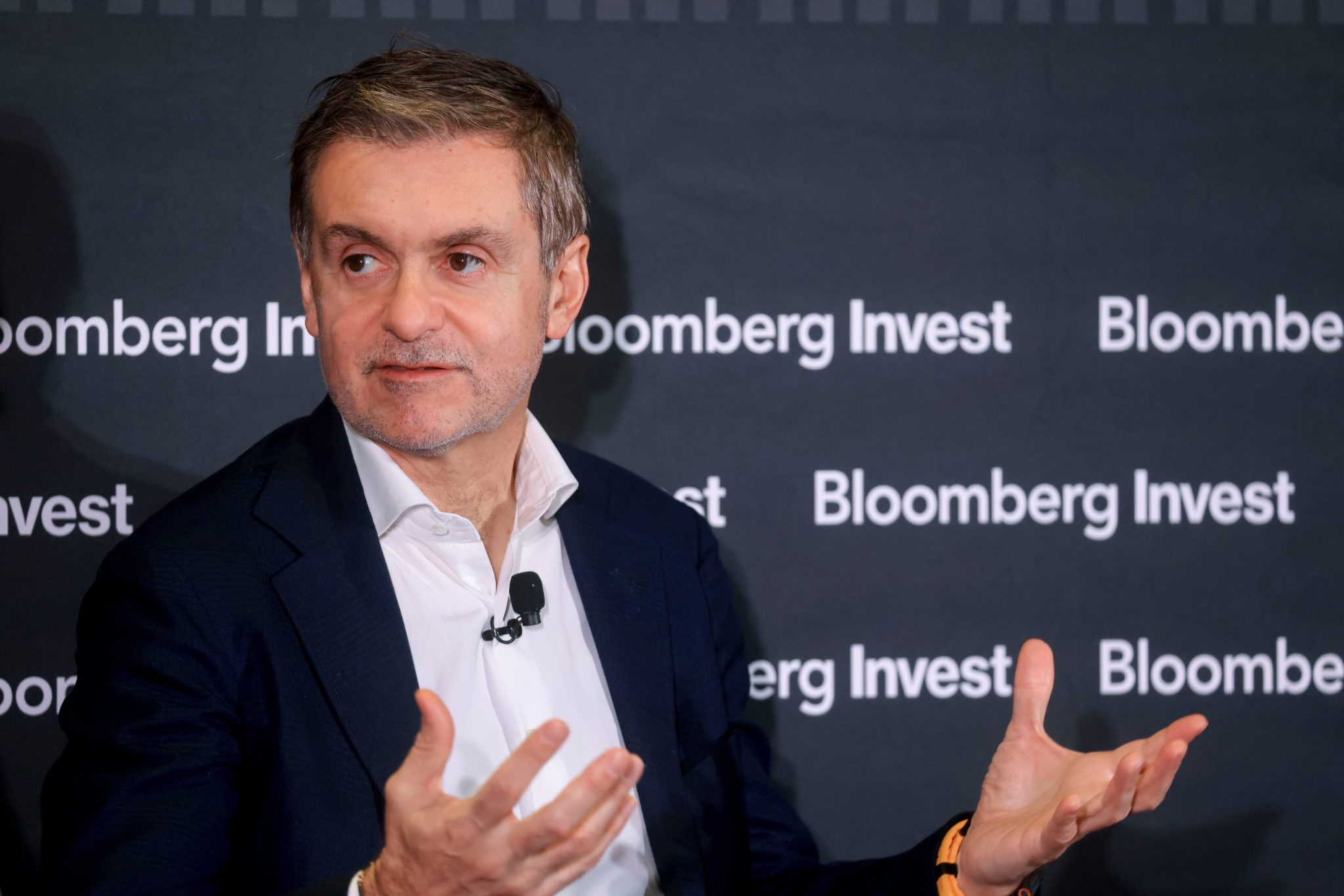
Goldman Sachs CIO Argenti Rejects Tracking Individual AI Usage
Coveragetap to expand ▾Spectrum: Center Only🌍Other: 1
- Marco Argenti is the Chief Information Officer at Goldman Sachs (per Fortune).
- Argenti argues that tracking individual AI usage is not an effective way to measure productivity (per Fortune).
Goldman Sachs' Chief Information Officer, Marco Argenti, has taken a distinctive stance on measuring productivity in the age of artificial intelligence. Argenti, who oversees a team of 12,000 engineers, argues that tracking individual AI usage is not a useful metric for assessing productivity.
Instead, he emphasizes the importance of evaluating how quickly teams can transition from conceptualizing ideas to executing them. In an era where companies are increasingly encouraging employees to adopt AI technologies to boost productivity, Argenti's approach stands out.
While Goldman Sachs has the capability to monitor how much AI each employee uses, Argenti believes that focusing on this detail is akin to concentrating on a single player's movements in a team sport without considering the overall team performance. He suggests that such an approach might not lead to the desired outcomes, such as scoring more goals in a soccer game.
Argenti's philosophy is rooted in the belief that the real value of AI lies in its ability to streamline processes and enhance the speed of innovation. At Goldman Sachs, AI tools have empowered employees to move beyond traditional methods, such as creating PowerPoint presentations, to developing prototypes that can be iteratively improved based on real-time feedback.
This shift not only accelerates the development process but also fosters a more dynamic and responsive work environment. The decision to prioritize team productivity over individual AI usage metrics reflects a broader understanding of how technology can be leveraged to drive collective success.
By focusing on the speed and efficiency of idea execution, Argenti aims to harness the full potential of AI to benefit the organization as a whole. This approach also highlights a critical consideration for other companies navigating the integration of AI into their operations.
As businesses strive to maximize the benefits of AI, the emphasis may need to shift from individual usage metrics to broader measures of team effectiveness and innovation speed. Argenti's perspective offers a fresh lens through which to view the role of AI in modern enterprises.
It challenges the conventional wisdom of tracking individual technology usage and instead advocates for a more holistic approach that aligns with the collaborative nature of today's work environments.
- Goldman Sachs' engineers benefit from a focus on team productivity, which enhances their ability to innovate and execute ideas quickly.
- The bank's decision not to track individual AI usage could influence other companies to adopt similar productivity measures, impacting how AI is integrated into workplaces.
- By prioritizing team performance, Goldman Sachs may achieve faster innovation cycles, potentially giving it a competitive edge in the financial sector.
- Whether other financial institutions adopt similar productivity measures focusing on team performance rather than individual AI usage.
- The impact of Goldman Sachs' approach on its innovation and product development timelines over the next year.
- Potential changes in AI integration strategies across industries as companies observe Goldman Sachs' outcomes.
- Fortune emphasizes the holistic approach to productivity over individual AI usage metrics.
- No source mentions the potential impact of this approach on employee performance evaluations or compensation structures.
- 'It would be like looking at only one player on the field,' Argenti said (per Fortune).