
How China’s leader lost faith in his generals
Coveragetap to expand ▾Spectrum: Mixed🌍US: 2
- Xi Jinping has conducted a purge of military leadership, removing several high-ranking generals since 2021.
- At a recent legislative meeting, the number of generals present was significantly reduced compared to the previous year, where approximately 40 were shown on state television.
- Reports indicate that Xi Jinping's distrust in his military generals has grown due to perceived failures in leadership and strategy.
- The Chinese Communist Party has emphasized loyalty to Xi Jinping as a key criterion for military appointments following the purge.
- In 2023, Xi Jinping appointed new military leaders who are seen as loyal to his vision and policies, further consolidating his control over the armed forces.
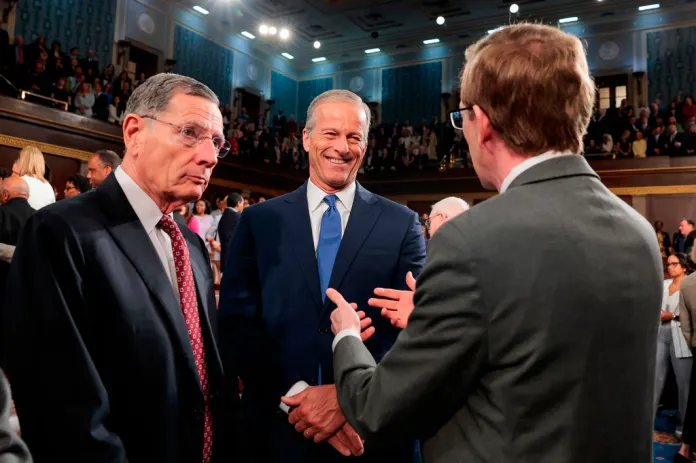
In a notable shift within the Republican Party, GOP Senate candidates are actively campaigning against incumbents they perceive as insufficiently conservative, yet they are sparing John Thune (R-SD) from their criticism.
This exemption highlights a strategic alignment with Thune, who serves as the Senate GOP majority leader and has garnered support from prominent senators like John Cornyn (R-TX) and Bill Cassidy (R-LA).
As the primary elections approach, these insurgent candidates are vocal about their intentions to root out other incumbents, but they are notably backing Thune for another term atop the conference.
This dual approach reflects a complex dynamic where candidates are navigating the pressures of aligning with President Donald Trump’s brand of conservatism while also recognizing Thune's established leadership role. The decision to support Thune may be seen as a tactical move to maintain party unity in a time of increasing ideological division.
The upcoming primaries will test the strength of this strategy as candidates seek to balance their conservative credentials with the need for party cohesion. The implications of these endorsements could shape the future leadership of the Senate GOP and influence the party's direction heading into the general elections.
- The recent purge of military leaders by Xi Jinping signals a significant shift in China's military strategy, potentially affecting regional power dynamics in the Asia-Pacific.
- As Xi consolidates control, this could lead to a more aggressive stance in territorial disputes, impacting neighboring countries and U.S. interests in the region.
- For military personnel and their families, this atmosphere of distrust may create uncertainty about their future roles and the direction of China's defense policy, ultimately affecting morale and operational effectiveness.
- Watch for Republican Senate candidates to announce their endorsements for upcoming primaries within the next two weeks, as they seek to consolidate support against incumbents.
- Monitor John Thune's upcoming public appearances and speeches over the next month, as he will likely outline his vision for the party and address the criticisms from more conservative factions.
- Expect a potential shift in campaign strategies from challengers to incumbents, with new ads and messaging rolling out within the next 30 days to highlight their conservative credentials.
- Keep an eye on the Senate GOP leadership's discussions scheduled for next week, where they may address the internal divisions and strategize on maintaining party unity ahead of the elections.
- Anticipate a formal statement from the National Republican Senatorial Committee (NRSC) within the next week regarding their support for incumbents and how they plan to counteract the challenges from the right.
Left- and right-leaning outlets are covering this story differently — in which facts to emphasize, which context to include, and how to frame causes and consequences.