
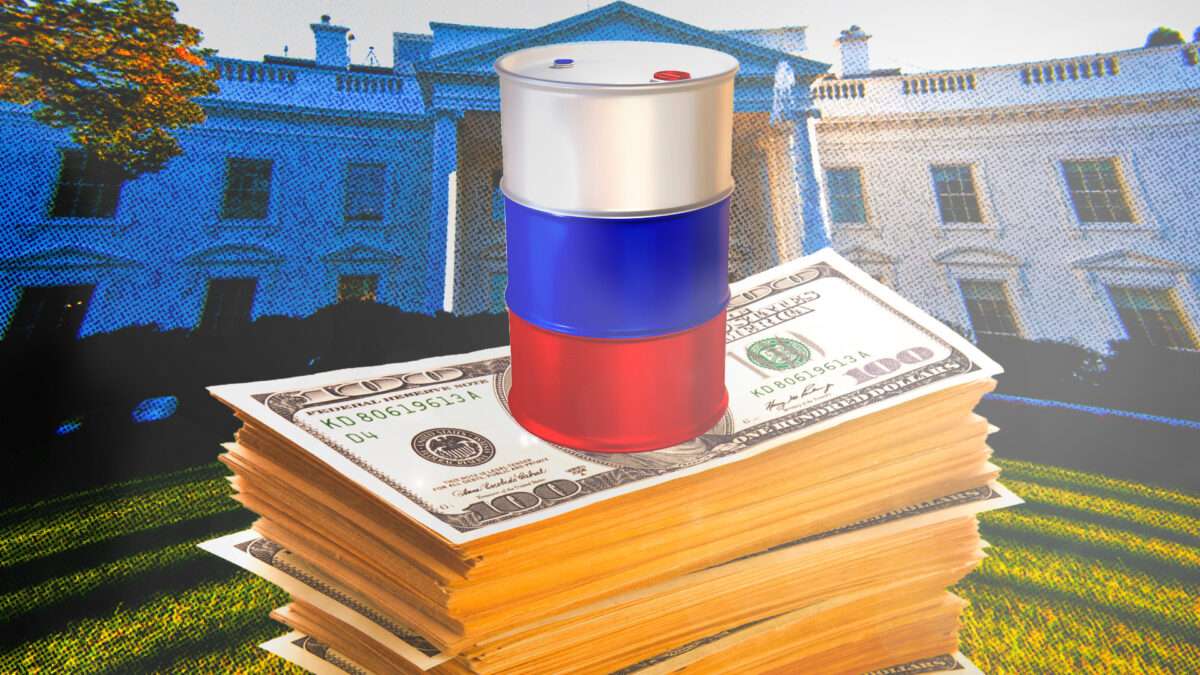
Congress OKs Russia-Iran sanctions bill granting Trump power to impose up to 100% tariffs
Topic: politicsRegion: North AmericaUpdated: i3 outletsSources: 6⚠ Bias gap — sources divergeSpectrum: Mostly Center⏱ 4 min read
Story Summary
SITUATION
Congress passed the Lindsey O. Graham Sanctioning Russia and Iran Act of 2026, which allows President Donald Trump to impose tariffs up to 100% on goods from certain countries but does not clearly define which countries qualify.
Coveragetap to expand ▾Spectrum: Mostly Center🌍US: 2 · Asia: 1
Political Spectrum
Position is inferred from coverage mix.
i3 outlets · Center
Left
Center
Right
Left: 1
Center: 2
Right: 0
Geography Coverage
Distribution of where coverage is coming from.
i3 unique outlets · Dominant: US/Canada
KEY FACTS
- The bill directs the president to impose tariffs "of up to 100 percent" on goods from any country that in the previous year was "among the 5 largest importers, by total volume, of crude oil or natural gas that originated in the Russian Federation" or "among the top 5 countries facilitating Russian oil sanctions evasion."
- The bill exempts any country that imported "less than 15 percent" of Russia's total natural gas exports and "has taken significant steps to reduce its imports of natural gas that originated in the Russian Federation."
- Reason's Eric Boehm argued the tariff policy would effectively raise taxes on Americans who buy goods made in countries like India or Belgium and criticized the lack of precise definitions in the bill.
- The article warns the bill's broad wording could be used by the president in other ways beyond targeting Russian energy importers.
- Through the end of August, China, India, and Turkey were the largest recipients of Russian crude oil, while the European Union received the most pipeline gas and liquefied natural gas, per the article's summary.
HISTORICAL CONTEXT
The immediate backdrop is the wider geopolitical crisis of 2026: after the United States and Israel launched coordinated strikes on Iranian infrastructure in March 2026, Washington has been operating under heightened national-security rhetoric and tightened executive coordination with Congress over tools of economic and military pressure.
Domestically, President Donald Trump’s return to the White House in January 2025 shifted executive-branch posture toward a more aggressive use of trade and sanctions authorities, prompting new legislative proposals in Congress to lock in or expand presidential powers over economic coercion. That domestic debate unfolded against a February 2026 U.S.
Brief
Senator Lindsey Graham has proposed legislation that would convert most existing sanctions on Russia into statute and vest President Donald Trump with sweeping new trade powers, including the ability to impose tariffs as high as 100 percent on major trading partners.
Theatlantic.com reports the measure — styled the Lindsey Graham Sanctioning Russia Act — names China, India, France, Japan, and Hungary as potential targets for such levies and would make the current sanctions framework statutory rather than solely executive.
Critics quoted by theatlantic.com warn the bill explicitly allows the president to waive sanctions and tariff limits by invoking the national interest, a provision they say could let a future administration escalate trade conflicts.
Theatlantic.com also ties the proposal to a February Supreme Court decision that narrowed presidential tariff authority, arguing Graham’s bill would restore or even expand White House discretion.
Supporters of tougher Russia measures see converting sanctions into law as a way to lock in pressure on Moscow; opponents warn that giving a president the power to both impose 100 percent tariffs and unilaterally waive sanctions concentrates economic coercion in the executive branch.
This proposal arrives amid ongoing debates over the balance between Congress and the presidency on trade and national-security powers; theatlantic.com frames the key controversy as whether statutory sanctions plus expansive waiver power would check or amplify executive discretion.
Lawmakers considering the bill will face a choice between enshrining sanctions in statute and preserving congressional oversight, or enabling a president to wield sweeping unilateral trade measures that critics say could destabilize relationships with named trading partners (per theatlantic.com).
Where sources differ
Bias gap1.00 / 2.0
Left- and right-leaning outlets are covering this story differently — in which facts to emphasize, which context to include, and how to frame causes and consequences.
Left-leaning (1)
the_atlantic-0.50
The Lindsey Graham Sanctioning Russia Act would convert most Russia sanctions into law and grant President Trump authority to impose tariffs, including levies up to 100 percent on …
Center (4)
reason_magm.economictimes.comdynamitenews.comhindustantimes.com
Right-leaning (1)
foxnews.com+0.80
Sources
6 of 6 linked articles
A Russia Sanctions Bill Would Give Trump Vast New Tariff Powers
reason.comSep 17Center
↗
Congress Might Be About to Hand Trump Sweeping Tariff Powers
theatlantic.comSep 15Left
↗
US Congressman names India, China in Russia Sanctions Bill
m.economictimes.comSep 15Left
↗
India Named In Russia Sanctions Bill As 100 Percent Tariff Threat Grows
dynamitenews.comSep 15Left
↗
US lawmakers move amendments to Russia sanctions bill which targets India, others with 100% tariff threat | India News
hindustantimes.comSep 15Left
↗
House Dems face Trump tariff dilemma as major Russia sanctions bill heads to floor
foxnews.comSep 15Left
↗