
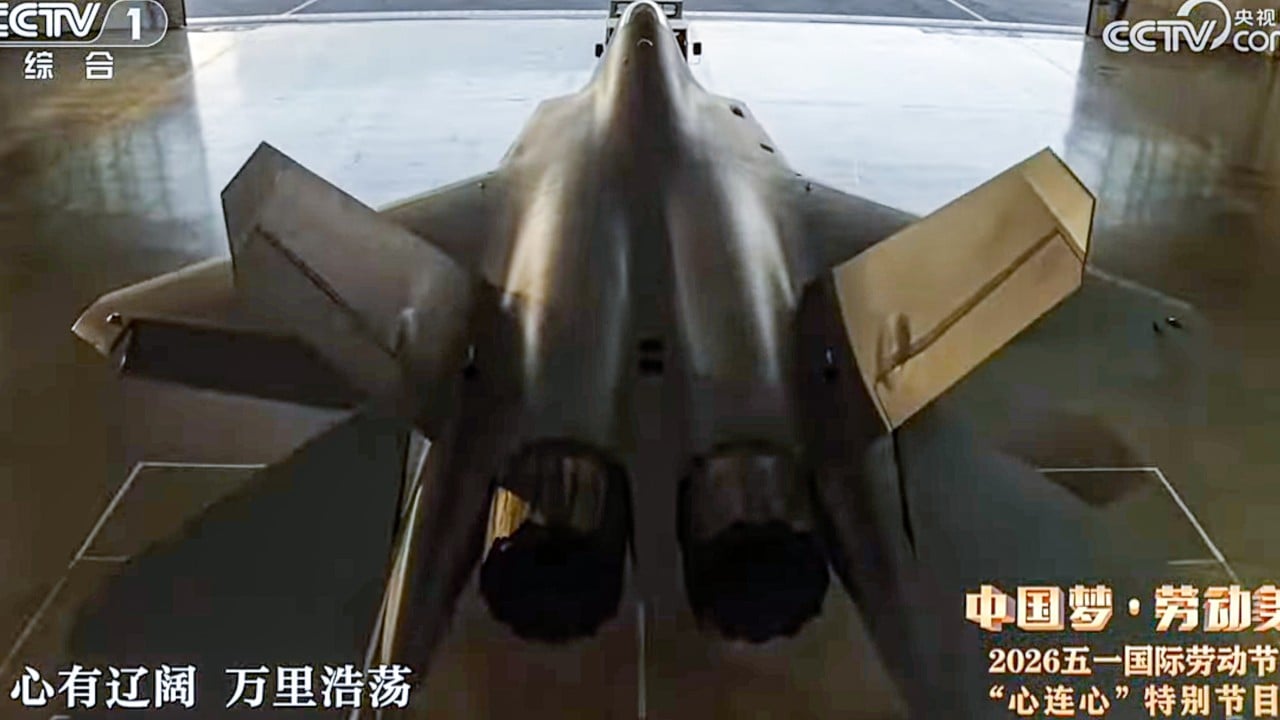
Has China given the first sign it’s ready to export its J-35A fighter jet to Pakistan?
Coveragetap to expand ▾Spectrum: Mixed🌍Asia: 2
- China has unveiled the J-35AE, an export variant of its fifth-generation fighter jet, the J-35A (per scmp.com).
- The J-35AE was shown with the AVIC logo, suggesting it is intended for export rather than domestic use (per scmp.com).
- Pakistan is reported to be the most likely first recipient of the J-35AE fighter jet (per scmp.com).
- This is the first time the J-35AE has been unveiled as a full operational model, having previously been shown only as small models at defense exhibitions (per scmp.com).
China has taken a significant step in its military export strategy by unveiling the J-35AE, an export variant of its fifth-generation fighter jet, the J-35A. This development is particularly noteworthy as Pakistan is anticipated to be the first recipient of this advanced aircraft.
The J-35AE was prominently featured with the logo of Aviation Industry Corporation of China (AVIC), rather than the emblem of the People's Liberation Army Air Force, indicating its intended role in international markets.
The J-35AE's introduction marks the first time this model has been presented as a fully operational aircraft, having previously only been displayed as small models at international defense exhibitions. The aircraft's design includes an internally integrated Electro-Optical Targeting System (EOTS), which is crucial for maintaining its stealth capabilities.
This feature underscores China's commitment to providing cutting-edge military technology to its allies. The timing of this unveiling is strategic, as China seeks to bolster its position in the global arms market.
By offering advanced military technology like the J-35AE, China aims to strengthen its geopolitical ties, particularly with nations like Pakistan, which has historically been a key ally. The move to export the J-35AE also reflects China's broader ambitions to challenge Western dominance in the defense sector.
By equipping allies with sophisticated weaponry, China not only enhances its influence but also creates dependencies that can be leveraged in international diplomacy. While the unveiling of the J-35AE has been met with interest, it also raises questions about the balance of power in regions where these jets might be deployed.
The introduction of such advanced aircraft could potentially alter military dynamics, prompting neighboring countries to reassess their own defense strategies. As China continues to expand its military exports, many governments will be closely watching how these developments impact regional security and alliances.
The J-35AE's deployment in Pakistan, if confirmed, will be a critical test of China's export strategy and its implications for global military balance.
- Pakistan stands to gain advanced military capabilities with the acquisition of the J-35AE, potentially shifting regional power dynamics.
- China benefits by expanding its influence in the global arms market and strengthening ties with key allies like Pakistan.
- The introduction of the J-35AE could prompt neighboring countries to reassess their defense strategies, impacting regional security.
- Whether Pakistan confirms the acquisition of the J-35AE fighter jets.
- Reactions from neighboring countries to Pakistan's potential new military capabilities.
- China's future announcements regarding additional export deals for the J-35AE.
- scmp.com emphasizes the strategic implications of the J-35AE's export, while news.google.com focuses on the unveiling itself.
- No source disputes the likelihood of Pakistan being the first recipient, but the exact terms of the deal remain unverified.
- No source mentions the potential impact on India's defense strategy or regional military balance.