
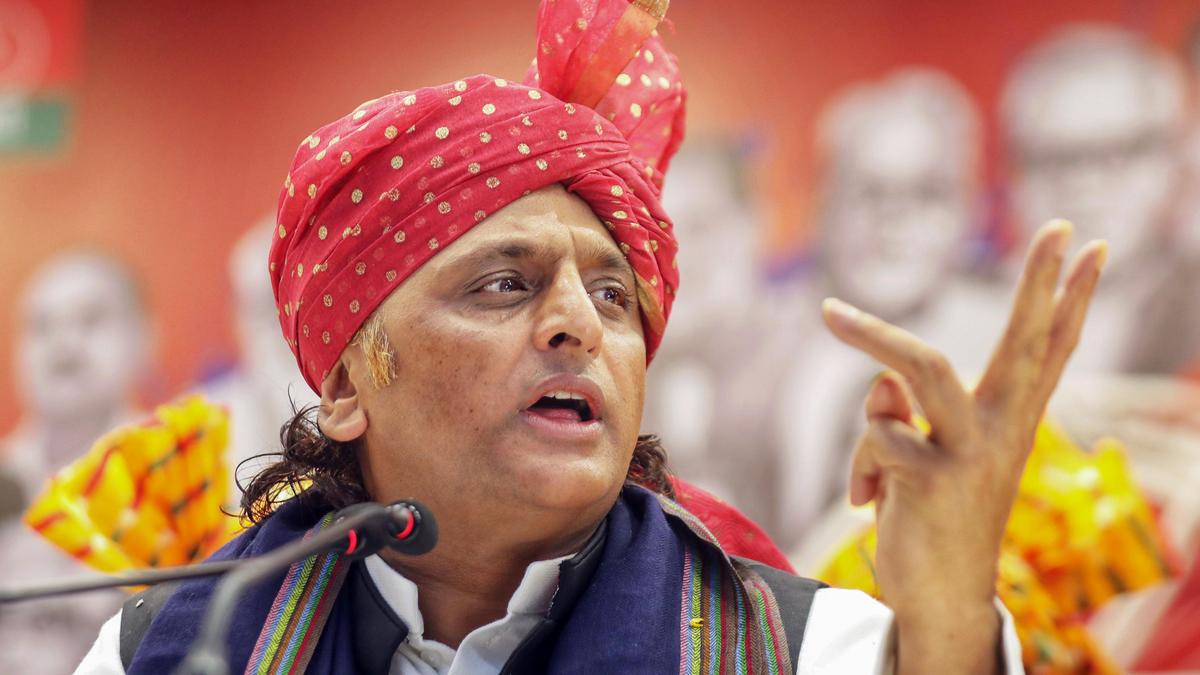
He said the appeal was an “admission of failure”.
Coveragetap to expand ▾Spectrum: Center Only🌍Other: 3 · Asia: 1
- Modi’s austerity drive is an admission of failure on economic and foreign policy fronts, alleges Akhilesh Modi’s austerity drive is an admission of failure on economic and foreign policy fronts, alleges Akhilesh.
- “As soon as the elections were over, the BJP recalled the ‘crisis’.
- In fact, there is only one ‘crisis’ facing the country and that we know as the ‘BJP’.
- If so many restrictions have to be imposed, how will the ‘five trillion-dollar jumla economy’ be created?
- It appears the BJP government has completely lost control.
Akhilesh Yadav, the president of the Samajwadi Party, sharply criticized Prime Minister Narendra Modi's recent appeal for austerity measures, labeling it an 'admission of failure' on the part of the Bharatiya Janata Party (BJP) government.
This appeal comes in the context of rising tensions due to the Iran conflict in West Asia, which Modi cited as a reason for the need to tighten economic belts. Yadav argued that the BJP's acknowledgment of a crisis only after the elections suggests a lack of foresight and control over the country's economic and foreign policy.
He further contended that the only genuine crisis facing India is the BJP itself, questioning the party's ambitious goal of establishing a 'five trillion-dollar economy' while simultaneously imposing austerity measures. The criticism reflects broader concerns among opposition leaders about the government's handling of economic challenges and its implications for governance.
As the situation evolves, the effectiveness of Modi's austerity measures and the public's response will be closely monitored, particularly in light of the economic pressures stemming from international conflicts.
- Austerity measures proposed by Prime Minister Modi in response to the Iran conflict signal a significant shift in India’s economic strategy, raising concerns among citizens and businesses about the government's ability to achieve its ambitious economic goals.
- Akhilesh Yadav's critique highlights the potential impact on everyday people, as increased restrictions could lead to reduced public spending and investment, further straining the economy.
- This situation may exacerbate existing hardships for vulnerable populations, who rely on government support and economic growth for their livelihoods, while also undermining investor confidence in India's economic prospects.
- Watch for a response from the BJP leadership within 72 hours regarding Yadav's criticism and their strategy to address economic concerns amid the Iran conflict.
- Monitor upcoming statements from key economic advisors to Prime Minister Modi as they outline potential austerity measures and their implications for the upcoming budget.
- Anticipate a press conference from Akhilesh Yadav before the next parliamentary session, where he may propose alternative economic policies to counter the BJP's approach.
- Look for reactions from international trade partners in the Asia Pacific region in the next week, particularly regarding India's economic stability and foreign policy direction.