
Ceasefire Breaches Continue as Israel and Hezbollah Accuse Each Other
Coveragetap to expand ▾Spectrum: Mixed🌍ME: 1 · Asia: 1
- Both Israel and Hezbollah have accused each other of breaching the ceasefire (per Dawn).
- Israel has continued its airstrikes since the ceasefire came into effect (per Dawn).
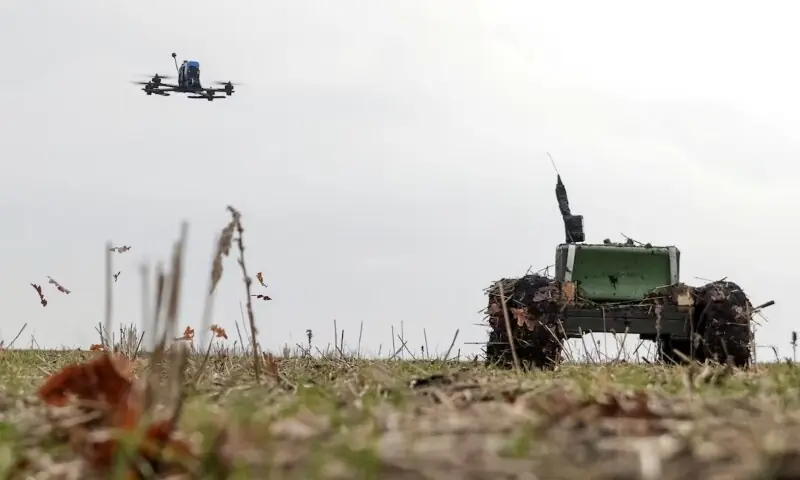
- Hezbollah's fiber-optic drones are creating new challenges for Israeli troops in southern Lebanon (per Dawn).
- The ongoing violence follows a ceasefire agreement that both parties are now accusing each other of violating (per Dawn).
Following a recent ceasefire agreement, violence has persisted between Israel and Hezbollah, with both parties accusing each other of breaching the terms. Israel has continued its airstrikes, a move that has been met with accusations from Hezbollah of ceasefire violations.
Meanwhile, Hezbollah's deployment of fiber-optic drones has introduced new tactical challenges for Israeli forces operating in southern Lebanon. These drones, described as cheap yet effective, have forced the Israeli military to adapt its strategies in response to the evolving threat.
The accusations of ceasefire breaches underscore the fragility of the agreement and the ongoing tensions in the region. Both sides remain entrenched in their positions, with Israel citing security concerns and Hezbollah emphasizing its right to defend against perceived aggression.
The situation remains volatile as each side continues to leverage military capabilities to assert dominance. many governments watches closely, concerned about the potential for further escalation and its implications for regional stability.
- Civilians in southern Lebanon and Israel bear the concrete costs of ongoing violence, facing threats from airstrikes and drone attacks.
- Hezbollah benefits from its enhanced drone capabilities, challenging Israeli military operations and asserting its influence in the region.
- Israel's continued airstrikes highlight its strategic focus on countering perceived threats from Hezbollah, impacting regional security dynamics.
- Whether Israel will escalate its military response to Hezbollah's drone activities in the coming weeks.
- Any potential diplomatic interventions by international actors to reinforce the ceasefire agreement.
- Developments in Hezbollah's drone technology and its impact on Israeli military tactics.
- Dawn highlights Hezbollah's drone capabilities as a new challenge, while other outlets may focus on different aspects of the conflict.
- The specific details of the ceasefire breaches remain disputed between Israel and Hezbollah.
- No source mentions the broader geopolitical implications of the ongoing conflict for regional alliances.
- Sources agree on the mutual accusations of ceasefire breaches but differ on the sequence of specific actions.
- Both parties attribute the ceasefire violations to each other, with no consensus on the primary aggressor.